CONSEIL EN ART GRATUIT

x
Commander l'impression Commander l'impressionAcheter l'image haute résolution Acheter l'image haute résolution PartagerPartager
Détails de l'œuvreDétails de l'œuvre Ajouter aux favoris Ajouter aux favoris TéléchargerTélécharger Articles similairesArticles similaires RadiographieRadiographie DiaporamaDiaporama

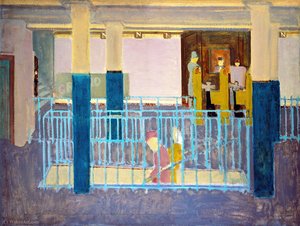
The Source

Experience Mark Rothko’s iconic ‘The Source,’ a captivating 1946 painting featuring a lone boat with a red sail amidst turbulent ocean waters and soaring birds, embodying existential themes in his signature color field style – discover or own this masterpiece.

Explorez la vie et l'œuvre de Mark Rothko (1903-1970), un peintre essentiel de l'Expressionnisme Abstrait. Découvrez ses icônes peintures à champs de couleurs, sa profondeur émotionnelle et son impact durable sur l'art moderne. #ExpressionnismeAbstrait #PeintureChampDeCouleurs #Rothko #HistoiredeLArt

Reproduction à l'huile faite à la main

Huile sur toile peinte à la main, avec cadre et dimensions personnalisés, réalisée sur commande par nos artistes.

P118B $10
P118H $10
P118W $10
P438Z $10
P508JH $12
P508YH $12
P805H $10
P805Z $10
P919BZ $10
P919G $10
P919XJ $10
P959ZH $10
P968JZ $12
W106C $8
W218G $10
W218JH $8
W218Y $10
W307PJ $10
W316G $10
W316PJ $8
W316Y $10
W398PJ $8
W4111J $10
W500HY $15
W500JH $15
W692G $12
W849H $8
W940BG $15
W953PJ $8

Standard
custom
CM
INCH

Choisissez parmi nos formats prédéfinis qui respectent les proportions originales de l’œuvre.

largeur
hauteur

Vous pouvez saisir vos propres dimensions pour l'adapter à un cadre ou à un espace spécifique. Si la taille sélectionnée ne correspond pas aux proportions de l'image d'origine, nous recadrerons l'œuvre ou prolongerons la peinture avec des éléments peints à la main supplémentaires. Une maquette numérique vous sera envoyée pour approbation avant le début de la production.
Veuillez noter que l'aperçu à l'écran ne reflète pas le recadrage ou l'extension réels. Seule la maquette montrera fidèlement la composition finale.
Bien que des tailles personnalisées soient disponibles, nous vous recommandons de sélectionner une dimension dans la liste prédéfinie afin de préserver les proportions d'origine.

Exemples de personnalisation : remplacer un visage par la photo du client ; ajouter un animal de compagnie (par exemple, remplacer un chat par un chien) ; inclure un message caché en arrière-plan ; modifier le paysage ou les éléments de l'arrière-plan.
Après la commande, l’équipe WahooArt.com contactera le client par e-mail pour obtenir ses instructions et lui fournira une maquette d’aperçu.

Livraison dans le monde entier () en 3 à 4 semaines au lieu des 5 semaines habituelles. (6 juillet). Aucune concession sur la qualité.

why_choose_icon
Livraison express gratuite dans le monde entier
why_choose_icon
Toile de lin de haute qualité
why_choose_icon
Assurance transport complète
why_choose_icon
Garantie de remboursement des frais de douane
why_choose_icon
Garantie de fidélité des couleurs
why_choose_icon
Politique de retour de 60 jours (uniquement en cas de défaut)
why_choose_icon
Garantie de remboursement à 100%
why_choose_icon
Réduction sur les achats groupés

Prix total

-

reproduction

The Source

Technique de reproduction

Format de reproduction

-

Prix total final

-

En bref

  • Title: The Source
  • Movement: Abstract Expressionism
  • Artist: Mark Rothko
  • Notable elements: Red sail, birds
  • Year: 1946
  • Medium: Painting
  • Influences: Existentialism

Description de l'œuvre

Mark Rothko’s ‘The Source’: A Meditation on Loss and Transcendence

Mark Rothko's 1946 painting, “The Source,” is more than just a depiction of a boat on the water; it’s a profoundly moving exploration of existential themes – loss, memory, and the enduring human search for meaning. Executed during a pivotal period in his career, this work exemplifies Rothko’s signature style: large-scale color field paintings that evoke intense emotional responses through layered blocks of pigment. The painting's deceptively simple subject matter—a lone vessel navigating a vast expanse of blue water with two prominent sails – belies the complex psychological landscape it represents.

  • Subject Matter and Composition: The central focus is undeniably the boat, rendered in dark hues that suggest both vulnerability and resilience. Its placement in the middle of the composition immediately draws the viewer’s eye, creating a sense of isolation yet also inviting contemplation. The two sails, positioned diagonally across the canvas, contribute to the dynamic movement within the stillness of the ocean.
  • Color Field Technique: Rothko's masterful use of color is central to the painting’s impact. He employs broad, rectangular blocks of red, blue, and black, allowing the colors to bleed into one another, creating a shimmering effect that seems to vibrate with energy. This technique, characteristic of his mature style, aims to bypass conscious thought and directly engage the viewer's emotions.

Historical Context and Rothko’s Vision

Created in 1946, “The Source” emerged from a period of intense artistic experimentation following World War II. The post-war era was marked by a profound sense of disillusionment and anxiety, themes that resonated deeply with artists like Rothko. Born in Latvia (then part of the Russian Empire) in 1903, Rothko’s early life was shaped by displacement and hardship – his family's emigration to Portland, Oregon, in 1913 following his father’s death, further solidified these experiences. This background profoundly influenced his artistic vision, fueling a preoccupation with themes of mortality, trauma, and the human condition. The painting can be seen as a direct response to this emotional landscape, reflecting a desire to grapple with profound questions about existence.

  • Abstract Expressionism: Rothko is considered a key figure in the Abstract Expressionist movement, though his approach differed significantly from some of his contemporaries. He rejected representational imagery altogether, focusing instead on the expressive potential of color and form.
  • Influence of Spiritual Thought: While Rothko himself rarely spoke explicitly about his influences, many scholars believe that he was deeply affected by Eastern religious traditions, particularly Zen Buddhism, which emphasized meditation and the transcendence of the ego.

Symbolism and Emotional Impact

The imagery within “The Source” is rich with symbolic potential. The boat itself can be interpreted as a metaphor for the human soul navigating the turbulent waters of life. The vastness of the ocean represents the unknown, while the birds soaring above suggest hope and aspiration. The red sail, particularly prominent in the composition, often associated with passion, sacrifice, and perhaps even blood – alluding to Rothko’s own experiences with loss and suffering. The overall effect is one of quiet contemplation and profound sadness, inviting viewers to confront their own mortality and grapple with the complexities of human existence.

  • Emotional Resonance: Rothko's paintings are renowned for their ability to evoke powerful emotional responses in viewers. The large scale and intense colors create an immersive experience that can be both unsettling and deeply moving.
  • Legacy: “The Source” exemplifies Rothko’s enduring legacy as one of the most influential artists of the 20th century, whose work continues to resonate with audiences today.

Specifications

Title: The Source

Artist: Mark Rothko

Year: 1946

Size: 111 x 81 cm

Medium: Oil on Canvas

Condition: Hand-Painted Reproduction – Faithful Recreation of Original Artwork


Biographie de l'artiste

enfance et influences

Mark Rothko (Marcus Rothkowitz), un artiste américain renommé, est né le 25 septembre 1903 à Dvinsk, Lettonie. Sa famille a immigré aux États-Unis lorsqu'il n’avait que dix ans. Ce changement culturel aura influencé plus tard son style artistique.

évolution artistique

Le travail précoce de Rothko était caractérisé par l’expressionnisme abstrait, un style qui mettait l’accent sur le processus de création d'une œuvre d'art plutôt que sur le produit final. Ses peintures, telles que No. 18 (1948) et Untitled (1948), mettaient en valeur son approche unique de la couleur et de la forme.
  • Champ de couleurs : L'utilisation par Rothko de champs de couleurs audacieux et rectangulaires, souvent en contraste saisissant les uns avec les autres, créait une sensation de profondeur et d’émotion.
  • Structure organique : Ses peintures semblaient respirer la vie, comme si les couleurs étaient des entités vivantes.

œuvres notables et expositions

  • No. 10 (1950), une peinture qui marquait un tournant significatif dans le style de Rothko, est maintenant au sein de la collection du Museum of Modern Art.
  • Les Seagram Murals, une série de peintures commandées pour le restaurant Four Seasons, mettait en valeur la capacité de Rothko à adapter son style à différents environnements.
  • No. 3 (1950), une peinture qui exemplifie l'utilisation par Rothko de champs de couleurs audacieux et rectangulaires.

vie tardive et héritage

La vie de Rothko a été marquée par des luttes contre la santé mentale et un mariage tumultueux. Il est décédé le 25 février 1970, à l'âge de 66 ans. Malgré ses difficultés, Rothko a laissé une marque indélébile sur le monde de l’art. Ochre et rouge sur rouge (champ de couleurs), une peinture qui met en valeur l'approche unique de Rothko à la couleur, peut être trouvée dans la collection WahooArt.com. La page Wikipédia de Mark Rothko fournit des informations supplémentaires sur sa vie et son style artistique.
Mark Rothko

Mark Rothko

1903 - 1970 , Lettonie

En bref

  • Artistes Influents:
    • Sigmund Freud
    • Marcel Proust
  • Date De Décès: 25 février 1970
  • Date De Naissance: 25 septembre 1903
  • Influences Artistiques:
    • Minimalisme
    • Art contemporain
  • Lieu De Naissance: Daugavpils, Lettonie
  • Mouvement Artistique: Expressionnisme abstrait
  • Nationalité: Américaine
  • Nom Complet: Mark Rothko / Marcus Rothkowitz
  • Œuvres Notables:
    • No. 18 (1948)
    • No. 10 (1950)
    • Murals Seagram
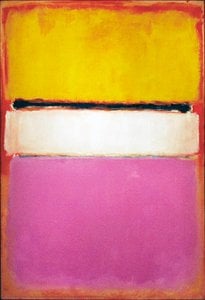
    • White Center (1957)
Explorez des œuvres d'art classées par thèmes, styles et caractéristiques.