Aperçu en situation Aperçu en RA Acheter la peinture faite à la main Passer au format image numérique Partager
Détails Guide Ajouter aux favoris Télécharger Articles similaires Radiographie Voir le diaporama Statistiques

Fantasy at Dawn [obverse]

Born Markus Yakovlevich Rothkowitz in Dvinsk (now Riga), Latvia, in 1903, Mark Rothko’s artistic vision was shaped by early experiences of displacement and loss—his family's emigration to Portland, Oregon, after Jacob Rothkowitz’s death—and a lifelong preoccupation with existential questions. He championed Color Field painting as a means of conveying profound emotional states.

Explorez la vie et l'œuvre de Mark Rothko (1903-1970), un peintre essentiel de l'Expressionnisme Abstrait. Découvrez ses icônes peintures à champs de couleurs, sa profondeur émotionnelle et son impact durable sur l'art moderne. #ExpressionnismeAbstrait #PeintureChampDeCouleurs #Rothko #HistoiredeLArt

Giclées et impressions d'art

Impressions giclées ou sur toile de qualité musée, avec une production rapide et des finitions au choix. ( Acheter la peinture faite à la main Passer au format image numérique)

P118B $10
P118H $10
P118W $10
P438Z $10
P508JH $12
P508YH $12
P805H $10
P805Z $10
P919BZ $10
P919G $10
P919XJ $10
P959ZH $10
P968JZ $12
W106C $8
W218G $10
W218JH $8
W218Y $10
W307PJ $10
W316G $10
W316PJ $8
W316Y $10
W398PJ $8
W4111J $10
W500HY $15
W500JH $15
W692G $12
W849H $8
W940BG $15
W953PJ $8

Format standard
personnalisé
CM
INCH

Choisissez parmi nos formats prédéfinis qui respectent les proportions originales de l’œuvre.

largeur
hauteur

Vous pouvez saisir vos propres dimensions pour vous adapter à un cadre ou à un espace spécifique. Si la taille sélectionnée ne correspond pas aux proportions de l'image originale, nous recadrerons l'œuvre ou étendrons l'image avec une bordure en miroir ou une couleur unie. Une maquette numérique vous sera envoyée pour approbation avant le début de la production.
Veuillez noter que l'aperçu à l'écran ne reflète pas le recadrage ou l'extension réelle. Seule la maquette montrera avec précision la composition finale.
Bien que des tailles personnalisées soient disponibles, nous vous recommandons de choisir une dimension dans la liste prédéfinie afin de préserver les proportions originales.

Livraison dans le monde entier () en 2 semaines au lieu des 4/5 semaines habituelles. (20 septembre)

why_choose_icon
Livraison express gratuite dans le monde entier

why_choose_icon
Toile de lin de haute qualité
why_choose_icon
Assurance transport complète
why_choose_icon
Garantie de remboursement des droits de douane
why_choose_icon
Garantie de fidélité des couleurs
why_choose_icon
Garantie de retour de 100 jours (uniquement en cas de défaut)
why_choose_icon
Garantie de remboursement à 100%
why_choose_icon
Tarifs dégressifs sur quantité

Prix total

$ 68

reproduction

Fantasy at Dawn [obverse]

Giclées et impressions d'art

Format de la reproduction

-

Prix total final

$ 68

L'essentiel de l'œuvre

  • Medium: Oil on canvas
  • Notable elements or techniques: Color Field painting
  • Movement: Abstract Expressionism
  • Influences: Existentialism
  • Subject or theme: Ethereal Landscape
  • Year: 1946
  • Location: National Gallery of Art

Quiz d'art

Chaque question ne comporte qu'une seule bonne réponse.

Question 1:
What artistic movement is Mark Rothko’s "Fantasy at Dawn \[obverse]" primarily associated with?
Question 2:
According to the description, what is the dominant color scheme of the painting?
Question 3:
What does the image description suggest about the chairs in the scene?
Question 4:
In what year was "Fantasy at Dawn \[obverse]" created?
Question 5:
The biographical information mentions that Mark Rothko experienced significant loss early in his life due to the death of his father. How did this experience influence his artistic vision?

A Fragmented Dawn: Exploring Mark Rothko’s ‘Fantasy at Dawn’

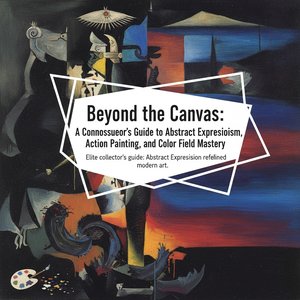
The painting “Fantasy at Dawn” by Mark Rothko stands as a testament to the artist's masterful manipulation of color and form, encapsulating the profound anxieties and spiritual yearning characteristic of his era. Executed in 1946, this monumental canvas – measuring 130 x 82 cm – immediately commands attention with its deceptively simple composition: two rectangular blocks of crimson and white pigment stacked vertically against a backdrop of muted hues. Yet, within this apparent austerity lies an intricate tapestry of emotional resonance and artistic innovation.
  • Subject Matter & Composition: Rothko deliberately eschewed representational imagery, opting instead for abstract forms that prioritize feeling over depiction. The central figure’s decapitated head—a jarring visual element—serves not as a literal portrait but as a symbol of vulnerability and loss, mirroring the artist's own experiences of familial bereavement and displacement. The positioning of the chairs reinforces this sense of emptiness and solitude, suggesting an introspective gaze directed inward rather than outward.
  • Style & Technique: Rothko’s signature technique—known as “color field painting”—involved applying thin layers of pigment to canvas in a manner that creates hazy, luminous surfaces. This process relies heavily on optical blending and subtle gradations of color, resulting in an ethereal quality that transcends mere visual perception. The deliberate avoidance of brushstrokes contributes to the artwork’s meditative atmosphere, inviting contemplation and fostering a connection with the viewer's subconscious.

Historical Context: The Shadow of War and Existential Uncertainty

“Fantasy at Dawn” emerged during the tumultuous years immediately following World War II. The devastation wrought by the conflict instilled a pervasive sense of disillusionment and questioned established moral frameworks. Rothko’s artistic explorations responded directly to this intellectual climate, delving into themes of trauma, mortality, and the elusive quest for spiritual solace. His work aligns with broader movements in postwar art—such as Surrealism and Expressionism—that sought to grapple with the psychological impact of historical upheaval.
  • Symbolism & Color Palette: The crimson hue dominates the left block, representing passion, vitality, and perhaps even primal instinct. Simultaneously, it evokes associations with blood – a potent symbol of sacrifice and suffering—reflecting Rothko’s preoccupation with themes of loss and vulnerability. The white pigment on the right contrasts sharply with the crimson, symbolizing purity, transcendence, and spiritual illumination. However, its luminosity is subdued, hinting at an unattainable ideal and underscoring the inherent difficulties in confronting existential anxieties.

Emotional Impact & Artistic Legacy

Ultimately, “Fantasy at Dawn” succeeds in conveying a profound emotional depth that transcends stylistic conventions. The artwork’s hypnotic color scheme induces a state of contemplative stillness, prompting viewers to confront their own inner landscapes and grapple with fundamental questions about human existence. Rothko's influence extends far beyond the canvas itself, shaping subsequent generations of artists who embraced abstraction as a vehicle for expressing emotion and exploring psychological complexities. It remains an enduring emblem of postwar art’s commitment to confronting difficult truths and fostering a deeper understanding of the human condition.

Biographie de l'artiste

enfance et influences

Mark Rothko (Marcus Rothkowitz), un artiste américain renommé, est né le 25 septembre 1903 à Dvinsk, Lettonie. Sa famille a immigré aux États-Unis lorsqu'il n’avait que dix ans. Ce changement culturel aura influencé plus tard son style artistique.

évolution artistique

Le travail précoce de Rothko était caractérisé par l’expressionnisme abstrait, un style qui mettait l’accent sur le processus de création d'une œuvre d'art plutôt que sur le produit final. Ses peintures, telles que No. 18 (1948) et Untitled (1948), mettaient en valeur son approche unique de la couleur et de la forme.
  • Champ de couleurs : L'utilisation par Rothko de champs de couleurs audacieux et rectangulaires, souvent en contraste saisissant les uns avec les autres, créait une sensation de profondeur et d’émotion.
  • Structure organique : Ses peintures semblaient respirer la vie, comme si les couleurs étaient des entités vivantes.

œuvres notables et expositions

  • No. 10 (1950), une peinture qui marquait un tournant significatif dans le style de Rothko, est maintenant au sein de la collection du Museum of Modern Art.
  • Les Seagram Murals, une série de peintures commandées pour le restaurant Four Seasons, mettait en valeur la capacité de Rothko à adapter son style à différents environnements.
  • No. 3 (1950), une peinture qui exemplifie l'utilisation par Rothko de champs de couleurs audacieux et rectangulaires.

vie tardive et héritage

La vie de Rothko a été marquée par des luttes contre la santé mentale et un mariage tumultueux. Il est décédé le 25 février 1970, à l'âge de 66 ans. Malgré ses difficultés, Rothko a laissé une marque indélébile sur le monde de l’art. Ochre et rouge sur rouge (champ de couleurs), une peinture qui met en valeur l'approche unique de Rothko à la couleur, peut être trouvée dans la collection WahooArt.com. La page Wikipédia de Mark Rothko fournit des informations supplémentaires sur sa vie et son style artistique.
Mark Rothko

Mark Rothko

1903 - 1970 , Lettonie

En bref

  • Artistes Influents:
    • Sigmund Freud
    • Marcel Proust
  • Date De Décès: 25 février 1970
  • Date De Naissance: 25 septembre 1903
  • Influences Artistiques:
    • Minimalisme
    • Art contemporain
  • Lieu De Naissance: Daugavpils, Lettonie
  • Mouvement Artistique: Expressionnisme abstrait
  • Nationalité: Américaine
  • Nom Complet: Mark Rothko / Marcus Rothkowitz
  • Œuvres Notables:
    • No. 18 (1948)
    • No. 10 (1950)
    • Murals Seagram
    • White Center (1957)
Explorez des œuvres d'art classées par thèmes, styles et caractéristiques.