Aperçu en situationAperçu en situation Visualiser en RAVisualiser en RA Commander l'impression Commander l'impressionAcheter l'image haute résolution Acheter l'image haute résolution EnvoyerEnvoyer
Détails de l'œuvreDétails de l'œuvre Ajouter aux favoris Ajouter aux favoris TéléchargerTélécharger Articles similairesArticles similaires RadiographieRadiographie DiaporamaDiaporama

Crucifixion

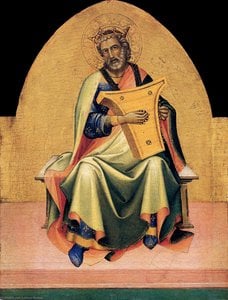
Lorenzo Monaco’s Crucifixion depicts Jesus Christ on the cross, capturing profound sorrow and spiritual contemplation. Inspired by Giotto and illuminated manuscripts, this 1405 painting showcases Monaco's distinctive style and reflects monastic devotion.

Découvrez Lorenzo Monaco (1370-1425), peintre siennois mariant élégance gothique et innovation de la Renaissance. Manuscrits illuminés & art spirituel à explorer.

Reproduction à l'huile faite à la main

Huile sur toile peinte à la main, avec cadre et dimensions personnalisés, réalisée sur commande par nos artistes. (Commander l'impression Commander l'impressionAcheter l'image haute résolution Acheter l'image haute résolution)

P118B $10
P118H $10
P118W $10
P438Z $10
P508JH $12
P508YH $12
P805H $10
P805Z $10
P919BZ $10
P919G $10
P919XJ $10
P959ZH $10
P968JZ $12
W106C $8
W218G $10
W218JH $8
W218Y $10
W307PJ $10
W316G $10
W316PJ $8
W316Y $10
W398PJ $8
W4111J $10
W500HY $15
W500JH $15
W692G $12
W849H $8
W940BG $15
W953PJ $8

Format standard
sur mesure
CM
INCH

Choisissez parmi nos formats prédéfinis qui respectent les proportions originales de l’œuvre.

largeur
hauteur

Vous pouvez saisir vos propres dimensions pour l'adapter à un cadre ou à un espace spécifique. Si la taille sélectionnée ne correspond pas aux proportions de l'image d'origine, nous recadrerons l'œuvre ou prolongerons la peinture avec des éléments peints à la main supplémentaires. Une maquette numérique vous sera envoyée pour approbation avant le début de la production.
Veuillez noter que l'aperçu à l'écran ne reflète pas le recadrage ou l'extension réels. Seule la maquette montrera fidèlement la composition finale.
Bien que des tailles personnalisées soient disponibles, nous vous recommandons de sélectionner une dimension dans la liste prédéfinie afin de préserver les proportions d'origine.

Exemples de personnalisation possibles : remplacer un visage par la photo du client ; ajouter un animal de compagnie (par exemple, remplacer un chat par un chien) ; inclure un message caché en arrière-plan ; modifier le paysage ou les éléments de l'arrière-plan.
Après la commande, l’équipe WahooArt.com contactera le client par e-mail pour recueillir ses instructions et lui fournira une maquette d’aperçu

Livraison dans le monde entier () en 3 à 4 semaines au lieu des 5 semaines habituelles. (7 septembre). Aucun compromis sur la qualité.

why_choose_icon
Livraison express gratuite dans le monde entier
why_choose_icon
Toile de lin de qualité supérieure
why_choose_icon
Assurance transport complète
why_choose_icon
Garantie de remboursement des droits de douane
why_choose_icon
Garantie de fidélité des couleurs
why_choose_icon
Politique de retour de 100 jours (uniquement en cas de défaut)
why_choose_icon
Garantie de remboursement à 100%
why_choose_icon
Offre de tarifs dégressifs

Prix total

$ 272

reproduction

Crucifixion

Technique de reproduction

Format de la reproduction

-

Prix total

$ 272

Informations clés

  • Title: Crucifixion
  • Influences: Giotto
  • Year: 1405
  • Artistic style: Meditative realism
  • Dimensions: 50 x 27 cm
  • Subject or theme: Religious iconography
  • Movement: Early Renaissance

Quiz d'art

Chaque question ne comporte qu'une seule bonne réponse.

Question 1:
What is the primary subject matter depicted in “Crucifixion”?
Question 2:
Lorenzo Monaco painted “Crucifixion” during which artistic period?
Question 3:
What technique was predominantly employed by Lorenzo Monaco in creating this artwork?
Question 4:
The painting’s atmosphere is characterized as:
Question 5:
According to the image description, what are some of the figures present in “Crucifixion”?

The Soul of Sorrow: Analyzing Lorenzo Monaco’s Crucifixion

Lorenzo Monaco's Crucifixion stands as a cornerstone of Quattrocento Florentine art—a testament not merely to artistic skill but to profound spiritual contemplation. Painted circa 1405, this monumental panel transcends mere depiction; it strives to convey the agonizing beauty inherent in Christ’s suffering and serves as an enduring emblem of Christian faith. Examining its stylistic choices, technical execution, and historical resonance illuminates Monaco's masterful grasp of both humanist ideals and medieval devotional traditions.
  • Style: Monaco’s Crucifixion embodies a refined Gothic sensibility tempered by nascent Renaissance principles. While retaining the solemn grandeur characteristic of his predecessors—particularly Giotto—the painting exhibits an unprecedented level of naturalism, evident in the subtly rendered musculature of Christ and the expressive drapery that clings to his body. This careful attention to anatomical detail distinguishes it from earlier depictions where Christ was often stylized as a symbolic figure rather than a human being experiencing palpable pain.
  • Technique: Monaco employed tempera on panel—a technique favored by Florentine artists of the period—renowned for its luminosity and durability. The pigment binders, derived from egg yolk, achieved astonishing brilliance through meticulous layering and glazing, capturing the ethereal quality of divine light that permeates the scene. Furthermore, Monaco’s masterful use of chiaroscuro—the dramatic interplay between light and shadow—intensifies the emotional impact of the composition, emphasizing Christ's vulnerability against a backdrop of solemn majesty.

Historical Context: Bridging Gothic Legacy & Renaissance Awakening
  • The painting emerged during a period of significant artistic ferment in Florence, marking a decisive break from the stylistic conventions of the preceding century. The humanist movement championed by figures like Leonardo Bruni and Marsilio Ficino exerted considerable influence on artists’ thinking, prompting them to explore human psychology and emotion with newfound sensitivity. Monaco's Crucifixion reflects this intellectual shift—moving beyond purely symbolic representations toward an earnest attempt to portray Christ’s suffering as a profoundly human experience.
  • Moreover, the panel was created in response to the fervent piety of its patrons—members of the influential Medici family who commissioned religious art to adorn their palaces and express their devotion to God. This patronage fostered a climate of artistic innovation while upholding traditional Christian iconography, resulting in a synthesis that exemplifies the best qualities of Florentine Renaissance culture.
  • Symbolism: Echoes of Medieval Devotion & Humanist Insight
  • The Crucifixion’s symbolism is rich and multilayered—drawing upon centuries of Christian tradition while simultaneously articulating humanist concerns about mortality and redemption. The central figure embodies Christ's sacrifice for humanity, symbolizing divine compassion and unwavering faith. The outstretched arms represent humility and acceptance of God’s will—a gesture that resonates with the medieval emphasis on penitence and spiritual aspiration.
  • However, Monaco subtly incorporates humanist elements into the composition—such as the realistic depiction of Christ's musculature—underscoring the human dimension of suffering. This juxtaposition of theological symbolism and anatomical observation reflects the Renaissance’s commitment to observing nature with scientific rigor—a departure from medieval art that nonetheless retains its core message of spiritual transcendence.
  • Emotional Impact: Capturing Agony & Reverence
  • Monaco's Crucifixion succeeds in evoking a visceral response from the viewer—capturing the agony of Christ’s torment while simultaneously inspiring reverence for his divine sacrifice. The artist achieves this feat through masterful use of color, texture, and composition—creating an immersive experience that draws upon the viewer’s empathy and intellect.
  • Ultimately, Monaco's Crucifixion remains a profoundly moving testament to human faith and artistic genius—a masterpiece that continues to inspire contemplation and admiration centuries after its creation. Its enduring power lies in its ability to convey both the sorrowful beauty of suffering and the sublime grandeur of divine compassion—themes that resonate across cultures and epochs.
  • This painting exemplifies the Renaissance’s quest for artistic excellence while honoring medieval spiritual traditions. It is a remarkable achievement of tempera technique, demonstrating Monaco's profound understanding of human anatomy and emotion.


    Biographie de l'artiste

    Première Vie et Formation

    • Né: Sienne, Italie (c. 1370)
    • Décédé: c. 1425
    • On en sait peu sur la première vie de Lorenzo Monaco, à l'exception du fait qu'il a été apprenti à Florence.
    • Il a été influencé par les œuvres de Giotto et de ses disciples, Spinello Aretino et Agnolo Gaddi. Cette exposition a façonné son développement artistique.

    Carrière Artistique et Style

    • En 1390, Lorenzo est entré au monastère camaldule de Santa Maria degli Angeli, devenant connu sous le nom de « Laurent l'ermite ».
    • Ses premières œuvres (années 1390) montrent une forte influence du style gothique international, aux côtés d'influences provenant de Lorenzo Ghiberti et Gherardo Starnina.
    • Le style de Monaco se caractérise par :
      • Un linéaire tendu
      • Une gamme chromatique froide initialement
      • Plus tard, une adoption d'éléments gothiques internationaux
      • Des figures allongées avec des draperies sinueuses
      • Des bords nets et des couleurs vives (or et lapis-lazuli)
      • Des gestes suggérés et un sentiment d'espace minimisé
    • Il dépeint constamment des images avec une forte valeur spirituelle, souvent détachées du réalisme.

    Œuvres Majeures

    • Pietà : Exposée à la Galleria dell'Accademia, Florence – Démontre une ligne nerveuse et une tension émotionnelle.
    • Coronation de la Vierge : Aujourd’hui à l’Uffizi – Présente un grand nombre de saints aux formes sinueuses et aux couleurs brillantes.
    • Polyptyque de Monteoliveto : À la Galleria dell'Accademia – Expose une spiritualité qui préfigure Fra Angelico.
    • Adoration des Mages (1420-1422) : Les raccourcis apparaissent surréalistes en raison de l’absence de perspective géométrique, mais maintiennent une grande qualité picturale.
    • Histoires de la Vierge dans la chapelle Bartolini Salimbeni : L'une de ses rares fresques.

    Influences et Héritage

    • Le travail de Monaco a été influencé par Giotto, Spinello Aretino, Agnolo Gaddi, Lorenzo Ghiberti et Gherardo Starnina.
    • Il est resté largement inaffecté par les innovations de Masaccio et Filippo Brunelleschi, maintenant son style distinctif.
    • Giorgio Vasari a inclus une biographie de Monaco dans ses « Vies », notant sa mort d'une infection non identifiée.
    • Malgré des informations biographiques limitées, les contributions de Lorenzo Monaco à l’art gothique tardif-renaissance précoce sont significatives. Son mélange unique de styles et son objectif spirituel ont laissé un impact durable sur les artistes ultérieurs.

    Signification Historique

    • Considéré comme le dernier important représentant du style Giotto avant la révolution de la Renaissance.
    • A comblé le fossé entre les traditions gothiques tardives et les principes artistiques émergents de la Renaissance.
    • Son insistance sur la spiritualité et les formes stylisées représentent une esthétique distincte dans la peinture florentine.
    Lorenzo Monaco

    Lorenzo Monaco

    1370 - 1425 , Italie

    L'essentiel de l'artiste

    • Artistic Movement Or Style: Gothique tardif-Renaissance
    • Artists Or Movements Influenced By This Artist:
      • Masaccio
      • Brunelleschi
    • Artists Who Influenced This Artist:
      • Giotto
      • Spinello Aretino
      • Agnolo Gaddi
    • Date De Décès: c. 1425
    • Date De Naissance: c. 1370
    • Full Name: Lorenzo Monaco
    • Lieu De Naissance: Sienne, Italie
    • Nationalité: Italienne
    • Notable Artworks:
      • Pietà
      • Coronation de la Vierge
      • Adoration des Mages
    Explorez des œuvres d'art classées par thèmes, styles et caractéristiques.