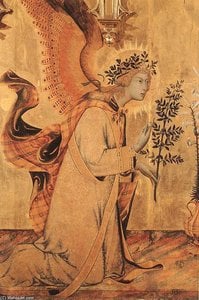
The Annunciation and Two Saints: A Gothic Masterpiece of Siena
Within the hallowed halls of the Galleria degli Uffizi in Florence resides “The Annunciation and Two Saints,” a painting that transcends mere religious depiction, blossoming into a profound meditation on grace, divine communication, and the burgeoning beauty of the International Gothic style. Attributed primarily to Lippo Memmi, yet undeniably shaped by his brother-in-law Simone Martini’s influence, this tempera-on-wood artwork from 1333 offers a captivating glimpse into the artistic heart of Siena during a pivotal moment in European art history.
The scene unfolds with an almost startling immediacy. The Archangel Gabriel, rendered with exquisite detail and a subtle dynamism, appears before the Virgin Mary, his gesture conveying both urgency and reverence. His wings are spread wide, capturing a fleeting moment of celestial arrival, while his face reflects a solemnity tempered by compassion. Mary’s reaction is equally compelling – a mixture of surprise, apprehension, and acceptance, subtly conveyed through her posture and the delicate curve of her hand.
Beyond the central figures, the painting is rich with symbolic detail. The two flanking saints, Saint Margaret and Saint Ansanus, are presented in circular medallions, their presence adding layers of devotional significance to the composition. The use of lapis lazuli – a notoriously expensive pigment imported from distant lands – within these medallions speaks volumes about the commission’s prestige and the collective wealth invested in this sacred artwork. The meticulous application of gold leaf, lavishly adorning the throne, the drapery, and the halos, further emphasizes the painting's opulence and its connection to divine splendor.
A Symphony of Line and Color: Artistic Technique
Lippo Memmi’s mastery is evident in the painting’s remarkably refined linear quality. The artist skillfully employs a technique reminiscent of illuminated manuscripts from the French court, characterized by elongated figures, intricate detailing, and a sense of ethereal beauty. This “northern European” style, as art historians often describe it, stands apart from the more robust and voluminous forms prevalent in Florentine painting at the time. The meticulous rendering of textures – the velvet folds of Mary’s robe, the polished marble floor, the delicate feathers of the angel’s wings – demonstrates Memmi's exceptional technical skill.
The color palette is equally sophisticated, dominated by rich blues and golds that evoke a sense of sacred light. The use of lapis lazuli, alongside other precious pigments, creates an atmosphere of otherworldly radiance. Notice how the artist subtly employs chiaroscuro – the interplay of light and shadow – to sculpt the figures and create depth within the composition. This masterful manipulation of color and light not only enhances the painting’s visual appeal but also contributes to its emotional impact.
Historical Context: Siena's Artistic Renaissance
“The Annunciation and Two Saints” is deeply rooted in the artistic and religious landscape of Siena during the 14th century. It was created as part of a larger cycle of altarpieces commissioned to honor the city’s patron saints, reflecting Siena’s civic pride and its commitment to religious devotion. This commission coincided with a period of remarkable artistic flourishing in Siena, marked by the emergence of talented artists like Memmi and Martini.
The painting's style—a harmonious blend of Byzantine influences, French manuscript illumination, and emerging Gothic trends—reflects the cosmopolitan nature of Sienese art at the time. It’s a testament to the city’s role as a major center for artistic production and exchange. The work was intended to be displayed in the chapel of Saint Ansanus within Siena Cathedral, serving as a focal point for worship and a symbol of the city's faith.
Symbolism and Emotional Resonance
Beyond its technical brilliance and historical significance, “The Annunciation and Two Saints” resonates with profound symbolic meaning. The scene itself—the announcement of Jesus’ birth—is one of the most iconic narratives in Christian art. However, Memmi elevates this familiar story through his masterful depiction of human emotion and spiritual grace.
Mary's reaction – a mixture of surprise, humility, and acceptance – speaks to the profound mystery of faith. The angel’s gesture embodies divine communication and the promise of salvation. The painting invites viewers to contemplate not only the miraculous event depicted but also the deeper themes of hope, love, and redemption. It is a work that continues to inspire awe and reverence centuries after its creation.
WahooArt offers meticulously crafted, hand-painted oil reproduction reproductions of this extraordinary masterpiece, allowing art enthusiasts to bring the beauty and spiritual depth of “The Annunciation and Two Saints” into their homes or studios. Experience the artistry firsthand – a timeless testament to the genius of Lippo Memmi and Simone Martini.



 Aperçu en situation
 Passer au format impression
 Partager
 Partager
 Détails
 Guide
Guide

 Télécharger
 Articles similaires
 Radiographie
 Voir le diaporama
 Statistiques


 Afficher la suite