CONSEIL EN ART GRATUIT

x
Commander l'impression Commander l'impressionAcheter l'image haute résolution Acheter l'image haute résolution PartagerPartager
DétailsDétails Ajouter aux favoris Ajouter aux favoris TéléchargerTélécharger Articles similairesArticles similaires RadiographieRadiographie DiaporamaDiaporama

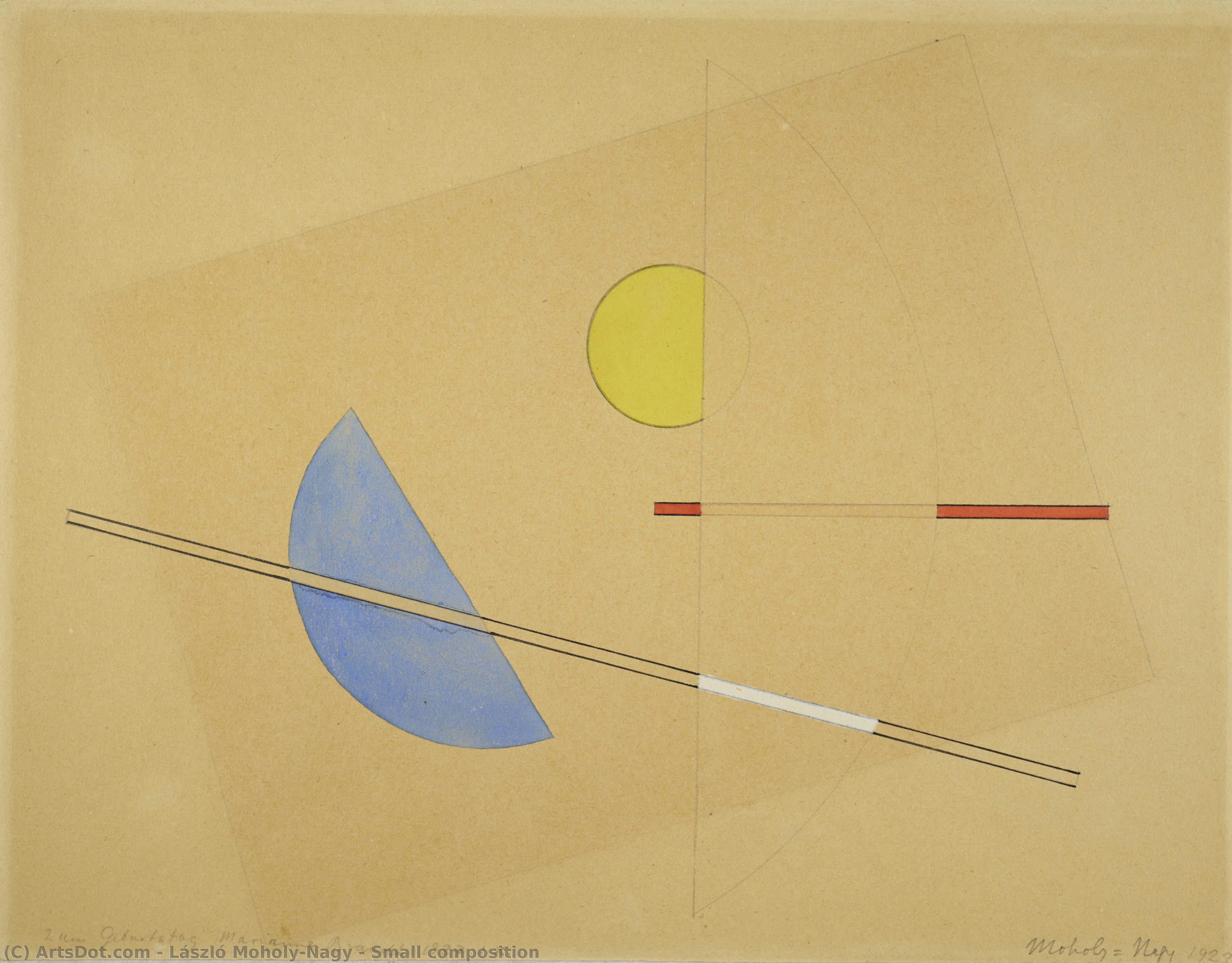
Small composition

Explore Laszlo Moholy Nagy’s ‘Small Composition’ (1923). A dynamic geometric abstraction in watercolor/gouache, influenced by Constructivism & Suprematism. Discover its balanced forms and unique style.

Pionnier de l'art moderne ! László Moholy-Nagy (1895-1946), peintre, photographe & maître du Bauhaus, fusionne art et technologie avec vision novatrice.

Reproduction à l'huile faite à la main

Huile sur toile peinte à la main, avec cadre et dimensions personnalisés, réalisée sur commande par nos artistes.

P118B $10
P118H $10
P118W $10
P438Z $10
P508JH $12
P508YH $12
P805H $10
P805Z $10
P919BZ $10
P919G $10
P919XJ $10
P959ZH $10
P968JZ $12
W106C $8
W218G $10
W218JH $8
W218Y $10
W307PJ $10
W316G $10
W316PJ $8
W316Y $10
W398PJ $8
W4111J $10
W500HY $15
W500JH $15
W692G $12
W849H $8
W940BG $15
W953PJ $8

Standard
custom
CM
INCH

Choisissez parmi nos formats prédéfinis qui respectent les proportions originales de l’œuvre.

largeur
hauteur

Vous pouvez saisir vos propres dimensions pour l'adapter à un cadre ou à un espace spécifique. Si la taille sélectionnée ne correspond pas aux proportions de l'image d'origine, nous recadrerons l'œuvre ou prolongerons la peinture avec des éléments peints à la main supplémentaires. Une maquette numérique vous sera envoyée pour approbation avant le début de la production.
Veuillez noter que l'aperçu à l'écran ne reflète pas le recadrage ou l'extension réels. Seule la maquette montrera fidèlement la composition finale.
Bien que des tailles personnalisées soient disponibles, nous vous recommandons de sélectionner une dimension dans la liste prédéfinie afin de préserver les proportions d'origine.

Exemples de personnalisation : remplacer un visage par la photo du client ; ajouter un animal de compagnie (par exemple, remplacer un chat par un chien) ; inclure un message caché en arrière-plan ; modifier le paysage ou les éléments de l'arrière-plan.
Après la commande, l’équipe WahooArt.com contactera le client par e-mail pour obtenir ses instructions et lui fournira une maquette d’aperçu.

Livraison dans le monde entier () en 3 à 4 semaines au lieu des 5 semaines habituelles. (2 juillet). Aucune concession sur la qualité.

why_choose_icon
Livraison express gratuite dans le monde entier
why_choose_icon
Toile de lin de haute qualité
why_choose_icon
Assurance transport complète
why_choose_icon
Garantie de remboursement des frais de douane
why_choose_icon
Garantie de fidélité des couleurs
why_choose_icon
Politique de retour de 60 jours (uniquement en cas de défaut)
why_choose_icon
Garantie de remboursement à 100%
why_choose_icon
Réduction sur les achats groupés

Prix total

-

reproduction

Small composition

Technique de reproduction

Format de reproduction

-

Prix total final

-

En bref

  • Influences:
    • Bauhaus
    • Modernism
  • Notable elements: Geometric abstraction
  • Artist: László Moholy-Nagy
  • Medium: Watercolor/gouache
  • Subject or theme: Compositional study
  • Dimensions: 24 x 30 cm
  • Year: 1923

Quiz d'art

Chaque question ne comporte qu'une seule bonne réponse.

Question 1:
What artistic movement is most closely associated with László Moholy-Nagy’s ‘Small Composition’?
Question 2:
The color blue in 'Small Composition' represents which element?
Question 3:
In what year was ‘Small Composition’ created?
Question 4:
What material is most likely used in the creation of ‘Small Composition’?
Question 5:
László Moholy-Nagy was a pioneer in which field besides painting?

Description de l'œuvre

László Moholy-Nagy’s “Small Composition”: A Pioneering Leap into Abstract Form

“Small Composition,” created in 1923 by László Moholy-Nagy, isn't merely a painting; it’s a crystallized moment of artistic revolution. Emerging from the fertile ground of Constructivism and deeply influenced by the radical experimentation of the Bauhaus school, this work represents a pivotal shift in how artists approached representation – moving beyond mimetic accuracy to explore the inherent power of form, line, and color as autonomous elements of visual language. The piece, rendered in watercolor and gouache on paper, immediately captivates with its dynamic geometry, a carefully orchestrated balance between order and chaos that speaks volumes about the artist’s evolving philosophy.

At first glance, “Small Composition” appears strikingly abstract, yet closer inspection reveals a sophisticated system of relationships. A central axis line bisects the canvas, acting as a silent guide to the placement of several key shapes: a vibrant blue crescent moon, a bold yellow circle, and a striking red rectangle. These aren’t simply decorative elements; they are deliberately positioned to create a sense of spatial depth and visual tension. The overlapping forms suggest movement and interaction, inviting the viewer to actively engage with the composition and decipher its underlying structure. The flatness of the medium – watercolor and gouache on paper – further emphasizes this interplay of form, creating an illusion of three-dimensionality through careful layering and line weight.

The Bauhaus Legacy and the Embrace of Technology

To fully appreciate “Small Composition,” it’s crucial to understand its context within the broader artistic landscape of the early 20th century. Moholy-Nagy's time at the Bauhaus in Weimar was transformative, exposing him to a radical new approach to design that sought to integrate art with industry and technology. The Bauhaus championed functionalism, believing that art should serve a purpose beyond mere aesthetics – it should improve people’s lives through innovative design solutions. This ethos is powerfully reflected in “Small Composition,” which can be seen as an exploration of the principles of geometric abstraction, a technique favored by Constructivist artists like Piet Mondrian and Kazimir Malevich.

However, Moholy-Nagy wasn't simply replicating these movements; he was pushing them forward. He recognized the potential of photography – a relatively new medium at the time – to challenge traditional notions of representation. His early experiments with photograms (photographs created without a camera) demonstrated his fascination with chance and accident, suggesting that art could emerge from unexpected combinations of light and shadow. “Small Composition” can be interpreted as an extension of this exploration, utilizing the principles of photography—particularly its ability to capture fleeting moments and manipulate perception—to create a dynamic and visually arresting composition.

Symbolism and Emotional Resonance

While ostensibly abstract, "Small Composition" is rich in subtle symbolism. The dominant blue crescent moon could represent intuition or dreams, while the bold yellow circle might symbolize energy or enlightenment. The red rectangle, often associated with stability and structure, provides a grounding element to the composition. The deliberate use of color—each hue carefully chosen for its emotional impact—further enhances the work’s expressive power. It's not about depicting recognizable objects; it’s about evoking feelings and ideas through pure form and color.

Beyond these specific symbols, “Small Composition” resonates with a sense of dynamism and forward momentum. The intersecting lines and overlapping shapes create a feeling of movement and transformation, suggesting that the artwork is constantly evolving before the viewer's eyes. It’s a testament to Moholy-Nagy’s belief that art should be an active force—capable of stimulating thought, provoking emotion, and ultimately transforming our perception of the world.

A Reproduction Worthy of Display

Reproductions of “Small Composition” offer a remarkable opportunity to bring this pioneering artwork into any interior space. The vibrant colors and dynamic composition will add a touch of modern sophistication while simultaneously evoking the spirit of artistic innovation. Consider framing the reproduction in a minimalist style to allow the artwork’s inherent beauty to shine through, or opt for a bold statement piece that commands attention. “Small Composition” is more than just a print; it's an invitation to engage with the transformative power of abstract art.

Œuvres apparentées


Biographie de l'artiste

László Moholy-Nagy : Pionnier de l'Art Moderne et du Bauhaus

  • Né: Bacs-Kajala, Hongrie (1895)
  • Décédé: 1946

László Moholy-Nagy était un peintre, photographe, sculpteur et designer hongrois profondément influent. Il est surtout connu pour ses contributions significatives à l'école du Bauhaus et son travail pionnier dans le constructivisme, la typographie, la photographie et l'art cinétique. Sa philosophie artistique s'articulait autour de l'intégration de la technologie et de l'industrie dans les arts, plaidant pour une nouvelle vision de la créativité qui embrassait le monde moderne.

Première Vie et Influences

  • Premières années et famille: Né László Weisz au sein d'une famille juive à Bacsborsód, en Hongrie, il adopta plus tard le nom de Moholy-Nagy. Son cousin était le célèbre chef d'orchestre Sir Georg Solti.
  • Éducation et service militaire : Il étudia initialement le droit à Budapest avant de servir pendant la Première Guerre mondiale, où il subit une blessure grave. Cette période lui permit de découvrir les mouvements d'avant-garde grâce à des revues comme "Jelenkor" et au cercle “activiste” autour de la revue "Ma" de Lajos Kassák.
  • Formation artistique précoce : Après son service militaire, il étudia auprès du peintre fauviste hongrois Róbert Berény, démontrant un intérêt précoce pour les tendances artistiques modernes. Il soutint brièvement la République soviétique hongroise.
  • Influences clés : Moholy-Nagy a été fortement influencé par le constructivisme et le suprématisme, des mouvements qui mettaient l'accent sur l'abstraction géométrique et les matériaux industriels. Ces influences se manifestent dans ses œuvres ultérieures.

Les Années du Bauhaus et la "Nouvelle Vision"

  • Adhésion au Bauhaus : En 1923, Moholy-Nagy rejoint l'école du Bauhaus à Weimar, en Allemagne, où il co-enseigne initialement le cours préparatoire avec Josef Albers et finit par remplacer Johannes Itten comme chef de l'atelier de métal.
  • Changement de direction au Bauhaus : Son arrivée a marqué un passage de l'expressionnisme vers une approche plus constructiviste et axée sur le design, conformément aux objectifs initiaux de l'école.
  • "Nouvelle Vision" (Neues Sehen) : Moholy-Nagy est surtout connu pour avoir inventé le terme "Nouvelle Vision", qui saluait la capacité de la caméra à révéler des aspects de la réalité invisibles à l’œil humain. Ce concept sous-tendait ses expérimentations photographiques et artistiques.
  • Photogrammes : Il a ouvertement la voie à la technique du photogramme – créer des images en plaçant des objets directement sur du papier photosensible, sans appareil photo – démontrant des approches innovantes de la photographie.
  • Expérimentation avec les matériaux et la technologie : Moholy-Nagy a adopté des matériaux industriels tels que le métal, le plexiglas et l'éclairage électrique dans ses sculptures et ses designs, reflétant sa conviction en l'intégration de l'art et de la technologie.

Réalisations Majeures et Innovations

  • "Lichtrequisit einer elektrischen bühne" (Modulateur d’espace lumineux) : Réalisée en 1930, cette sculpture cinétique utilisait des pièces mobiles et projetait de la lumière pour créer des motifs dynamiques sur les surfaces environnantes, considérée comme une précurseur à la fois de l'art cinétique et de l'art lumière.
  • Photographie et film : Son travail photographique explorait l’abstraction, la texture et le mouvement, utilisant souvent des techniques non conventionnelles telles que le photomontage et un éclairage expérimental. Il s’est également aventuré dans le cinéma.
  • Héritage pédagogique : En tant qu'enseignant au Bauhaus puis au New Bauhaus à Chicago (qu'il a fondé), Moholy-Nagy a profondément influencé des générations d'artistes et de designers.
  • Décoration de théâtre et publicité : Au-delà de sa pratique artistique, il concevait des décors pour des productions théâtrales et créait des campagnes publicitaires, démontrant une polyvalence qui reflétait sa philosophie du design.

Signification Historique

  • Pionnier de l'art moderne : László Moholy-Nagy est une figure essentielle de l'art moderne du XXe siècle, reliant la peinture, la sculpture, la photographie et le design industriel.
  • Influence sur le design Bauhaus : Ses contributions à l'école du Bauhaus ont été essentielles pour façonner son programme d’études et son esthétique, laissant un impact durable sur l’éducation au design dans le monde entier.
  • Défenseur de l'intégration technologique : L'insistance de Moholy-Nagy sur l'intégration de la technologie dans l'art a anticipé de nombreux développements dans les pratiques artistiques contemporaines.
  • Héritage de la "Nouvelle Vision" : Son concept de « Nouvelle Vision » continue d’inspirer les artistes et les photographes à explorer les possibilités de perception et de représentation grâce à des techniques innovantes.
László Moholy-Nagy

László Moholy-Nagy

1895 - 1946 , Hongrie

En bref

  • Artistes Influents: ['Robert Berény']
  • Date De Décès: 24 novembre 1946
  • Date De Naissance: 20 juillet 1895
  • Influence Sur Les Artistes:
    • Marianne Brandt
    • György Kepes
    • Andor Weininger
  • Lieu De Naissance: Bacs-Kajala, Hongrie
  • Mouvement Artistique: Constructivisme, Bauhaus
  • Nationalité: Hongrois
  • Nom Complet: László Moholy-Nagy
  • Oeuvres Notables:
    • Petite composition
    • Fleur
    • Psychose collective
    • Sans titre
    • La tempête
    • Photogramme