x
Aperçu en situationAperçu en situation Visualiser en RAVisualiser en RA Commander l'impression Commander l'impressionAcheter l'image haute résolution Acheter l'image haute résolution EnvoyerEnvoyer
Détails de l'œuvreDétails de l'œuvre Ajouter aux favoris Ajouter aux favoris TéléchargerTélécharger Articles similairesArticles similaires RadiographieRadiographie DiaporamaDiaporama

Untitled (D2X9SR)

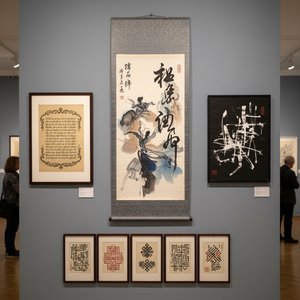
Exquisite Edo-period kakemono by Kubo Shunman (801). A serene scroll featuring crane & calligraphy in aged paper. Explore Japanese minimalism, symbolism & artistic mastery.

Explore the vibrant ukiyo-e prints & novels of Kubo Shunman (1757-1820), a prolific Japanese artist known for bold colors, beauty, and poetic works.

Reproduction à l'huile faite à la main

Huile sur toile peinte à la main, avec cadre et dimensions personnalisés, réalisée sur commande par nos artistes. (Commander l'impression Commander l'impressionAcheter l'image haute résolution Acheter l'image haute résolution)

Format standard
sur mesure
CM
INCH

Choisissez parmi nos formats prédéfinis qui respectent les proportions originales de l’œuvre.

largeur
hauteur

Vous pouvez saisir vos propres dimensions pour l'adapter à un cadre ou à un espace spécifique. Si la taille sélectionnée ne correspond pas aux proportions de l'image d'origine, nous recadrerons l'œuvre ou prolongerons la peinture avec des éléments peints à la main supplémentaires. Une maquette numérique vous sera envoyée pour approbation avant le début de la production.
Veuillez noter que l'aperçu à l'écran ne reflète pas le recadrage ou l'extension réels. Seule la maquette montrera fidèlement la composition finale.
Bien que des tailles personnalisées soient disponibles, nous vous recommandons de sélectionner une dimension dans la liste prédéfinie afin de préserver les proportions d'origine.

Exemples de personnalisation possibles : remplacer un visage par la photo du client ; ajouter un animal de compagnie (par exemple, remplacer un chat par un chien) ; inclure un message caché en arrière-plan ; modifier le paysage ou les éléments de l'arrière-plan.
Après la commande, l’équipe WahooArt.com contactera le client par e-mail pour recueillir ses instructions et lui fournira une maquette d’aperçu

Livraison dans le monde entier () en 3 à 4 semaines au lieu des 5 semaines habituelles. (6 septembre). Aucun compromis sur la qualité.

why_choose_icon
Livraison express gratuite dans le monde entier

why_choose_icon
Toile de lin de qualité supérieure
why_choose_icon
Assurance transport complète
why_choose_icon
Garantie de remboursement des droits de douane
why_choose_icon
Garantie de fidélité des couleurs
why_choose_icon
Politique de retour de 60 jours (uniquement en cas de défaut)
why_choose_icon
Garantie de remboursement à 100%
why_choose_icon
Offre de tarifs dégressifs

Prix total

$ 272

reproduction

Untitled (D2X9SR)

Technique de reproduction

Format de la reproduction

-

Prix total

$ 272


Biographie de l'artiste

The Poetic Soul of the Edo Brush

In the twilight of the Edo period, a singular figure emerged whose artistry bridged the gap between the visual and the literary, weaving together the delicate threads of ukiyo-e printmaking with the profound depths of Japanese poetry. Kubo Shunman (c. 1757 – 1820) was far more than a mere illustrator; he was a master of emotional resonance, a man whose brush captured not just the physical world, but the very breath of the era's cultural spirit. Born with the surname Kubo or Kubota and given the name Yasubei, his early life was marked by the hardship of being orphaned, a circumstance that perhaps deepened the sensitivity and contemplative melancholy often found in his later works.

Shunman’s artistic journey began under the tutelage of Katori Nahiko, a scholar and painter whose influence instilled in the young apprentice the foundational principles of Nanga painting. From Nahiko, Shunman learned to observe nature with a meticulous, reverent eye, finding harmony between the human spirit and the natural landscape. This early training in the serene, scholarly traditions of Chinese-inspired landscapes provided a sophisticated counterpoint to his later mastery of the more urban, vibrant ukiyo-e style. As his talent matured, he sought further refinement under the renowned Kitao Shigemasa, a titan of the ukiyo-e world. This apprenticeship allowed Shunman to adopt the graceful, elongated figures and elegant poses characteristic of the Kiyonaga school, blending classical landscape sensibilities with the fashionable beauty of contemporary Edo life.

A Symphony of Color and Verse

The true brilliance of Shunman lay in his ability to inhabit multiple creative identities simultaneously. He was a polymath of the pleasure-seeking world, moving seamlessly between the roles of painter, gesaku novelist, and poet. Under various literary pseudonyms—such as Nandaka Shiran for his prose and Hitofushi Chitsue for his kyōka poetry—he contributed to the vibrant intellectual life of his time. His participation in prestigious poetry circles like Bakuro-ren and Rokujuen ensured that his visual art was always deeply informed by a rhythmic, lyrical sensibility. To look upon a Shunman print is to read a poem; every line of a kimono or curve of a willow branch carries the weight of a whispered verse.

During the Tenmei and Kansei eras, Shunman became a leading figure in the beni-girai, or "red-hating," aesthetic movement. This stylistic trend deliberately eschewed the garish, vibrant reds that had dominated earlier prints, opting instead for a more sophisticated palette of blues, greens, and subtle earth tones. Shunman embraced this restraint with unparalleled skill, using understated compositions to evoke profound moods. His works often featured:

  • Subtle Chromaticism: A mastery of cool tones that captured the misty atmosphere of twilight or the crisp clarity of a spring morning.
  • Symbolic Landscapes: The use of natural elements, such as the flight of a hototogisu (cuckoo) against a full moon, to represent fleeting moments of beauty and longing.
  • Refined Portraiture: Bijin-ga (pictures of beautiful women) that moved beyond mere fashion to convey an inner, psychological grace.

Legacy of the Left-Handed Master

Shunman’s prolific output left an indelible mark on the history of Japanese art. As one of the most productive painters within the Kitao school, his influence stretched across genres, from intricate book illustrations to grander paintings and even votive plaques. He often utilized art names like Shōsadō or Sashōdō, which incorporated characters meaning "left," a subtle nod to his left-handedness that added a touch of personal character to his professional identity. His ability to navigate the complex social strata of Edo—from the scholarly elite to the vibrant urban masses—allowed him to create art that was both intellectually stimulating and widely accessible.

Today, the works of Kubo Shunman are celebrated not just for their technical perfection, but for their role in defining the aesthetic elegance of late 18th-century Japan. He remains a testament to the power of interdisciplinary mastery, reminding us that the highest form of art occurs when the eye, the hand, and the poetic heart act in perfect unison. His legacy lives on in every delicate shade of blue and every carefully placed brushstroke that continues to evoke the ephemeral beauty of a world long passed.

kubo shunman

kubo shunman

1757 - 1820

L'essentiel de l'artiste

  • Artistic Movement Or Style: Ukiyo-e
  • Artists Or Movements Influenced By This Artist: ['Torii Kiyonaga']
  • Artists Who Influenced This Artist:
    • Katori Nahiko
    • Kitao Shigemasa
  • Date Of Death: 1820
  • Full Name: Kubo Shunman
  • Nationality: Japanese
  • Notable Artworks: ['History of Kamakura']
  • Place Of Birth: Japan