CONSEIL EN ART GRATUIT

x
Commander la reproduction Commander la reproductionAcheter l'image haute résolution Acheter l'image haute résolution PartagerPartager
Détails de l'œuvreDétails de l'œuvre Ajouter aux favoris Ajouter aux favoris TéléchargerTélécharger Articles similairesArticles similaires RadiographieRadiographie DiaporamaDiaporama

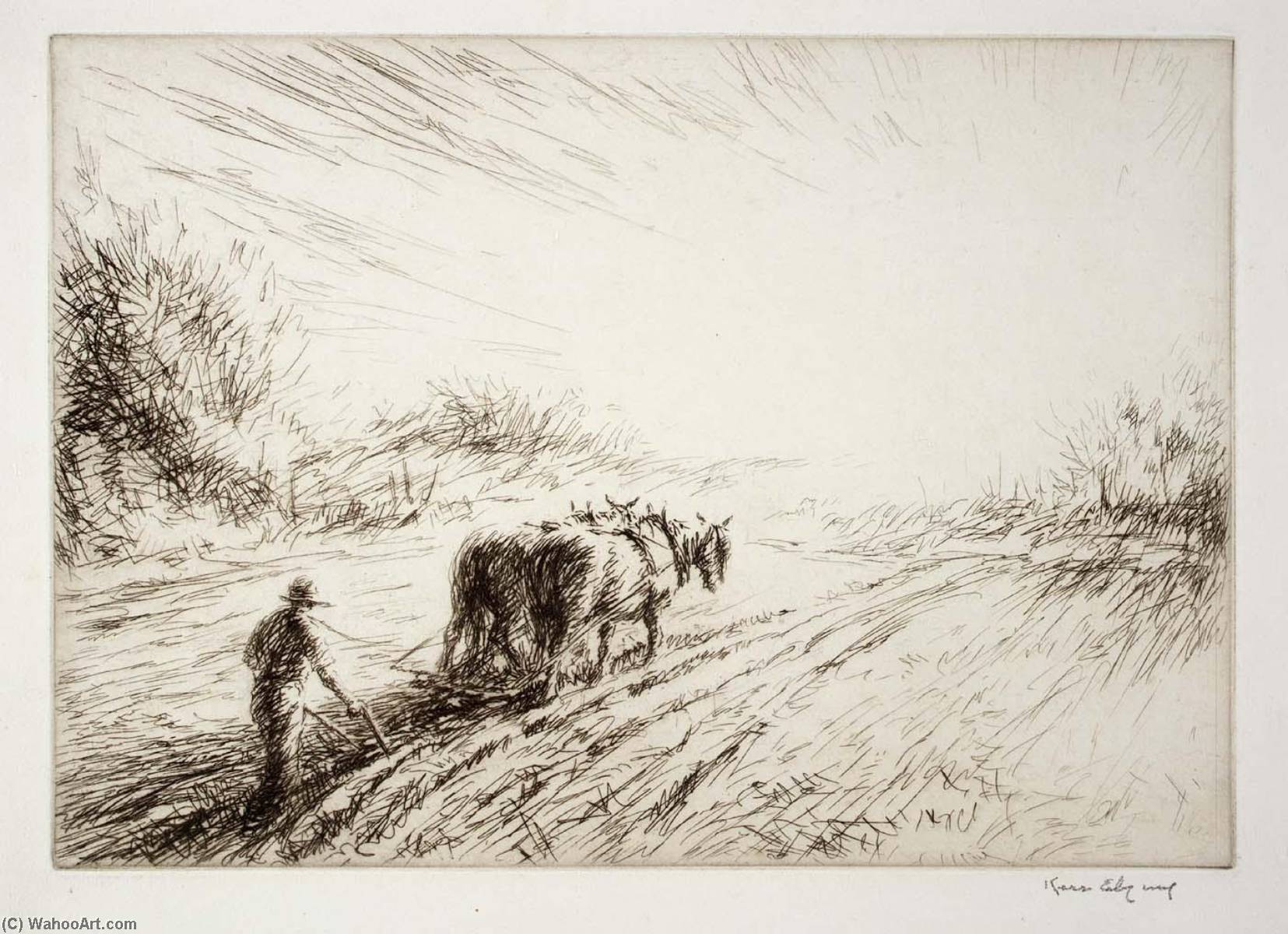
Ploughing

  • Date de création1930
  • Dimensions17.0 x 25.0 cm

Explore the evocative landscapes & cultural scenes of Kerr Eby’s art – a war artist documenting global experiences through powerful paintings & sketches.

Giclée / Impression d'art

Impression giclée ou sur toile de qualité musée, avec une production rapide et des finitions au choix.

Standard
custom
CM
INCH

Choisissez parmi nos formats prédéfinis qui respectent les proportions originales de l’œuvre.

largeur
hauteur

Vous pouvez saisir vos propres dimensions pour vous adapter à un cadre ou à un espace spécifique. Si la taille sélectionnée ne correspond pas aux proportions de l'image originale, nous recadrerons l'œuvre ou étendrons l'image avec une bordure en miroir ou une couleur unie. Une maquette numérique vous sera envoyée pour approbation avant le début de la production.
Veuillez noter que l'aperçu à l'écran ne reflète pas le recadrage ou l'extension réelle. Seule la maquette montrera avec précision la composition finale.
Bien que des tailles personnalisées soient disponibles, nous vous recommandons de choisir une dimension dans la liste prédéfinie afin de préserver les proportions originales.

Livraison dans le monde entier () en 2 semaines au lieu des 4/5 semaines habituelles. (4 juillet)

why_choose_icon
Livraison express gratuite dans le monde entier

why_choose_icon
Toile de lin de haute qualité
why_choose_icon
Assurance transport complète
why_choose_icon
Garantie de remboursement des frais de douane
why_choose_icon
Garantie de fidélité des couleurs
why_choose_icon
Politique de retour de 60 jours (uniquement en cas de défaut)
why_choose_icon
Garantie de remboursement à 100%
why_choose_icon
Réduction sur les achats groupés

Prix total

-

reproduction

Ploughing

Giclée / Impression d'art

Format de reproduction

-

Prix total final

-

Description de l'œuvre

The painting Ploughing by Kerr Eby is a remarkable etching that showcases the artist's ability to convey a sense of serenity and tranquility. Created in 1930, this piece measures 17 x 25 cm and is currently housed at the Smithsonian American Art Museum. The etching is quite detailed and captures the essence of a traditional farming scene, with a man plowing a field with several cows behind him.

The Artist's Background

Kerr Eby was a Canadian illustrator best known for his renderings of soldiers in combat in the First and Second World Wars. He is held in a similar regard to Harvey Dunn and the other famous illustrators dispatched by the government to cover the First World War. Eby received formal art training at Pratt Institute and the Art Students League of New York.

The Painting's Significance

The painting Ploughing is a significant work in Kerr Eby's oeuvre, as it showcases his ability to capture the beauty of everyday life. The etching is a testament to the artist's skill and attention to detail, with intricate lines and textures that bring the scene to life. For more information on Kerr Eby and his works, visit Kerr Eby: Ploughing or Kerr Eby's Wikipedia page. Key Features of the Painting:
  • The etching measures 17 x 25 cm and is created using the etching technique.
  • The painting is housed at the Smithsonian American Art Museum in the United States.
  • The scene depicts a man plowing a field with several cows behind him, showcasing traditional farming practices.

The painting Ploughing by Kerr Eby is a captivating work that showcases the artist's skill and attention to detail. With its intricate lines and textures, this etching is a testament to the beauty of everyday life and the importance of traditional farming practices. For handmade oil painting reproductions of Kerr Eby's works, visit WahooArt.com.

Biographie de l'artiste

Kerr Eby: A Chronicle of War and Witness

Born in the bustling metropolis of Tokyo in 1889, Kerr Eby’s artistic journey began far from the familiar landscapes of his Canadian heritage. His parents, devout Methodist missionaries, instilled within him a deep appreciation for observation and a keen eye for detail – qualities that would prove instrumental in shaping his distinctive style. Early life in Canada provided a grounding in traditional art training, but it was his relocation to New York City in 1907 that truly ignited his artistic ambitions. He enrolled at Pratt Institute and later honed his skills at the prestigious Art Students League, immersing himself in the vibrant artistic community of the city.

Eby’s formative years were marked by a fascination with printmaking, an art form he mastered through apprenticeships and hands-on experience. He secured a position at the American Lithographic Company, gaining invaluable insight into the technical intricacies of etching and lithography – skills that would later become central to his artistic practice. Crucially, he benefited from the influence of his uncle, Frederick Keppel Sr., a prominent art dealer who championed the recognition of prints as a legitimate form of fine art within America. This support, combined with his own dedication, allowed Eby to develop a remarkable technical proficiency and a unique visual language.

The Crucible of War: Illustrations from the Front

World War I marked a pivotal moment in Kerr Eby’s career, transforming him from a promising artist into a chronicler of war. Enlisting in the U.S. Army in 1917, he initially served as an ambulance driver and later as a camoufleur – a vital role that demanded both artistic skill and an intimate understanding of military strategy. It was during this period that Eby began to document the realities of combat through sketches and drawings, capturing not just the grand sweep of battles but also the quiet moments of human experience amidst the chaos. Unlike many official war artists who focused on heroic depictions, Eby sought to portray the war with unflinching honesty, revealing both its brutality and its profound impact on the lives of ordinary soldiers.

His early sketches, initially intended for personal records, were eventually compiled into a powerful collection titled *War*, published in 1936. This book, a testament to Eby’s artistic vision and his commitment to bearing witness, became an immediate sensation, capturing the attention of critics and collectors alike. It established him as one of the foremost illustrators of the war, alongside figures like Harvey Dunn, and cemented his reputation for portraying the horrors and humanity of conflict with remarkable sensitivity.

A Shift in Focus: Landscapes and Equestrian Portraits

Following the First World War, Eby experienced a period of reflection and artistic evolution. While he continued to occasionally revisit themes related to war, he increasingly turned his attention to landscapes and equestrian portraits – subjects that offered a respite from the grim realities of combat. His landscape paintings, characterized by their luminous quality and evocative atmosphere, drew inspiration from the Luminist movement, emphasizing light, color, and the beauty of nature. Simultaneously, he returned to his earlier passion for portraiture, producing stunning depictions of horses and riders – works that showcased his exceptional technical skill and his ability to capture the essence of his subjects.

This shift in focus did not diminish Eby’s artistic integrity; rather, it allowed him to explore new avenues of expression while retaining the core values that had defined his work throughout his career. His equestrian portraits, for example, often carried a subtle undercurrent of melancholy, reflecting his experiences during the war and his deep understanding of human suffering.

Legacy and Historical Significance

Kerr Eby’s life was tragically cut short in 1946, succumbing to complications from a tropical disease contracted while documenting the fighting in Bougainville. Despite his untimely death, his artistic legacy endures as a powerful testament to the role of art in bearing witness to historical events. His illustrations from World War I and II remain invaluable documents, offering a rare glimpse into the experiences of soldiers on the front lines. His work is held in numerous museums across America, including the Smithsonian American Art Museum, a testament to its enduring artistic merit and historical significance.

Eby’s ability to capture both the physical realities of war and the emotional toll it exacted on individuals has cemented his place as one of the most important illustrators of the 20th century. His art serves not only as a record of history but also as a poignant reminder of the human cost of conflict – a message that remains profoundly relevant today.

kerr eby

kerr eby

1889 - 1946

En bref

  • Artistic Movement Or Style: War artist, Luminist influence
  • Artists Or Movements Influenced By This Artist:
    • American Realism
    • Luminist Tradition
  • Artists Who Influenced This Artist:
    • Harvey Dunn
    • John Henry Twachtman
  • Date Of Birth: 1889-10-19
  • Date Of Death: 1946-11-18
  • Full Name: Kerr Eby
  • Nationality: Canadian
  • Notable Artworks:
    • Two Bridges
    • Brittany Farm
    • Spring in Cornwall
  • Place Of Birth: Tokyo, Japan