A Moment of Quietude: Unveiling Hokusai’s “Totsuka”
Katsushika Hokusai's "Totsuka," a captivating woodblock print from his celebrated “Fifty-Three Stations of the Tokaido” series, isn’t merely a depiction of a roadside scene; it’s a distillation of Japanese life and a profound meditation on human connection. Created around 1806 during the Edo period, this image transports us to a fleeting moment along the ancient trade route between Kyoto and Edo (modern-day Tokyo), capturing an ordinary encounter imbued with a subtle grace and quiet dignity.
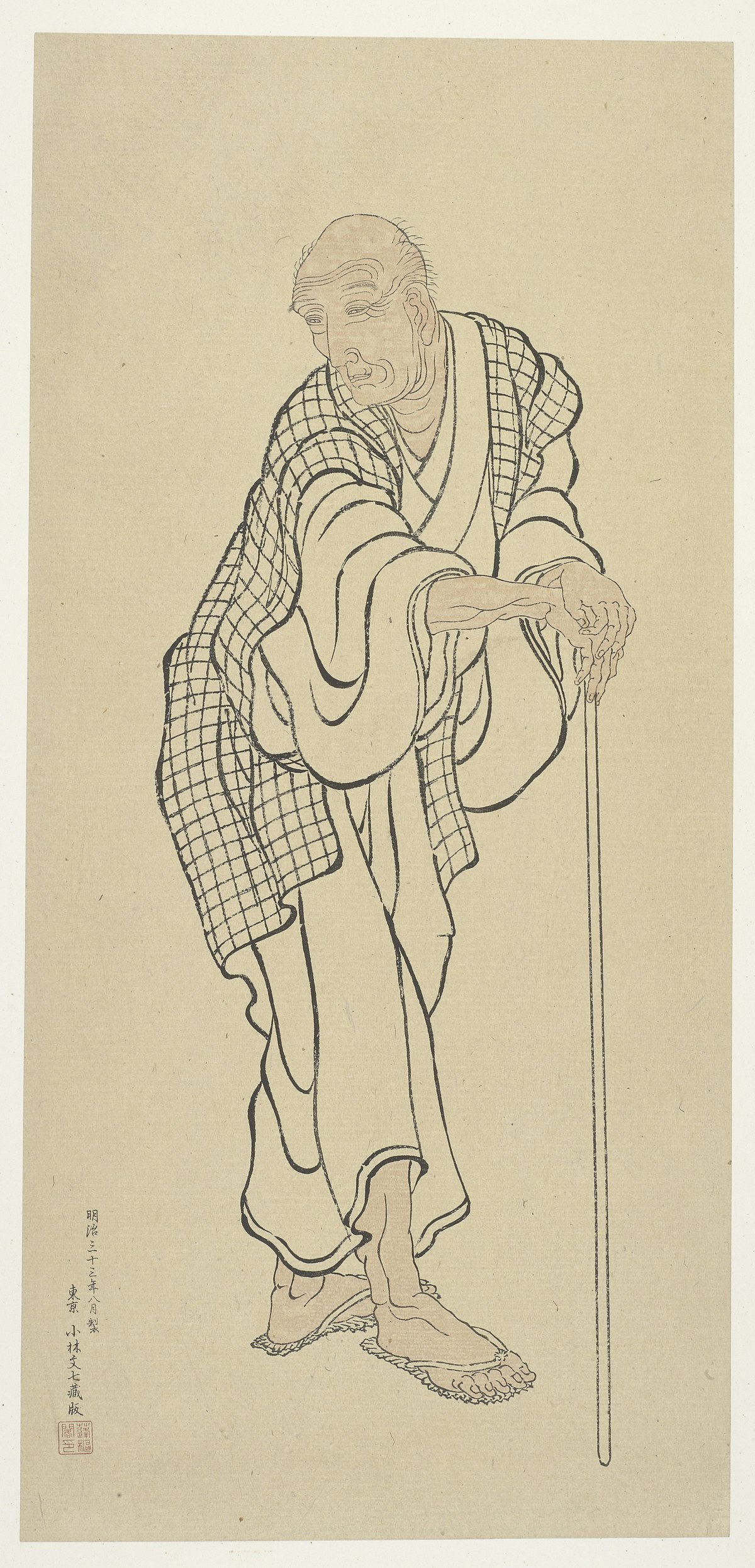
The scene unfolds in a simple, yet meticulously rendered, landscape. A lone traveler, clad in the dark robes of a pilgrim, pauses beside a woman beckoning him to rest. She stands near a small wooden structure – likely a roadside inn or teahouse – her posture suggesting both invitation and a gentle warning against haste. The composition is remarkably balanced; the receding lines of the path draw the eye into the distance, while the figures are positioned with an almost theatrical precision. Hokusai’s masterful use of negative space—the expansive sky and surrounding fields—amplifies the sense of solitude and contemplation.
The Art of Ukiyo-e: Technique and Style
“Totsuka” exemplifies the hallmarks of ukiyo-e, a genre that flourished during the Edo period. Hokusai, a true innovator within this tradition, pushed its boundaries with his dynamic compositions, vibrant colors (achieved through Prussian blue pigment imported from Europe), and bold use of perspective. The print is executed in sumi-ink and color woodblock printing, a painstaking process involving multiple blocks carved to create the various tones and textures. Notice the subtle gradations of color—the delicate washes of blue sky, the earthy browns of the landscape, and the rich reds and greens of the woman’s robes—all achieved through careful layering and precise carving.
Hokusai's signature style is evident in his loose, expressive brushstrokes and his ability to capture fleeting moments with remarkable immediacy. He wasn’t simply documenting a scene; he was imbuing it with emotion and atmosphere. The print’s slightly flattened perspective—a characteristic of ukiyo-e—creates an illusion of depth while maintaining a sense of intimacy.
A Window into Edo Life and Symbolism
“Totsuka” offers a valuable glimpse into the daily life of people traveling along the Tokaido highway. The pilgrim’s attire, the simple structure offering shelter, and the woman's gesture all speak to the realities of travel during this period. The woman herself is often interpreted as a symbol of hospitality and guidance—a reminder that even in a world of constant movement, human connection remains essential. The umbrella she holds, a common sight in Japan, adds to the scene’s sense of practicality and everyday life.
Furthermore, Hokusai's work reflects broader cultural themes. The series as a whole was commissioned to celebrate the opening of the Tokaido road, but it also served as a vehicle for showcasing the beauty of Japan’s landscapes and its people. The print’s composition subtly evokes the concept of *wabi-sabi*, an aesthetic philosophy that embraces imperfection, transience, and simplicity—qualities deeply rooted in Japanese culture.
The Enduring Legacy
Katsushika Hokusai's “Totsuka” is more than just a beautiful print; it’s a testament to the artist’s genius and his profound understanding of human nature. Its enduring appeal lies in its ability to evoke a sense of quiet contemplation, reminding us of the beauty that can be found in everyday moments. Reproductions of this iconic work continue to captivate audiences worldwide, offering a window into a rich cultural heritage and a timeless meditation on life’s simple pleasures.



 Aperçu en situation
 Passer au format impression
 Partager
 Partager
 Détails
 Guide
Guide

 Télécharger
 Articles similaires
 Radiographie
 Voir le diaporama
 Statistiques

 Afficher la suite






































 L'option verre n'est disponible que pour les dimensions inférieures à 110 cm.


