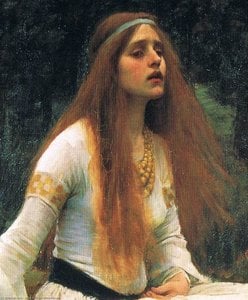
Pre-Raphaelite Romanticism
 1917Renaissance
 90.0 x 144.0 cm
 Auckland Art Gallery Toi o Tāmaki
Acquérez une image numérique haute résolution et optimisée, d'une qualité bien supérieure à l'aperçu en ligne.
Chaque fichier est méticuleusement préparé par nos spécialistes internes à l'aide d'outils avancés et d'une retouche manuelle experte. Nous garantissons que chaque image possède une clarté exceptionnelle, une précision des couleurs irréprochable et un niveau de détail fin.
Le fichier final est livré par e-mail sous 72 heures, optimisé pour une utilisation immédiate dans des contextes professionnels, éditoriaux et d'impression. Il offre la même qualité de confiance que celle utilisée par les plus grands studios de création, éditeurs et galeries.
Téléchargez un fichier haute résolution pour votre usage personnel, l'impression et vos projets créatifs. ( Commander l'impression Commander la reproduction peinte à la main)
En choisissant WahooArt.com, vous n'obtenez pas seulement une simple image : vous recevez une œuvre numérique sublimée avec professionnalisme, conçue avec précision et accompagnée d'une garantie de satisfaction. Voici tout ce qui accompagne automatiquement votre commande :

Votre fichier d'image numérique haute résolution vous sera envoyé par e-mail sous 72 heures après votre commande — prêt à un usage immédiat.

Votre œuvre d'art bénéficie d'une optimisation professionnelle grâce à des outils d'IA avancés et une retouche manuelle, garantissant un niveau maximal de détail, de clarté et de fidélité chromatique.

Vous avez accidentellement supprimé ou perdu votre fichier ? Pas d'inquiétude — nous vous le renverrons gratuitement, quand vous le souhaitez.

Profitez de votre œuvre d'art instantanément sans frais de douane ni de livraison — les téléchargements numériques sont toujours exonérés de taxes.

Nous garantissons que votre image numérique reproduit les couleurs de l'original aussi fidèlement que possible grâce à des outils professionnels et une gestion rigoureuse des couleurs.

Si vous n'êtes pas satisfait de votre image numérique, nous la retoucherons ou vous rembourserons 100% sous 100 jours — sans poser de questions.

Pas satisfait ? Obtenez un remboursement intégral dans les 100 jours suivant la réception de votre fichier numérique — sans aucune question posée.

Achetez 3 images, économisez 10% - Achetez 5, économisez 15% - Achetez 10+, économisez 20%. Idéal pour les projets créatifs, les galeries et les agences.
John Waterhouse’s “Lamia” is more than simply a depiction of a classical scene; it's an immersive experience, a carefully constructed tableau designed to evoke the very essence of Keats’s poem. Painted in 1917, this work exemplifies Waterhouse’s masterful command of Pre-Raphaelite aesthetics – a style characterized by meticulous detail, luminous color palettes, and a profound reverence for medieval and Renaissance art. The scene unfolds within the shadowed depths of an ancient Greek hillside, rendered with a sensitivity to light and atmosphere that borders on the ethereal. The knight's posture, rigid yet yearning, combined with Lamia’s melancholic grace, creates a palpable tension – a frozen moment of both desire and impending doom.
(Image of Lamia by John Waterhouse)
Waterhouse’s interpretation is deeply rooted in Keats's original poem. The title itself, “Lamia,” immediately establishes the subject – a monstrous woman transformed from human beauty through divine retribution. However, it’s not merely a retelling of the myth; Waterhouse subtly shifts the focus to the knight’s perspective. His intense gaze, directed solely at Lamia, speaks volumes about his captivated vulnerability. The positioning—kneeling before her, hand outstretched – suggests a willing surrender to an irresistible force, mirroring the poem's exploration of obsessive love and fatal attraction. The ‘evening dim at moth time,’ so vividly described by Keats, is meticulously recreated through Waterhouse’s use of muted tones and atmospheric haze, amplifying the sense of mystery and foreboding.
Waterhouse's technical skill is immediately apparent in the rendering of texture. The armor gleams with a realistic sheen, reflecting the light while simultaneously conveying its protective function. The fabric of Lamia’s garment – subtly textured to suggest scales – provides a crucial visual clue to her true nature, a delicate yet unsettling detail that avoids overt horror. The peacock hues within the ‘snake-skin’ draped around her are not merely decorative; they directly reference Keats's evocative description, grounding the painting firmly in the poem’s imagery and reinforcing the theme of transformation and corruption. The inclusion of the two swords adds a layer of narrative complexity, hinting at conflict and potential violence – a stark contrast to Lamia’s initial allure.
"Lamia" represents a pivotal moment in Waterhouse's artistic development. Initially working in the style of Lawrence Alma-Tadema, he gradually embraced the Pre-Raphaelite Brotherhood’s romantic vision, finding inspiration in Arthurian legends and medieval themes. This painting showcases his mastery of this style, demonstrating his ability to seamlessly blend classical subject matter with a distinctly Pre-Raphaelite sensibility. Waterhouse's "Lamia" remains a powerful example of the movement's influence, captivating viewers with its beauty, mystery, and profound exploration of human emotion – a testament to Waterhouse’s enduring artistic legacy.


1849 - 1917 , Italie

 Aperçu en situation
 Envoyer
 Partager
 Détails de l'œuvre

 Télécharger
 Articles similaires
 Radiographie
 Diaporama
 Lire la suite