Impressions giclées ou sur toile de qualité musée, avec une production rapide et des finitions au choix. ( Commander la reproduction peinte à la main Passer au format numérique)





























Choisissez parmi nos formats prédéfinis qui respectent les proportions originales de l’œuvre.

Saisissez la largeur et la hauteur souhaitées pour qu'elles s'adaptent à votre cadre ou à votre mur. Une impression peut être recadrée, mais jamais agrandie au-delà de l'image originale ; ainsi, un format de forme différente entraînera la perte d'une partie de l'image. Nous vous envoyons une maquette numérique pour approbation avant toute impression. L'image présentée sur cette page ne montre pas le recadrage réel — seule la maquette le permet.
Livraison dans le monde entier () en 2 semaines au lieu des 4/5 semaines habituelles. (11 novembre)
Cleopatra
Format de la reproduction
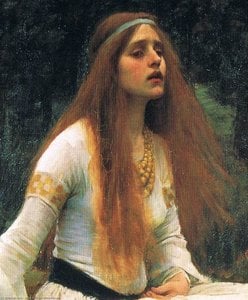
John William Waterhouse's "Cleopatra," painted in 1890, is more than just a depiction of an ancient queen; it’s a meticulously crafted meditation on power, intellect, and the enduring allure of antiquity. This remarkable work, rendered with the characteristic precision and romantic sensibility of the Pre-Raphaelite movement, invites viewers into a moment of profound introspection within the figure of Cleopatra VII Philopator, the last active ruler of the Ptolemaic Kingdom of Egypt. Waterhouse’s skill lies not merely in his technical mastery – evident in the delicate rendering of fabrics, the subtle play of light and shadow, and the remarkably lifelike portrayal of the subject's face – but also in his ability to imbue the scene with a palpable sense of atmosphere and emotional depth.
“Cleopatra” is deeply embedded within a rich tapestry of historical and mythological symbolism. The inclusion of elements such as the diadem – a potent symbol of royalty and divine authority – and the reference to Isis, the Egyptian goddess of magic and motherhood, firmly anchors the painting within Cleopatra’s world. Waterhouse deliberately evokes the grandeur of ancient Egypt while simultaneously presenting a portrait of a woman grappling with the complexities of her position. The book or manuscript in her lap suggests intellectual pursuits, aligning Cleopatra not just as a queen but also as a scholar and strategist – a deliberate subversion of traditional portrayals that often reduced her to a purely seductive figure.
John William Waterhouse (1849-1917) was a pivotal figure in the Pre-Raphaelite movement, known for his evocative depictions of mythology, literature, and historical subjects. Born in Rome to English parents, he spent his early years immersed in the beauty of Italian art and architecture, an experience that profoundly shaped his artistic sensibilities. “Cleopatra” exemplifies Waterhouse’s ability to seamlessly blend classical influences with a distinctly Romantic vision – a desire to capture not just the outward appearance of a subject but also their inner thoughts and emotions. The painting's meticulous detail and evocative atmosphere are hallmarks of Waterhouse’s oeuvre, solidifying his place as one of the Pre-Raphaelites’ most accomplished artists.
“Cleopatra” transcends a simple portrait; it is an exploration of power, vulnerability, and intellectual curiosity. The woman's contemplative expression invites viewers to share in her moment of reflection, prompting questions about leadership, legacy, and the burdens of responsibility. Waterhouse’s masterful technique and profound understanding of symbolism combine to create a work that continues to resonate with audiences today. A hand-painted reproduction of this iconic image offers an unparalleled opportunity to experience the beauty and intellectual depth of one of John William Waterhouse's most celebrated masterpieces.
La couleur dominante de «Cleopatra» de John William Waterhouse est le Putty (#d3cecc).
« Cleopatra » a été créé par John William Waterhouse dans le style Pre-Raphaelite Revival. L'artiste et le mouvement définissent la tradition de l'œuvre.
L'émotion Reflective de « Cleopatra » accompagne son style Pre-Raphaelite Revival.

Les racines de John William Waterhouse plongent dans l'atmosphère classique de Rome, où il naît en 1849 au sein d'une famille anglaise. Son père, William, et sa mère, Isabella, étaient tous deux peintres, faisant de la langue de l'art son premier héritage. Après son baptême le 6 avril 1849, ses premières années furent façonnées par cette immersion constante dans un foyer créatif. La famille finit par s'installer en Angleterre, dans le quartier de South Kensington à Londres, un emplacement privilégié qui le plaça à proximité immédiate des grandes collections de l'époque.
Sa formation académique débuta en 1870 lorsqu'il intégra les Royal Academy of Art Schools de Londres. Pourtant, ses premiers pas ne se firent pas dans la discipline qui allait plus tard définir sa carrière ; il commença ses études en tant qu'étudiant en sculpture. Cet intérêt initial pour la forme et la structure tridimensionnelle lui offrit un socle fondamental pour sa transition ultérieure vers la peinture. Il finit par détourner son regard du ciseau pour se consacrer à la toile, développant ainsi l'approche picturale qui allait caractériser toute sa vie professionnelle.
Travaillant principalement à l'huile, John William Waterhouse façonnait des toiles imprégnées d'une profonde sensibilité romantique. Son approche se distinguait par une technique méticuleuse, s'appuyant sur une compréhension intime du symbolisme pour insuffler du sens à ses œuvres. Il mettait souvent en scène des figures féminines puissantes et sensuelles au cœur de décors oniriques, créant une atmosphère à la fois introspective et lointaine. Ce sentiment de détachement était magistralement orchestré par un jeu de clair-obscur spécifique, qui permettait de définir les formes de ses sujets tout en préservant une qualité éthérée et presque surnaturelle.
La palette de l'artiste se caractérisait par des schémas de couleurs vibrantes et un intérêt marqué pour la luminosité de la peau. Il représentait fréquemment ses personnages avec une clarté de porcelaine, un détail qui contrastait avec la touche plus fluide et libre utilisée pour ses arrière-plans. Cette tension entre le rendu précis de la forme humaine et le traitement plus atmosphérique et vaporeux de l'environnement environnant contribuait à la nature onirique de ses compositions. Par ailleurs, sa maîtrise du drapé pour suggérer le mouvement et le poids ajoutait une présence physique tangible à ses figures mythologiques et historiques.
John William Waterhouse a puisé ses sujets les plus impérissables au cœur des pages de la littérature classique et romantique. S'inspirant largement des récits d'Homère et d'Ovide, il a souvent transcendé les mythes de la Grèce antique pour les transformer en véritables études visuelles de la forme féminine. Ses toiles se concentrent fréquemment sur les femmes issues de ces mythologies, les dépeignant dans des instants d'une profonde intensité psychologique. Une sensation récurrente de mélancolie et de désir émane de ces figures, une tristesse feutrée qui semble définir sa vision de l'expérience féminine. Il ne se contentait pas d'illustrer des histoires ; il cherchait à capturer l'état émotionnel intérieur des personnages qu'il mettait en scène.
L'influence de la poésie et du théâtre anglais a apporté une dimension secondaire, tout aussi essentielle, à ses intérêts thématiques. Il s'est tourné vers les œuvres de Tennyson et de Keats, trouvant dans leurs vers un paysage fertile pour sa sensibilité romantique. Les légendes arthuriennes occupaient également une place centrale dans son imaginaire, lui permettant d'explorer les thèmes de la chevalerie et de l'amour tragique. Ce penchant littéraire s'étendait jusqu'aux pièces de Shakespeare, où il puisait tension dramatique et profondeur historique. En fusionnant ces sources diverses, il a créé un langage visuel capable de jeter un pont entre l'Antiquité et le romantisme de l'ère victorienne.
La réputation de l'artiste s'est largement consolidée grâce à sa capacité singulière à capturer un personnage à l'instant précis où son destin bascule. Son tableau de 1888, La Dame de Shalott, demeure sa contribution la plus significative au style préraphaélite, traduisant les vers de Tennyson en un récit visuel de l'isolement. Ce penchant pour les moments dramatiques et littéraires s'est poursuivi jusqu'au tournant du siècle. En 1896, il produisit à la fois Hylas et les Nymphes et Pandore, des œuvres qui s'appuyaient lourdement sur la charge psychologique du mythe. Ces pièces mettaient souvent en scène une femme unique et sublime, évoluant dans un décor onirique, un motif récurrent qui a défini sa période la plus fructueuse.
Au fil de sa carrière, ses sujets se sont de plus en plus concentrés sur l'intersection entre le mythe et l'émotion humaine. L'année 1900 vit l'achèvement de Une Sirène, tandis qu'en 1903, Écho et Narcisse prena vie sur la toile. Ces œuvres utilisaient une touche de pinceau plus libre et un traitement spécifique de la lumière pour créer un sentiment d'intimité avec le sujet. Même durant ses dernières années, l'artiste a maintenu ce focus sur la figure féminine, comme en témoigne L'Âme de la Rose en 1908. Sa capacité à dépeindre la vie intérieure de ces figures, à travers l'expression subtile et le détail symbolique, lui a assuré une place de choix dans la scène artistique victorienne.
Au cours de ses dernières années, John William Waterhouse se sentit irrésistiblement attiré par les récits passionnés qui avaient autrefois défini les premiers préraphaélites. Cette fascination de la fin de sa vie se manifesta à travers des œuvres explorant les paysages émotionnels intenses, et souvent tragiques, des poètes qu'il admirait tant. Son regard se tourna vers l'amour profond et spiritualisé présent dans les œuvres de Dante Alighieri, comme en témoignent ses dernières études sur le Décaméron de Boccaccio. Même lorsque ses forces physiques commençaient à décliner, son pinceau continuait de naviguer avec maestria entre les complexités de la passion humaine et les profondeurs du mythe.
La santé de l'artiste finit par succomber à un cancer du foie. Il s'éteignit à Londres le 10 février 1917. Ses derniers élans créatifs laissèrent derrière eux plusieurs grandes toiles et des esquisses à l'huile qui reflétaient un engagement profond envers les thèmes dramatiques de sa jeunesse. Il fut inhumé au cimetière de Kensal Green, à Londres.
John William Waterhouse occupait une position unique sur la scène artistique de la fin du XIXe siècle, agissant comme un véritable pont entre les époques. Il a su porter avec succès les principes du mouvement préraphaélite jusqu'au XXe siècle, veillant à ce que sa sensibilité esthétique demeure pertinente alors que l'ère victorienne cédait la place à de nouveaux courants artistiques. Cette capacité à adapter ces idéaux a permis à son œuvre de maintenir une présence constante dans le paysage en pleine mutation de la peinture britannique.
Son ascension professionnelle au sein des institutions artistiques fut marquée par une reconnaissance constante. Nommé associé de la Royal Academy en 1885, une distinction qui précéda son élection en tant qu'académicien titulaire en 1895, son parcours témoigne de son prestige auprès de ses pairs et de son intégration parfaite dans les structures formelles de l'establishment artistique londonien. Au-delà de son propre atelier, il a contribué à la pérennité de son art en enseignant à la St. John's Wood Art School, transmettant son savoir technique à une nouvelle génération de peintres.
La nature intemporelle de ses sujets continue de susciter l'intérêt des collectionneurs et des historiens. Son attention portée à l'intériorité psychologique des figures mythologiques et littéraires demeure un pilier fondamental de sa réputation. Si sa popularité a connu des fluctuations au lendemain de la Première Guerre mondiale, le regain d'intérêt récent pour son approche singulière de la figure féminine et des décors historiques a réaffirmé l'importance cruciale de son œuvre dans l'étude de l'art victorien et préraphaélite.
La présence physique des toiles de John William Waterhouse se retrouve au cœur de plusieurs musées et galeries d'art majeurs à travers le Royaume-Uni et bien au-delà. À Londres, la Tate Britain abrite des œuvres qui témoignent de son engagement envers le style préraphaélite. Ses peintures font également partie des collections de la Manchester Art Gallery ainsi que de la Walker Art Gallery à Liverpool.
Au-delà des îles Britanniques, son influence s'étend jusqu'à l' Art Gallery of South Australia à Adélaïde. Ces diverses institutions préservent le témoignage visuel de son intérêt pour la mythologie et la littérature, sauvegardant les chefs-d'œuvre qui ont défini sa carrière à la fin du XIXe et au début du XXe siècle.

1849 - 1917 , Italie

Explorez l'éclat du mouvement préraphaélite et ses maîtres. Découvrez ces chefs-d'œuvre sur WahooArt.com.

Plongez dans la splendeur de la Chapelle Sixtine. Découvrez 25 chefs-d'œuvre de Michel-Ange et Botticelli, entre fresques divines et génie de la Renaissance. Trouvez l'inspiration pour votre décor avec nos reproductions d'art de qualité musée sur WahooArt.com.

Explorez 10 chefs-d'œuvre iconiques célébrant la figure féminine, de Klimt à Degas. Découvrez l'histoire et la technique de ces maîtres à travers nos reproductions d'art de qualité musée pour votre décoration. Explorez la collection complète sur WahooArt.com.

Explore the psychological depth of classical portraiture through masters like Rembrandt and Vermeer. Discover the power of the gaze today.
 Aperçu en situation
 Envoyer
 Partager
 Détails de l'œuvre
 Guide
Guide

 Télécharger l'image
 Articles similaires
 Radiographie
 Diaporama
 Questions et réponses
 Statistiques

 Lire la suite









 L'option verre n'est disponible que pour les dimensions inférieures à 110 cm.