Biographie de l'artiste
John William Waterhouse : Le Romantisme Préraphaélite et les Héroïnes Tragiques
Né à Rome en 1849, John William Waterhouse a incarné une époque où l'art se nourrissait de mythes, de légendes et d’une nostalgie pour un passé idéalisé. Fils de peintres anglais, il grandit dans un environnement artistique familial avant de s'installer à Londres, où il fréquente les écoles du Royal Academy. Ses premières œuvres témoignent d'une formation académique rigoureuse, influencée par des maîtres comme Alma-Tadema et Frederic Leighton, avec une prédilection pour les scènes classiques et l’allégorie. Cependant, c'est son adhésion au mouvement préraphaélite qui allait définir sa carrière et le propulser vers la renommée. Le préraphaélisme, avec son souci du détail, sa quête de vérité chromatique et son intérêt pour les thèmes littéraires et mythologiques, offrait à Waterhouse un terrain fertile pour exprimer sa sensibilité romantique.
L'Éclosion d'un Style Unique : Mythes, Littérature et Féminité
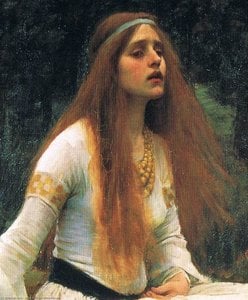
Waterhouse ne se contente pas de suivre les traces des préraphaélites ; il développe un style profondément personnel, caractérisé par une atmosphère onirique, une palette de couleurs riches et une attention particulière portée à la représentation féminine. Ses tableaux ne sont pas de simples illustrations littéraires; ils sont des explorations psychologiques subtiles, où chaque détail – le drapé d'une robe, l’expression d’un visage, la lumière qui baigne la scène – contribue à créer une ambiance chargée d'émotion et de mystère. Il puise son inspiration dans les œuvres de Shakespeare, Tennyson, Ovid et Keats, transformant ces récits en visions poétiques inoubliables. *La Dame de Shalott*, par exemple, n’est pas seulement l’adaptation du poème de Tennyson ; c'est une méditation sur le destin tragique d'une jeune femme prisonnière d'un sort funeste, dont la beauté éthérée contraste avec la menace qui pèse sur elle. Ses multiples versions de cette œuvre témoignent de son attachement à ce thème et de sa volonté constante d’explorer les différentes facettes de la mélancolie et du désespoir.
L'Héritage Préraphaélite : Ophélie, Ariane et au-delà
Au fil des années, Waterhouse s'est fait connaître pour ses représentations poignantes de femmes tragiques issues de la mythologie grecque et des légendes arthuriennes. *Ophélie*, avec sa beauté fragile et son regard perdu, est sans doute l’une de ses œuvres les plus emblématiques, capturant l'instant précis où la jeune femme sombre dans le fleuve, emportée par le chagrin d'amour. De même, *Ariane*, abandonnée sur Naxos par Thésée, incarne la solitude et la résignation face à un destin impitoyable. Ces tableaux ne sont pas de simples portraits; ce sont des études psychologiques profondes qui explorent les thèmes de l’amour perdu, du sacrifice et de la fragilité humaine. L'influence de Dante Gabriel Rossetti est palpable dans sa représentation des femmes, avec leur beauté mélancolique et leurs regards pénétrants. Cependant, Waterhouse transcende cette influence pour créer un univers visuel unique, où le romantisme se mêle à une certaine forme de réalisme psychologique.
Un Maître Oublié Retrouvé : L'Importance d'une Œuvre Romantique
Malgré son succès populaire et la reconnaissance de ses contemporains, John William Waterhouse a connu un certain oubli après sa mort en 1917. Ce n’est qu’au cours des dernières décennies que son œuvre a été redécouverte et réévaluée, suscitant un regain d'intérêt pour le romantisme britannique du XIXe siècle. Aujourd'hui, ses tableaux sont exposés dans les plus grands musées du monde, témoignant de la pérennité de son art et de sa capacité à émouvoir les spectateurs. Son héritage réside dans sa maîtrise technique, sa sensibilité poétique et sa capacité à créer des images intemporelles qui continuent de fasciner et d'inspirer. Il a su capturer l’essence du romantisme préraphaélite, en sublimant la beauté féminine et en explorant les profondeurs de l’âme humaine avec une délicatesse inégalée.



 Aperçu en situation
 Passer au format impression
 Partager
 Partager
 Détails

 Télécharger
 Articles similaires
 Radiographie
 Voir le diaporama
 Statistiques


 Afficher la suite






































 L'option verre n'est disponible que pour les dimensions inférieures à 110 cm.