Aperçu en situation Aperçu en RA Acheter la peinture faite à la main Passer au format image numérique Partager
Détails Guide imprimable Ajouter aux favoris Télécharger Articles similaires Radiographie Voir le diaporama Statistiques

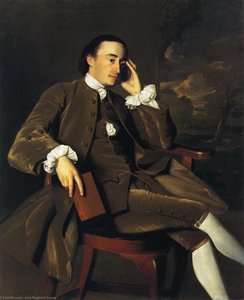
John A. Sidell

Experience Neoclassical elegance with John Vanderlyn's 1830 portrait of John A. Sidell, showcasing masterful detail and classical form; discover this American art masterpiece today.

Découvrez John Vanderlyn (1775-1852), pionnier américain du néoclassicisme, célèbre pour ses portraits et œuvres historiques comme "Le Débarquement de Colomb". Explorez son héritage !

Giclées et impressions d'art

Impressions giclées ou sur toile de qualité musée, avec une production rapide et des finitions au choix. ( Acheter la peinture faite à la main Passer au format image numérique)

Corner sample of the P118B picture frame: moulded polystyrene, 5 cm wide and 3 cm thick
P118B €10
Corner sample of the P118H picture frame: moulded polystyrene, 5 cm wide and 3 cm thick
P118H €10
Corner sample of the P118W picture frame: moulded polystyrene, 5 cm wide and 3 cm thick
P118W €10
Corner sample of the P438Z picture frame: moulded polystyrene, 5.5 cm wide and 3.5 cm thick
P438Z €10
Corner sample of the P508JH picture frame: moulded polystyrene, 7 cm wide and 3.5 cm thick
P508JH €12
Corner sample of the P508YH picture frame: moulded polystyrene, 7 cm wide and 3.5 cm thick
P508YH €12
Corner sample of the P805H picture frame: moulded polystyrene, 5 cm wide and 3.5 cm thick
P805H €10
Corner sample of the P805Z picture frame: moulded polystyrene, 5 cm wide and 3.5 cm thick
P805Z €10
Corner sample of the P919BZ picture frame: moulded polystyrene, 7 cm wide and 3.5 cm thick
P919BZ €10
Corner sample of the P919G picture frame: moulded polystyrene, 7 cm wide and 3.5 cm thick
P919G €10
Corner sample of the P919XJ picture frame: moulded polystyrene, 7 cm wide and 3.5 cm thick
P919XJ €10
Corner sample of the P959ZH picture frame: moulded polystyrene, 5 cm wide and 3 cm thick
P959ZH €10
Corner sample of the P968JZ picture frame: moulded polystyrene, 6 cm wide and 4 cm thick
P968JZ €12
Corner sample of the W106C picture frame: solid wood, 5 cm wide and 3 cm thick
W106C €8
Corner sample of the W218G picture frame: solid wood, 5 cm wide and 3 cm thick
W218G €10
Corner sample of the W218JH picture frame: solid wood, 5 cm wide and 3 cm thick
W218JH €8
Corner sample of the W218Y picture frame: solid wood, 5 cm wide and 3 cm thick
W218Y €10
Corner sample of the W307PJ picture frame: solid wood, 6 cm wide and 3 cm thick
W307PJ €10
Corner sample of the W316G picture frame: solid wood, 6 cm wide and 3 cm thick
W316G €10
Corner sample of the W316PJ picture frame: solid wood, 6 cm wide and 3 cm thick
W316PJ €8
Corner sample of the W316Y picture frame: solid wood, 6 cm wide and 3 cm thick
W316Y €10
Corner sample of the W398PJ picture frame: solid wood, 5 cm wide and 3 cm thick
W398PJ €8
Corner sample of the W4111J picture frame: solid wood, 6.5 cm wide and 3.5 cm thick
W4111J €10
Corner sample of the W500HY picture frame: solid wood, 7 cm wide and 5 cm thick
W500HY €15
Corner sample of the W500JH picture frame: solid wood, 7 cm wide and 5 cm thick
W500JH €15
Corner sample of the W692G picture frame: solid wood, 8 cm wide and 4 cm thick
W692G €12
Corner sample of the W849H picture frame: solid wood, 5 cm wide and 3 cm thick
W849H €8
Corner sample of the W940BG picture frame: solid wood, 7.5 cm wide and 4.5 cm thick
W940BG €15
Corner sample of the W953PJ picture frame: solid wood, 6 cm wide and 3.5 cm thick
W953PJ €8

Format standard
personnalisé
CM
INCH

Choisissez parmi nos formats prédéfinis qui respectent les proportions originales de l’œuvre.

largeur
hauteur

Vous pouvez saisir vos propres dimensions pour vous adapter à un cadre ou à un espace spécifique. Si la taille sélectionnée ne correspond pas aux proportions de l'image originale, nous recadrerons l'œuvre ou étendrons l'image avec une bordure en miroir ou une couleur unie. Une maquette numérique vous sera envoyée pour approbation avant le début de la production.
Veuillez noter que l'aperçu à l'écran ne reflète pas le recadrage ou l'extension réelle. Seule la maquette montrera avec précision la composition finale.
Bien que des tailles personnalisées soient disponibles, nous vous recommandons de choisir une dimension dans la liste prédéfinie afin de préserver les proportions originales.

Livraison dans le monde entier () en 2 semaines au lieu des 4/5 semaines habituelles. (10 octobre)

Livraison express gratuite dans le monde entier

Toile de lin de haute qualité
Assurance transport complète
Garantie de remboursement des droits de douane
Garantie de fidélité des couleurs
Garantie de retour de 100 jours (uniquement en cas de défaut)
Garantie de remboursement à 100%
Tarifs dégressifs sur quantité

Prix total

€ 59

John A. Sidell

Giclées et impressions d'art

Format de la reproduction

-

Prix total final

€ 59

L'essentiel de l'œuvre

  • Year: ca. 1830
  • Movement: Neoclassicism
  • Dimensions: 76 x 61 cm
  • Artist: John Vanderlyn
  • Medium: Oil on Canvas
  • Subject or theme: Portrait
  • Title: John A. Sidell

Quiz d'art

Chaque question ne comporte qu'une seule bonne réponse.

Question 1:
What artistic movement is John Vanderlyn’s ‘John A. Sidell’ primarily associated with?
Question 2:
The painting features a prominent red curtain, which serves what purpose in the composition?
Question 3:
What notable element can be found near the bottom right corner of the painting?
Question 4:
John Vanderlyn’s background influenced his artistic approach by emphasizing training in European styles, specifically...
Question 5:
Based on the image description, what can you infer about John Vanderlyn’s artistic skill?

A Pioneer Bridging Worlds: The Life and Art of John Vanderlyn

John Vanderlyn’s “John A. Sidell,” painted circa 1830, stands as a testament to the burgeoning Neoclassical movement's influence on American artistic sensibilities during its formative years. Born in Kingston upon Thames, England, in 1775, Vanderlyn wasn’t merely an artist; he was instrumental in establishing a precedent for American painters to pursue formal training abroad—specifically in Paris—rejecting the prevailing stylistic norms of London’s established academies.

His lineage provided him with an inherent understanding of artistic principles. As grandson to Pieter Vanderlyn, a respected colonial portraitist known for his meticulous attention to detail and masterful rendering of likenesses, John inherited not only a name but also a foundational skillset crucial for mastering the neoclassical style. Early employment with a New York print seller honed his observational abilities and exposed him to the broader artistic landscape, preparing him for his subsequent studies under Archiba Duffrin in Paris.

Style and Technique: Embracing Classical Idealism

“John A. Sidell” exemplifies Vanderlyn’s commitment to Neoclassical ideals—clarity of form, balanced composition, and idealized representation—characteristics deeply rooted in the artistic traditions of antiquity. The painting utilizes oil paint on canvas with a smooth, polished surface, demonstrating Vanderlyn's meticulous brushwork and skillful blending techniques. Careful attention is paid to anatomical accuracy and drapery folds, reflecting the influence of Greek sculpture and Roman portraiture.

Historical Context: Shaping American Artistic Identity

Painted during a period of significant cultural exchange between Britain and America, “John A. Sidell” reflects the broader trend toward adopting European artistic conventions. The neoclassical style gained traction in New York City as artists sought to elevate their craft beyond the more sentimental Romantic tendencies prevalent at the time. Vanderlyn’s work contributed to establishing American painting as a serious pursuit of aesthetic excellence alongside its European counterparts.

Symbolism and Emotional Impact: Dignity and Reflection

The portrait depicts John A. Sidell seated with an air of quiet contemplation, gazing intently at something unseen—perhaps a book or a document—suggesting intellectual engagement and inner reflection. Vanderlyn’s masterful depiction captures not only Sidell's physical appearance but also conveys a sense of dignified composure. The inclusion of the red curtain serves as a visual anchor, adding depth to the scene and subtly emphasizing the formality of the setting.

Decorative Potential: Bringing Classical Elegance Home

A high-quality reproduction of “John A. Sidell” would undoubtedly infuse any interior space with an aura of refined taste and intellectual curiosity. Its balanced composition, muted color palette dominated by reds and browns, and meticulous detailing align perfectly with contemporary design sensibilities seeking inspiration from timeless artistic traditions.

Questions et réponses

Quel âge avait John Vanderlyn lors de la création de « John A. Sidell » en 1830 ?

John Vanderlyn avait 55 ans lors de la création de « John A. Sidell » en 1830. L'âge est calculé à partir de l'année de naissance de l'artiste, 1775.

Vers quelle nuance John A. Sidell tend-elle ?

Une nuance Green to Violet Spectrum traverse «John A. Sidell» de John Vanderlyn.

Comment le contraste et l'harmonie se conjuguent-ils dans « John A. Sidell » ?

L'analyse chromatique de «John A. Sidell» de John Vanderlyn révèle un Serene contraste et une Softly Mixed Palette harmonie.

Quelle est la date de création de «John A. Sidell» de John Vanderlyn ?

«John A. Sidell» date de 1830. Cette date inscrit l'œuvre dans la carrière de John Vanderlyn ainsi que dans son époque.

Quelle est la luminosité perçue de «John A. Sidell» de John Vanderlyn ?

La luminosité perçue de «John A. Sidell» de John Vanderlyn est deep_shadow. Elle peut être harmonisée avec la lumière de l'espace prévu.

À quel artiste est attribuée l'œuvre "John A. Sidell" ?

L'artiste à l'origine de « John A. Sidell » est John Vanderlyn. L'œuvre est répertoriée sous le nom de John Vanderlyn.

En quelle année et dans quel mouvement "John A. Sidell" a-t-elle été réalisée ?

«John A. Sidell» a été réalisé en 1830, au sein du mouvement Neoclassical Style.


Biographie de l'artiste

Première Vie et Formation

  • Né: 15 octobre 1775, Kingston, New York
  • Origines Familiales: Petit-fils du peintre de portraits coloniaux Pieter Vanderlyn.
  • Premier Emploi: A travaillé pour un vendeur d'estampes à New York City.
  • Première Instruction: A étudié sous la direction d'Archibald Robinson, un artiste écossais.
  • Lien avec Gilbert Stuart: A copié des portraits de Gilbert Stuart et a passé du temps dans son atelier, développant ses compétences en portraiture.

Études à Paris et Développement Artistique

  • Déménagement à Paris (1796): Envoyé à Paris par Aaron Burr pour étudier l'art.
  • Formation Formelle: A étudié pendant cinq ans à Paris, exposé aux peintres néoclassiques français.
  • Influence du Néoclassicisme: Son style artistique a été considérablement façonné par les principes du Néoclassicisme – mettant l'accent sur les formes et les thèmes classiques.
  • Retour en Amérique (1801): A vécu avec Aaron Burr et sa fille à son retour.

Œuvres Majeures et Réalisations

  • Portraits: A peint des portraits de figures importantes, notamment James Monroe, John C. Calhoun, George Washington (une copie du portrait Lansdowne de Stuart) et Andrew Jackson.
  • Vues des Chutes Niagara (1802): A créé deux vues des chutes Niagara qui ont été gravées et publiées à Londres.
  • Caius Marius parmi les ruines de Carthage: A reçu une médaille d'or au Salon de 1808 à Paris.
  • Peintures Panoramiques: A exposé des panoramas, dont "Vue panoramique du palais et des jardins de Versailles" (1818-19).
  • Le Débarquement de Christophe Colomb (1842): Commandé par le Congrès pour peindre ce travail historique pour la rotonde du Capitole américain ; il a été reproduit ultérieurement sur les billets de cinq dollars américains.

Héritage et Importance Historique

  • Pionnier des études d'art françaises: Il fut le premier artiste américain à étudier en France plutôt qu'en Angleterre, élargissant ainsi les perspectives artistiques.
  • Style néoclassique en Amérique: A contribué de manière significative au développement du néoclassicisme dans l'art américain.
  • Document historique: Ses peintures représentaient souvent des événements et des figures historiques, contribuant à un document visuel de la première histoire américaine.
  • Membre fondateur: L’un des fondateurs de l’Académie nationale du design.

Vie Tardive et Décès

  • Difficultés Financières: Malgré son talent et sa reconnaissance, Vanderlyn a connu des difficultés financières plus tard dans sa vie.
  • Décès: Décédé le 23 septembre 1852 à Kingston, New York.
  • Sépulture: Inhumé au cimetière rural de Wiltwyck à Kingston, NY.
John Vanderlyn

John Vanderlyn

1775 - 1852 , Royaume-Uni

En bref

  • Artistes Influents: ['Gilbert Stuart']
  • Date De Décès: 23 septembre 1852
  • Date De Naissance: 15 octobre 1775
  • Lieu De Naissance: Kingston, Royaume-Uni
  • Mouvement Artistique: Néo-classicisme
  • Nationalité: Américaine
  • Nom Complet: John Vanderlyn
  • Oeuvres Notables: ['Débarquement de Colomb']
  • Style Artistique: Néo-classique américain