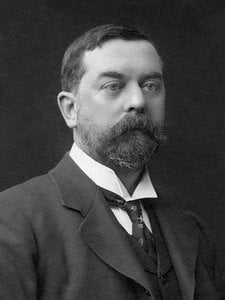
John Singer Sargent : Une Vie d'Art
John Singer Sargent (1856-1925) était un artiste expatrié américain considéré comme le « principal peintre de portraits de sa génération », pour la haute société de l’époque édouardienne. Son œuvre emploie un mélange unique de brillance technique, d'influences impressionnistes et de perspicacité psychologique.
Jeunesse et Formation
Né le 12 janvier 1856 à Florence, en Italie, auprès de parents américains Fitzwilliam et Mary Newbold Sargent, John Singer Sargent a connu une enfance itinérante. Ses parents étaient des expatriés qui se déplaçaient fréquemment entre la France, l'Allemagne, l'Italie et la Suisse. Ce mode de vie a favorisé une large conscience culturelle, mais a également entraîné une éducation moins conventionnelle. Au lieu d’une scolarité formelle, l’éducation de jeune Sargent était axée sur la visite de musées et d’églises dans toute l'Europe.
En 1874, Sargent a commencé à étudier avec le peintre portraitiste français Carolus-Duran à Paris. Cette mentorat s’est avéré décisif. Duran mettait l’accent sur la peinture directe – une technique d’application de la peinture sans croquis préliminaires – qui a affûté la remarquable compétence technique de Sargent et sa capacité à capturer les portraits avec une précision et une rapidité étonnantes.
Carrière Artistique et Style
La production artistique de Sargent peut être divisée en deux catégories : portraits commandés et études informelles. Ses portraits formels, souvent représentant les personnalités riches et influentes de son temps, adhéraient à la tradition du « grand style » – soulignant l’élégance, le statut et la profondeur psychologique.
Cependant, Sargent a également poursuivi un style plus personnel dans ses paysages et ses études en plein air. Ces œuvres témoignent d’une affinité claire avec l’impressionnisme, caractérisée par une touche de pinceau lâche, des palettes de couleurs vives et une emphase sur la capture d’instants fugaces de lumière et d’atmosphère.
Œuvres Majeures et Réalisations
- Madame X (1884) : Peut-être l'œuvre la plus célèbre de Sargent, ce portrait a suscité le scandale pour sa représentation audacieuse de la socialite Virginie Amélie Avegno Gautreau.
- El Jaleo (1882) : Une scène dynamique et colorée capturant une danse flamenco espagnole, mettant en valeur la maîtrise du mouvement et de la lumière de Sargent.
- Carnation, Lily, Lily, Rose (1886) : Un tableau serein et évocateur représentant deux jeunes filles allumant des lanternes dans un jardin anglais.
- Une table à manger le soir (1882-83) : Une composition innovante capturant l’atmosphère intime d’une réception en utilisant la lumière artificielle.
Influences
Sargent a été influencé par un ensemble diversifié d'artistes et de mouvements :
- Carolus-Duran : Son professeur, qui lui a inculqué une technique de peinture directe.
- Diego Velázquez : Sargent admirait l’utilisation magistrale de la lumière et de la touche de pinceau de Velázquez.
- L'impressionnisme : L’emphase des impressionnistes sur la capture d’instants fugaces et d’effets atmosphériques a profondément influencé ses peintures de paysages.
Signification Historique et Héritage
Initialement, Sargent a été critiqué pour son approche non conventionnelle du portrait et sa volonté de défier les normes artistiques traditionnelles. Cependant, au début du 20e siècle, il s’était établi comme l'un des artistes de son temps.
Dans les années 1980, une réévaluation importante de l’œuvre de Sargent a eu lieu, en particulier ses nus masculins auparavant négligés. Cette redécouverte a révélé un artiste plus complexe et nuancé qu'on ne le pensait auparavant. Aujourd’hui, John Singer Sargent est célébré pour sa virtuosité technique, sa capacité à saisir l’esprit de son époque et sa contribution durable à l’art américain.
Ses peintures offrent une fenêtre fascinante sur le luxe et les dynamiques sociales de l’époque édouardienne, tout en reflétant sa propre vision artistique personnelle. Son œuvre continue d'inspirer les artistes et de captiver les publics du monde entier.



 Aperçu en situation
 Passer au format impression
 Envoyer
 Partager
 Détails de l'œuvre

 Télécharger
 Articles similaires
 Radiographie
 Diaporama
 Statistiques

 Lire la suite