CONSEIL EN ART GRATUIT

x
Commander la reproduction Commander la reproductionAcheter l'image haute résolution Acheter l'image haute résolution PartagerPartager
DétailsDétails Ajouter aux favoris Ajouter aux favoris TéléchargerTélécharger Articles similairesArticles similaires RadiographieRadiographie DiaporamaDiaporama

Untitled (D2X2SL)

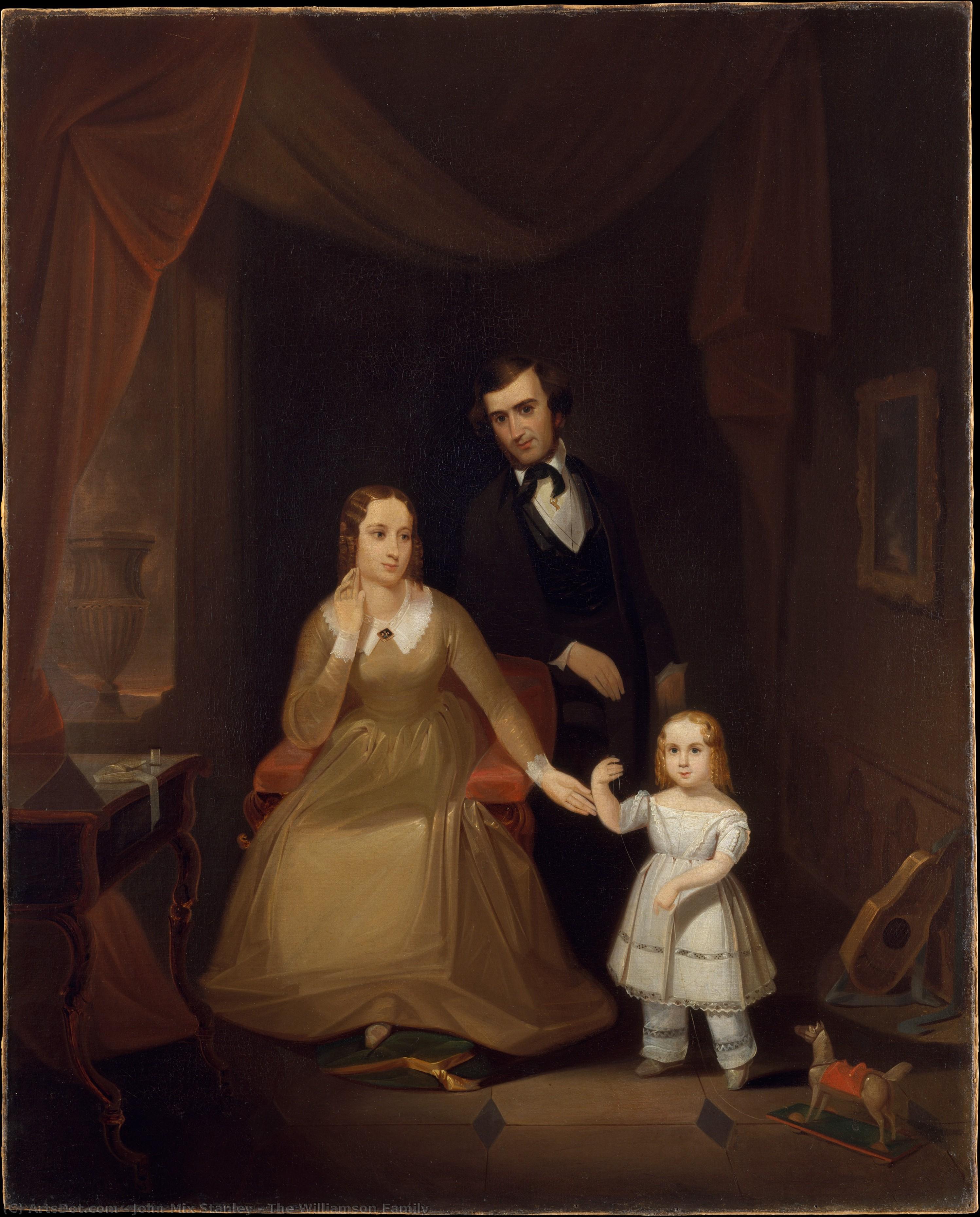
Discover John Mix Stanley’s "Untitled (D2X2SL)", a captivating portrait of the Williamson family from 1841, showcasing formal attire and domestic life amidst Western landscapes. A rare glimpse into 19th-century American society.

Découvrez John Mix Stanley (1814-1872), pionnier de l'art américain ! Ses portraits et paysages captivent, témoignant de la vie amérindienne et des frontières sauvages. Explorez son héritage.

Giclée / Impression d'art

Impression giclée ou sur toile de qualité musée, avec une production rapide et des finitions au choix.

P118B $10
P118H $10
P118W $10
P438Z $10
P508JH $12
P508YH $12
P805H $10
P805Z $10
P919BZ $10
P919G $10
P919XJ $10
P959ZH $10
P968JZ $12
W106C $8
W218G $10
W218JH $8
W218Y $10
W307PJ $10
W316G $10
W316PJ $8
W316Y $10
W398PJ $8
W4111J $10
W500HY $15
W500JH $15
W692G $12
W849H $8
W940BG $15
W953PJ $8

Standard
custom
CM
INCH

Choisissez parmi nos formats prédéfinis qui respectent les proportions originales de l’œuvre.

largeur
hauteur

Vous pouvez saisir vos propres dimensions pour vous adapter à un cadre ou à un espace spécifique. Si la taille sélectionnée ne correspond pas aux proportions de l'image originale, nous recadrerons l'œuvre ou étendrons l'image avec une bordure en miroir ou une couleur unie. Une maquette numérique vous sera envoyée pour approbation avant le début de la production.
Veuillez noter que l'aperçu à l'écran ne reflète pas le recadrage ou l'extension réelle. Seule la maquette montrera avec précision la composition finale.
Bien que des tailles personnalisées soient disponibles, nous vous recommandons de choisir une dimension dans la liste prédéfinie afin de préserver les proportions originales.

Livraison dans le monde entier () en 2 semaines au lieu des 4/5 semaines habituelles. (4 juillet)

why_choose_icon
Livraison express gratuite dans le monde entier

why_choose_icon
Toile de lin de haute qualité
why_choose_icon
Assurance transport complète
why_choose_icon
Garantie de remboursement des frais de douane
why_choose_icon
Garantie de fidélité des couleurs
why_choose_icon
Politique de retour de 60 jours (uniquement en cas de défaut)
why_choose_icon
Garantie de remboursement à 100%
why_choose_icon
Réduction sur les achats groupés

Prix total

-

reproduction

Untitled (D2X2SL)

Giclée / Impression d'art

Format de reproduction

-

Prix total final

-

En bref

  • Year: 1841
  • Notable elements: Family portrait, dining table
  • Artistic style: Realism, American West art
  • Subject or theme: Family life, Western scene
  • Influences:
    • Catlin
    • Stanley
  • Dimensions: 69 x 56 cm
  • Location: Metropolitan Museum of Art

Quiz d'art

Chaque question ne comporte qu'une seule bonne réponse.

Question 1:
What is the primary subject of John Mix Stanley’s ‘Untitled (D2X2SL)’?
Question 2:
According to the description, what formal attire is worn by the figures in the painting?
Question 3:
What object is prominently displayed on the dining table in the painting?
Question 4:
In what year was ‘Untitled (D2X2SL)’ painted?
Question 5:
John Mix Stanley is best known for his depictions of which group of people?

Description de l'œuvre

A Window into Victorian Domesticity: John Mix Stanley’s “Untitled (D2X2SL)”

John Mix Stanley's "Untitled (D2X2SL)" offers a remarkably intimate glimpse into the life of an American family during the mid-19th century. Painted in 1841, this portrait transcends mere documentation; it’s a carefully constructed tableau of Victorian domesticity, imbued with a quiet dignity and understated elegance. The scene unfolds within a modestly furnished room – a dining table bearing a vase of flowers, two chairs strategically placed, and the subtle suggestion of a life lived comfortably within these walls. The composition is remarkably balanced, drawing the eye to the central figures: a man, a woman, and their young child, united in a gesture of tender affection—their hands clasped together, a visual anchor for the entire scene.

Stanley’s skill lies not just in his ability to capture likenesses, but in his nuanced understanding of light and shadow. He employs a soft, diffused lighting that washes over the figures, creating an atmosphere of warmth and intimacy. Notice how he subtly models the fabric of their clothing – the folds of the man's tie, the gentle curve of the woman’s dress—revealing textures with remarkable detail. The muted color palette—earth tones punctuated by touches of crimson and gold—contributes to the painting’s overall sense of quiet refinement. This restrained approach was characteristic of Stanley’s style, prioritizing observation and emotional resonance over flamboyant display.

The Williamson Family: A Portrait of Early American Life

The subject of the portrait is the Williamson family – James Abeel Williamson, his wife, and their son. Research through The Metropolitan Museum of Art reveals that this particular painting was commissioned to document a prominent New York family during a period of significant westward expansion. Williamson’s lineage extends into Wyoming, New Jersey, and beyond, highlighting the interconnectedness of American society at the time. Stanley's decision to portray them in formal attire speaks volumes about their social standing and the importance placed on appearances within Victorian culture. The inclusion of the dog further reinforces this sense of domesticity – a loyal companion integrated seamlessly into family life.

Further research, accessed through the Smithsonian Institution Archives, reveals that Stanley’s collection was tragically lost in the 1865 fire at the Smithsonian. This loss is a poignant reminder of the fragility of artistic legacy and underscores the importance of reproductions like this one. The archival materials detail Stanley's meticulous process – his extensive travels throughout the American West, his dedication to accurately depicting Native American life alongside portraits of settlers, and his ambition to create a comprehensive visual record of the era.

Symbolism and Context: A Window into Victorian Values

Beyond its straightforward depiction of a family gathering, “Untitled (D2X2SL)” is rich in symbolic meaning. The formal attire represents respectability and adherence to social norms—a key value within 19th-century America. The act of holding hands signifies familial love and unity, while the child’s presence embodies hope for the future. The dining table, with its vase of flowers, suggests prosperity and a celebration of domestic harmony. Stanley's inclusion of Native Americans in the background subtly acknowledges the complex relationship between settlers and indigenous populations – a theme prevalent throughout his work.

Considering the context of John Mix Stanley’s life as a pioneer documenting the American West, this painting is more than just a portrait; it’s a testament to his commitment to capturing the realities of frontier life. His meticulous observations and artistic skill offer a valuable window into the social customs, values, and aspirations of a rapidly changing nation. The reproduction offered by WahooArt.com allows you to experience the beauty and emotional depth of this remarkable work firsthand.

Bringing “Untitled (D2X2SL)” Home: A Reproduction for Your Space

WahooArt.com’s hand-painted reproductions faithfully recreate Stanley's original techniques, capturing the subtle nuances of light, color, and texture. This ensures that you receive a piece of art that not only honors the legacy of John Mix Stanley but also seamlessly integrates into your own home décor. The size (69 x 56 cm) is ideal for adding a touch of Victorian elegance to living rooms, studies, or hallways.

Whether you are an art enthusiast, a collector seeking authentic reproductions, or simply someone looking to infuse their space with timeless beauty, “Untitled (D2X2SL)” offers a captivating glimpse into the past—a testament to family, tradition, and the enduring power of American artistry.

Œuvres apparentées


Biographie de l'artiste

Première Vie et Origines

  • Né: Le 17 janvier 1814, à Canandaigua, dans l'État de New York
  • Parents: Seth et Sally (McKinney) Stanley
  • Orphelin à l'âge de 12 ans.
  • Apprenti chez un fabricant de voitures à l'âge de 14 ans.
  • Compétences picturales autodidactes.
  • Déménagé à Detroit, dans le Michigan en 1832, devenant un peintre itinérant de panneaux et de portraits.

Carrière et Développement Artistique

  • Débuts (années 1830-1840) : A commencé comme peintre de panneaux publicitaires et portraitiste à Detroit et dans les environs. Voyagea vers Fort Snelling, Galena et Chicago.
  • Exploration du Sud-Ouest (1842-1845) : Accompagna Sumner Dickerman dans le sud-ouest américain spécifiquement pour peindre des Amérindiens. S'installa à Fort Gibson en territoire indien (aujourd’hui Oklahoma). Documenta la vie tribale, notamment en assistant à un conseil entre les représentants Cherokee et du Texas à Tahlequah.
  • Service pendant la guerre américano-mexicaine (1846) : Nommé dessinateur pour l'expédition du colonel Stephen Watts Kearney vers la Californie et le territoire de l'Oregon. Produisit des croquis et des peintures de la campagne.
  • Portraits hawaïens (1847-1848) : Voyagea à Hawaï, où il peignit les portraits du roi Kamehameha III et de sa famille.
  • Expositions et Reconnaissance (années 1850) : Organisa et exposa de grandes galeries de portraits amérindiens dans diverses villes. Présenta une exposition majeure au Smithsonian Institution en 1852, présentant près de 200 œuvres représentant 43 tribus. Reçut des critiques positives mais ne réussit pas à vendre sa collection au gouvernement ou au Smithsonian.
  • Panorama (1854) : Exposa un panorama de 42 scènes de l'Ouest à Washington, D.C., Baltimore, New York et Londres ; ce travail est aujourd’hui perdu.
  • Pertes et Déclin : Une partie importante de ses œuvres fut détruite lors d'un incendie au Smithsonian Institution en 1865. Cet événement contribua à un déclin de la réputation de Stanley pendant un certain temps.

Style Artistique et Influences

  • Sujets : Se concentra principalement sur les paysages, les portraits amérindiens et les représentations de la vie tribale dans l'ouest américain et à Hawaï.
  • Influences : Inspiré par le travail de George Catlin, un pionnier de la peinture des Amérindiens.
  • Style : Bien qu’il documente ses sujets avec une caméra et un crayon avant l’exécution, les peintures de Stanley étaient souvent organisées d'une manière académique. Certains critiques ont noté un manque d'empathie profonde pour les cultures amérindiennes par rapport à Catlin.
  • Documentation : Ses œuvres sont valorisées comme documents historiques fournissant des aperçus des rencontres du XIXe siècle entre les Américains d’origine européenne et les tribus amérindiennes.

Réalisations Majeures et Importance Historique

  • Représentation Pionnière de la Vie Amérindienne : Stanley a été l'un des premiers artistes à documenter systématiquement les cultures amérindiennes par le biais de la peinture, contribuant ainsi de manière significative aux archives visuelles de ces sociétés.
  • Voyages et Documentation Étendue : Ses voyages à travers l'ouest américain et Hawaï ont donné lieu à un vaste corpus d'œuvres représentant des paysages et des peuples divers.
  • Document Historique : Malgré la perte d’une grande partie de son œuvre, les peintures survivantes fournissent des aperçus précieux de la vie frontalière du XIXe siècle et des cultures amérindiennes.
  • Redécouverte et Appréciation : Les contributions de Stanley à l'art américain ont été réévaluées au cours des dernières décennies, ses œuvres étant désormais conservées dans des musées nationaux et régionaux.

Vie Tardive et Décès

  • Retourna à Detroit en 1863.
  • Décédé le 10 avril 1872 à Detroit, Michigan.
  • Son héritage a été initialement éclipsé par la perte de son œuvre mais a depuis été reconnu pour sa valeur historique et artistique.
John Mix Stanley

John Mix Stanley

1814 - 1872 , États-Unis d'Amérique

En bref

  • Artistic Movement Or Style: Paysages & art amérindien
  • Artists Who Influenced This Artist: ['George Catlin']
  • Date De Décès: 10 avril 1872
  • Date De Naissance: 17 janvier 1814
  • Full Name: John Mix Stanley
  • Lieu De Naissance: Canandaigua, États-Unis
  • Nationalité: Américain
  • Notable Artworks: ['La Courbe de la Rivière']
Explorez des œuvres d'art classées par thèmes, styles et caractéristiques.