CONSEIL EN ART GRATUIT

x
Commander l'impression Commander l'impressionAcheter l'image haute résolution Acheter l'image haute résolution PartagerPartager
Détails de l'œuvreDétails de l'œuvre Ajouter aux favoris Ajouter aux favoris TéléchargerTélécharger Articles similairesArticles similaires RadiographieRadiographie DiaporamaDiaporama

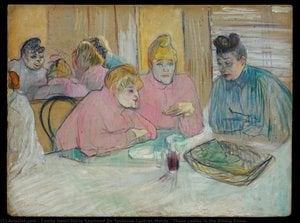
Taverna

Portrait de Maria Bicknell peint par John Constable en 1816 : une œuvre romantique capturant l'amour et les défis sociaux d’une relation exceptionnelle. Découvrez la beauté et la sensibilité du peintre anglais.

Reproduction à l'huile faite à la main

Huile sur toile peinte à la main, avec cadre et dimensions personnalisés, réalisée sur commande par nos artistes.

Standard
custom
CM
INCH

Choisissez parmi nos formats prédéfinis qui respectent les proportions originales de l’œuvre.

largeur
hauteur

Vous pouvez saisir vos propres dimensions pour l'adapter à un cadre ou à un espace spécifique. Si la taille sélectionnée ne correspond pas aux proportions de l'image d'origine, nous recadrerons l'œuvre ou prolongerons la peinture avec des éléments peints à la main supplémentaires. Une maquette numérique vous sera envoyée pour approbation avant le début de la production.
Veuillez noter que l'aperçu à l'écran ne reflète pas le recadrage ou l'extension réels. Seule la maquette montrera fidèlement la composition finale.
Bien que des tailles personnalisées soient disponibles, nous vous recommandons de sélectionner une dimension dans la liste prédéfinie afin de préserver les proportions d'origine.

Exemples de personnalisation : remplacer un visage par la photo du client ; ajouter un animal de compagnie (par exemple, remplacer un chat par un chien) ; inclure un message caché en arrière-plan ; modifier le paysage ou les éléments de l'arrière-plan.
Après la commande, l’équipe WahooArt.com contactera le client par e-mail pour obtenir ses instructions et lui fournira une maquette d’aperçu.

Livraison dans le monde entier () en 3 à 4 semaines au lieu des 5 semaines habituelles. (18 juillet). Aucune concession sur la qualité.

why_choose_icon
Livraison express gratuite dans le monde entier

why_choose_icon
Toile de lin de haute qualité
why_choose_icon
Assurance transport complète
why_choose_icon
Garantie de remboursement des frais de douane
why_choose_icon
Garantie de fidélité des couleurs
why_choose_icon
Politique de retour de 60 jours (uniquement en cas de défaut)
why_choose_icon
Garantie de remboursement à 100%
why_choose_icon
Réduction sur les achats groupés

Prix total

-

reproduction

Taverna

Technique de reproduction

Format de reproduction

-

Prix total final

-


Biographie de l'artiste

John Craxton: Echoes of Arcadia and Grecian Light

John leith craxton ra (1922-2009) stands as a singular figure in British Neo-Romantic painting, an artist who relentlessly pursued the idealized beauty of nature—specifically the landscapes and myths of Greece—with unwavering dedication. Born in St John’s Wood, London, he was the son of musician Harold Craxton and Essie, inheriting a creative lineage that extended to his brother, Harold Antony Craxton, a celebrated television producer. His sister Janet pursued a distinguished career as an oboist, fostering a family environment rich in artistic pursuits. From a young age, craxton’s fascination with art was nurtured by attending Clayesmore School and applying unsuccessfully for Chelsea School of Art's nude life classes—a testament to his early ambition. Nevertheless, he embarked on formative studies at the Académie Julian and the Académie de la grande chaumière in Paris during 1939-40, interrupted by the onset of World War II which necessitated completing his education remotely in London. His time at Goldsmiths College further honed his artistic sensibilities before a brief foray into military service was rejected, allowing him to participate in a transformative journey with Graham Sutherland through Pembroke shire in 1943. Craxton’s artistic breakthrough arrived swiftly after the war, beginning with his debut solo exhibition in London in 1942 at the Swiss Cottage Café and culminating in a landmark retrospective showcasing his oeuvre. His work resonated deeply within the Neo-Romantic movement—a reaction against the austerity of postwar Britain—drawing inspiration from Sutherland and Samuel Palmer, while acknowledging the profound influence of Peter Watson, who became both a friend and patron. This period witnessed craxton’s exploration of Grecian landscapes and mythology, fueled by firsthand experience during his travels to Scilly Isles, Switzerland, Istanbul, Spain, Italy, and predominantly Crete. From 1946 to 1966, he established himself as a permanent resident on the island, oscillating between Cretan life and London engagements—a duality that profoundly shaped his artistic vision. His early influences included artists like Samuel Palmer and Peter Watson, whose ethereal landscapes captivated craxton’s imagination and instilled in him a desire to capture the sublime grandeur of nature. The rejection of military service afforded him invaluable time for artistic contemplation and experimentation, culminating in collaborations with Graham Sutherland on expeditions into Pembroke shire—a formative experience that solidified his connection to the English countryside. Craxton's dedication to capturing the essence of Grecian mythology and landscape is evident throughout his oeuvre, particularly in his ballet designs for Sadler’s Wells Ballet’s production of Daphnis et Chloé in 1951. He skillfully translated mythological narratives into visually arresting stage settings, demonstrating an understanding of theatrical aesthetics that transcended mere decoration. Craxton's paintings are characterized by luminous color palettes and meticulous detail—techniques honed during his Parisian studies and reinforced by his immersion in Cretan artistic traditions. Works such as “An Acrobatic Cretan Butcher,” “Sleeping Fisherman,” and “Taverna” exemplify his ability to convey emotion through visual representation, capturing the spirit of place with remarkable sensitivity. His retrospective exhibitions in England and Greece cemented his legacy as a pivotal voice within 20th-century art, securing his place among the champions of Neo-Romantic idealism and reminding viewers of the enduring power of artistic contemplation. He remains an artist whose unwavering pursuit of beauty—particularly the timeless allure of Grecian landscapes—continues to inspire admiration and scholarly interest today.
John Craxton

John Craxton

1922 - 2009 , Royaume-Uni

En bref

  • Artistic Movement Or Style: Neo-Romanticisme
  • Artists Or Movements Influenced By This Artist: ['Ballet Design']
  • Artists Who Influenced This Artist:
    • Graham Sutherland
    • Samuel Palmer
    • Peter Watson
  • Date Of Birth: 1922
  • Date Of Death: 2009
  • Full Name: John Leith Craxton RA
  • Nationality: Britannique
  • Notable Artworks:
    • Taverna
    • An Acrobatic Cretan Butcher
    • Sleeping Fisherman
  • Place Of Birth: St John's Wood, United Kingdom