Aperçu en situation Aperçu en RA Passer au format impression Passer au format image numérique Partager
Détails Guide imprimable Ajouter aux favoris Télécharger Articles similaires Radiographie Voir le diaporama Statistiques

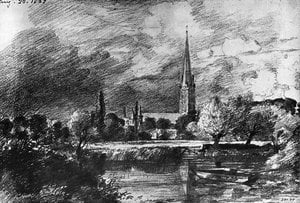
Windmills in landscape

Constable's artistic journey was marked by a dedication to capturing the essence of nature with unparalleled emotional depth. He prioritized sincerity and observation over theatrical grandeur, establishing himself as one of Britain’s foremost landscape artists.

Découvrez John Constable (1776-1837), un peintre de paysages britannique renommé pour sa profondeur émotionnelle et sa beauté naturelle. Influencé par la École de Barbizon, il a pionnier le Romantisme avec des œuvres emblématiques telles que 'Netley Abbey'. Explorez son héritage chez WahooArt!

Reproduction à l'huile faite à la main

Huile sur toile peinte à la main, avec cadre et dimensions personnalisés, réalisée sur commande par nos artistes. ( Passer au format impression Passer au format image numérique)

Corner sample of the P118B picture frame: polystyrène moulé, 5 cm wide and 3 cm thick
P118B 10
Corner sample of the P118H picture frame: polystyrène moulé, 5 cm wide and 3 cm thick
P118H 10
Corner sample of the P118W picture frame: polystyrène moulé, 5 cm wide and 3 cm thick
P118W 10
Corner sample of the P438Z picture frame: polystyrène moulé, 5.5 cm wide and 3.5 cm thick
P438Z 10
Corner sample of the P508JH picture frame: polystyrène moulé, 7 cm wide and 3.5 cm thick
P508JH 12
Corner sample of the P508YH picture frame: polystyrène moulé, 7 cm wide and 3.5 cm thick
P508YH 12
Corner sample of the P805H picture frame: polystyrène moulé, 5 cm wide and 3.5 cm thick
P805H 10
Corner sample of the P805Z picture frame: polystyrène moulé, 5 cm wide and 3.5 cm thick
P805Z 10
Corner sample of the P919BZ picture frame: polystyrène moulé, 7 cm wide and 3.5 cm thick
P919BZ 10
Corner sample of the P919G picture frame: polystyrène moulé, 7 cm wide and 3.5 cm thick
P919G 10
Corner sample of the P919XJ picture frame: polystyrène moulé, 7 cm wide and 3.5 cm thick
P919XJ 10
Corner sample of the P959ZH picture frame: polystyrène moulé, 5 cm wide and 3 cm thick
P959ZH 10
Corner sample of the P968JZ picture frame: polystyrène moulé, 6 cm wide and 4 cm thick
P968JZ 12
Corner sample of the W106C picture frame: bois massif, 5 cm wide and 3 cm thick
W106C 8
Corner sample of the W218G picture frame: bois massif, 5 cm wide and 3 cm thick
W218G 10
Corner sample of the W218JH picture frame: bois massif, 5 cm wide and 3 cm thick
W218JH 8
Corner sample of the W218Y picture frame: bois massif, 5 cm wide and 3 cm thick
W218Y 10
Corner sample of the W307PJ picture frame: bois massif, 6 cm wide and 3 cm thick
W307PJ 10
Corner sample of the W316G picture frame: bois massif, 6 cm wide and 3 cm thick
W316G 10
Corner sample of the W316PJ picture frame: bois massif, 6 cm wide and 3 cm thick
W316PJ 8
Corner sample of the W316Y picture frame: bois massif, 6 cm wide and 3 cm thick
W316Y 10
Corner sample of the W398PJ picture frame: bois massif, 5 cm wide and 3 cm thick
W398PJ 8
Corner sample of the W4111J picture frame: bois massif, 6.5 cm wide and 3.5 cm thick
W4111J 10
Corner sample of the W500HY picture frame: bois massif, 7 cm wide and 5 cm thick
W500HY 15
Corner sample of the W500JH picture frame: bois massif, 7 cm wide and 5 cm thick
W500JH 15
Corner sample of the W692G picture frame: bois massif, 8 cm wide and 4 cm thick
W692G 12
Corner sample of the W849H picture frame: bois massif, 5 cm wide and 3 cm thick
W849H 8
Corner sample of the W940BG picture frame: bois massif, 7.5 cm wide and 4.5 cm thick
W940BG 15
Corner sample of the W953PJ picture frame: bois massif, 6 cm wide and 3.5 cm thick
W953PJ 8

Format standard
personnalisé
CM
INCH

Choisissez parmi nos formats prédéfinis qui respectent les proportions originales de l’œuvre.

largeur
hauteur

Saisissez la largeur et la hauteur souhaitées, pour s'adapter à votre cadre ou à votre mur. Cette œuvre est peinte à la main ; ainsi, pour un format de forme différente, l'artiste peut peindre un peu plus autour du tableau ou réduire légèrement les bords — c'est vous qui choisissez. Nous vous envoyons une maquette numérique pour approbation avant que la peinture ne commence. L'image présentée sur cette page ne reflète pas le résultat réel — seule la maquette le fait.

Exemples de personnalisation possibles : remplacer un visage par la photo du client ; ajouter un animal de compagnie (par exemple, remplacer un chat par un chien) ; inclure un message caché en arrière-plan ; modifier le paysage ou les éléments de l'arrière-plan.
Après la commande, l’équipe WahooArt.com contactera le client par e-mail pour recueillir ses instructions et lui fournira une maquette d’aperçu

Livraison dans le monde entier () en 3 à 4 semaines au lieu des 5 semaines habituelles. (19 octobre). Aucun compromis sur la qualité.

Livraison express gratuite dans le monde entier
Toile de lin de haute qualité
Assurance transport complète
Garantie de remboursement des droits de douane
Garantie de fidélité des couleurs
Garantie de retour de 100 jours (uniquement en cas de défaut)
Garantie de remboursement à 100%
Tarifs dégressifs sur quantité

Prix total

€ 237

Windmills in landscape

Technique de reproduction

Format de la reproduction

-

Prix total final

€ 237

L'essentiel de l'œuvre

  • Title: Windmills in landscape
  • Influences: Claude Lorrain
  • Subject or theme: Rural life
  • Artistic style: Pastoral
  • Notable elements or techniques: Atmospheric detail, observation of light and shade

Quiz d'art

Chaque question ne comporte qu'une seule bonne réponse.

Question 1:
In which year was the masterpiece 'Landscape with Windmills Near Haarlem' completed?
Question 2:
How many windmills are prominently featured in the composition of this painting?
Question 3:
What is the primary atmospheric mood described in the painting's description?
Question 4:
Which artistic era's charm does the arrangement of elements in this work evoke?
Question 5:
Where is one of the windmills located within the painting?

A Symphony of Light and Sky

In his 1830 masterpiece, "Landscape with Windmills Near Haarlem," John Constable invites the viewer into a world where the atmosphere itself becomes a living, breathing protagonist. This evocative landscape is far more than a mere topographical record of rural life; it is a profound meditation on the transient beauty of nature. The scene unfolds across a sprawling vista, dominated by two windmills that stand as silent sentinaries against a dramatic, brooding sky. One windmill anchors the left side of the composition, while another rests more centrally, partially veiled by the lush greenery of the trees. Through his masterful command of light and shadow, Constable creates an illusionistic depth that pulls the observer into the very heart of the English countryside, making the damp, cool air of a cloudy afternoon feel almost tangible.

The painting captures a moment of quiet drama, where the interplay between sunlight and heavy, moisture-laden clouds creates a sense of movement across the canvas. Scattered throughout the verdant fields, small figures move with the unhurried rhythm of pastoral life, adding a human dimension to the vastness of the landscape. This careful arrangement of elements—the sturdy structures of industry, the organic silhouettes of trees, and the ephemeral textures of the clouds—works in harmony to evoke the quintessential charm of the Romantic era. For the collector or interior designer, this piece offers a window into a serene yet powerful world, providing a focal point that brings both tranquility and a sense of historical grandeur to any sophisticated space.

The Mastery of Romantic Technique

To behold a Constable is to witness the revolution of the landscape genre. Moving away from the rigid, academic conventions of his predecessors, Constable embraced the Romantic ideal, prioritizing emotional resonance and the "feeling" of a place over clinical precision. His technique in this work is nothing short of extraordinary; utilizing oil paint on oak panel, he employed a thick, textured application known as impasto. This method allowed him to build up layers of pigment that catch the light, mimicking the physical presence of earth, foliage, and the heavy textures of storm clouds. This tactile quality gives the painting an incredible vitality, ensuring that the landscape feels less like a static image and more like a captured moment in time.

Historically, this work sits at the pinnacle of Constable’s mature period, reflecting his deep-seated connection to the landscapes of his youth. While the title suggests a nod to the Dutch masters—specifically the influence of Jacob van Ruisdael—the soul of the painting remains rooted in the English tradition of capturing the sublime. The windmills themselves serve as potent symbols: they represent the harmonious integration of human endeavor and industrial progress within the natural world. By placing these symbols of labor against a turbulent, ever-changing sky, Constable underscores the delicate balance between man and the elements, creating an emotional impact that continues to resonate with modern viewers seeking a connection to the enduring power of nature.

Questions et réponses

Puis-je visionner « Windmills in landscape » sous forme de diaporama en plein écran ?

Un diaporama est disponible : la page Diaporama de «Windmills in landscape» de John Constable.

Où puis-je voir un aperçu de « Windmills in landscape » ?

La page Aperçu de « Windmills in landscape » vous permet de prévisualiser l'œuvre avant de passer commande.

Comment puis-je obtenir une impression de «Windmills in landscape» de John Constable ?

Pour obtenir une impression de «Windmills in landscape» de John Constable, il vous suffit de la commander sur sa page Impression d'art fine : une impression d'art sur toile de coton ou sur papier canvas d'archive.


Biographie de l'artiste

**Jeunesse et difficultés**

John Constable, un artiste britannique renommé, est né le 23 juin 1776 à East Bergholt, dans le Suffolk. Sa jeunesse a été marquée par une profonde connexion avec la nature, qui allait devenir la marque de fabrique de son style artistique. Malgré les nombreuses difficultés rencontrées sur le marché de l'art anglais, la détermination inébranlable de Constable envers son métier a ouvert la voie à un héritage qui dépasse largement sa propre époque.

**Style artistique et influence**

L’approche distinctive de Constable en matière de peinture paysagère, caractérisée par son accent sur la beauté naturelle et la profondeur émotionnelle, a marqué une évolution significative dans ce genre. Son influence a été particulièrement profonde en France, où elle a joué un rôle clé dans la formation de l'École de Barbizon des peintres. Cette école, connue pour sa focalisation sur le réalisme et la nature, s’est directement inspirée des techniques et des thèmes de Constable.
  • Netley Abbey (huile sur toile), un témoignage de son talent pour capturer l'essence des paysages naturels.
  • The Judges Walk, Hampstead (romantisme, huile), illustrant sa capacité à infuser des touches personnelles dans son travail.
  • A View on the Stour near Dedham (129 x 188 cm, romantisme, huile sur toile), un exemple flagrant de son influence sur le genre du paysage.

**Héritage et mémoire**

Aujourd’hui, John Constable est souvenu non seulement comme peintre de paysages mais aussi comme pionnier qui a ouvert de nouvelles possibilités d'expression émotionnelle dans l’art. Son impact profond sur la trajectoire de la peinture de paysage au 19e siècle et au-delà est indéniable. Points clés : * Influencé dans le développement de l'École de Barbizon en France * A ouvert une nouvelle approche de la peinture de paysages, axée sur la beauté naturelle et la profondeur émotionnelle * A lutté pour être reconnu sur le marché de l’art anglais pendant sa vie

**Conclusion**

L'héritage de John Constable témoigne du pouvoir transformateur de l’art. Son influence sur la peinture de paysages, à la fois dans sa période et au-delà, nous rappelle l'impact profond qu'un artiste peut avoir sur le monde.
John Constable

John Constable

1776 - 1837 , Royaume-Uni

En bref

  • Artistes Influents:
    • Claude Lorrain
    • Jacob van Ruisdael
  • Date De Décès: 1837
  • Date De Naissance: 23 juin 1776
  • Influence Sur Les Artistes: ['École de Barbizon']
  • Lieu De Naissance: East Bergholt, Royaume-Uni
  • Mouvement Artistique: Romantisme
  • Nationalité: Britannique
  • Nom Complet: John Constable
  • Oeuvres Notables:
    • Netley Abbey
    • The Hay Wain
    • Salisbury Cathedral
Explorez des œuvres d'art classées par thèmes, styles et caractéristiques.