CONSEIL EN ART GRATUIT

x
Commander l'impression Commander l'impressionAcheter l'image haute résolution Acheter l'image haute résolution PartagerPartager
DétailsDétails Ajouter aux favoris Ajouter aux favoris TéléchargerTélécharger Articles similairesArticles similaires RadiographieRadiographie DiaporamaDiaporama

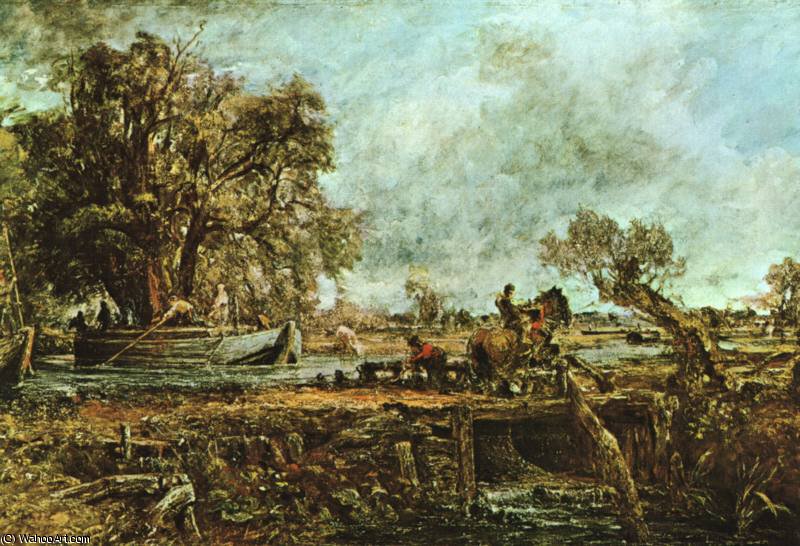
leaping horse

Witness the vibrant energy of John Constable’s "Leaping Horse" (1825)! This Romantic landscape captures a lively scene with horses and people, showcasing his signature loose brushwork & atmospheric depth. Explore this iconic British painting.

Découvrez John Constable (1776-1837), un peintre de paysages britannique renommé pour sa profondeur émotionnelle et sa beauté naturelle. Influencé par la École de Barbizon, il a pionnier le Romantisme avec des œuvres emblématiques telles que 'Netley Abbey'. Explorez son héritage chez WahooArt!

Reproduction à l'huile faite à la main

Huile sur toile peinte à la main, avec cadre et dimensions personnalisés, réalisée sur commande par nos artistes.

P118B $10
P118H $10
P118W $10
P438Z $10
P508JH $12
P508YH $12
P805H $10
P805Z $10
P919BZ $10
P919G $10
P919XJ $10
P959ZH $10
P968JZ $12
W106C $8
W218G $10
W218JH $8
W218Y $10
W307PJ $10
W316G $10
W316PJ $8
W316Y $10
W398PJ $8
W4111J $10
W500HY $15
W500JH $15
W692G $12
W849H $8
W940BG $15
W953PJ $8

Standard
custom
CM
INCH

Choisissez parmi nos formats prédéfinis qui respectent les proportions originales de l’œuvre.

largeur
hauteur

Vous pouvez saisir vos propres dimensions pour l'adapter à un cadre ou à un espace spécifique. Si la taille sélectionnée ne correspond pas aux proportions de l'image d'origine, nous recadrerons l'œuvre ou prolongerons la peinture avec des éléments peints à la main supplémentaires. Une maquette numérique vous sera envoyée pour approbation avant le début de la production.
Veuillez noter que l'aperçu à l'écran ne reflète pas le recadrage ou l'extension réels. Seule la maquette montrera fidèlement la composition finale.
Bien que des tailles personnalisées soient disponibles, nous vous recommandons de sélectionner une dimension dans la liste prédéfinie afin de préserver les proportions d'origine.

Exemples de personnalisation : remplacer un visage par la photo du client ; ajouter un animal de compagnie (par exemple, remplacer un chat par un chien) ; inclure un message caché en arrière-plan ; modifier le paysage ou les éléments de l'arrière-plan.
Après la commande, l’équipe WahooArt.com contactera le client par e-mail pour obtenir ses instructions et lui fournira une maquette d’aperçu.

Livraison dans le monde entier () en 3 à 4 semaines au lieu des 5 semaines habituelles. (2 juillet). Aucune concession sur la qualité.

why_choose_icon
Livraison express gratuite dans le monde entier

why_choose_icon
Toile de lin de haute qualité
why_choose_icon
Assurance transport complète
why_choose_icon
Garantie de remboursement des frais de douane
why_choose_icon
Garantie de fidélité des couleurs
why_choose_icon
Politique de retour de 60 jours (uniquement en cas de défaut)
why_choose_icon
Garantie de remboursement à 100%
why_choose_icon
Réduction sur les achats groupés

Prix total

-

reproduction

leaping horse

Technique de reproduction

Format de reproduction

-

Prix total final

-

En bref

  • Influences: Claude Lorrain
  • Medium: Oil on canvas
  • Location: Royal Academy
  • Title: The Leaping Horse
  • Subject or theme: Rural England
  • Year: 1825
  • Artist: John Constable

Quiz d'art

Chaque question ne comporte qu'une seule bonne réponse.

Question 1:
What is the primary subject of John Constable’s ‘Leaping Horse’?
Question 2:
In what region of England did John Constable primarily paint, as evidenced by this work?
Question 3:
What artistic movement is ‘Leaping Horse’ most closely associated with?
Question 4:
The painting features a boat near the left side. What is its likely purpose in the scene?
Question 5:
What technique is most evident in Constable’s brushwork, contributing to the painting's atmospheric quality?

Description de l'œuvre

A Moment of Rural Grace: John Constable’s “The Leaping Horse”

John Constable's "The Leaping Horse," painted in 1825, isn’t merely a depiction of a scene; it’s a distillation of the English countryside captured with an almost palpable sense of immediacy and emotion. This landscape painting, brimming with life and subtle detail, transports us to the River Stour valley – Constable's beloved home region of Suffolk – offering a glimpse into the rhythms of rural life and the artist’s profound connection to his surroundings. The image presents a lively tableau: a tow horse, powerfully pulling a barge across the riverbank, leaps gracefully over a cattle guard barrier, a common sight along the waterways of the time designed to keep livestock from straying. Flanking this central action are figures – likely lightermen and perhaps passengers – engaged in the everyday tasks of navigating the river, their presence adding a layer of human interaction to the natural world.

Constable’s signature style is immediately evident. He eschews the rigid formality of earlier landscape painters like Claude Lorrain, instead embracing a looser, more expressive brushstroke. Notice how the paint seems to shimmer and flow across the canvas, capturing the fleeting effects of light and shadow with remarkable sensitivity. The artist doesn't aim for photographic accuracy; rather, he prioritizes conveying the *feeling* of the scene – the warmth of the sun on the water, the rustle of reeds in the breeze, the energy of the horse’s movement. This approach aligns perfectly with the tenets of the Romantic movement, which emphasized emotion and imagination over strict representation.

The Painter's Landscape: Technique and Composition

Examining the painting’s composition reveals Constable’s meticulous attention to detail. The placement of the horse is central, drawing the viewer’s eye immediately to its dynamic leap. The use of aerial perspective – a technique where distant objects appear paler and less distinct – creates a sense of depth and atmospheric distance, effectively conveying the vastness of the landscape. Note how Constable subtly incorporates elements from his immediate surroundings: the weathered post of the cattle guard, the suggestion of a willow tree in the background (a detail he later revisited in a preparatory study), and even the faint outline of St Mary’s Church tower in Dedham – landmarks that would have been intimately familiar to the artist. The inclusion of these local details anchors the scene within its specific geographical context, reinforcing Constable's deep connection to his home.

Technically, “The Leaping Horse” is executed in oil on canvas, a medium that allowed Constable to achieve the rich colors and luminous effects he so prized. He employed a technique known as ‘broken color,’ layering thin washes of paint over each other to build up depth and vibrancy. This method contributes significantly to the painting’s atmospheric quality, creating a sense of shimmering light and subtle tonal variations.

Symbolism and Context: A Portrait of Rural England

Beyond its immediate visual appeal, “The Leaping Horse” is rich in symbolic meaning. The horse itself represents strength, vitality, and the essential role of animals in rural life. The act of leaping over the cattle guard barrier can be interpreted as a celebration of freedom and movement – a fleeting moment of exhilaration within the constraints of daily labor. The presence of the barge and its crew speaks to the importance of trade and transportation in this agricultural community. Furthermore, Constable’s choice to depict such an ordinary scene—a commonplace event on the River Stour—reflects his belief that beauty could be found in the everyday details of rural life.

Painted during a period of significant social and political change in England, “The Leaping Horse” offers a poignant glimpse into a vanishing way of life. The painting captures a moment before industrialization fundamentally altered the landscape and transformed the rhythms of rural existence. Constable’s work serves as both a celebration of this past and a testament to his enduring love for the English countryside.

Bringing “The Leaping Horse” Home: A Reproduction for Your Space

WahooArt offers meticulously crafted, hand-painted reproductions of John Constable's "The Leaping Horse," allowing you to bring this iconic masterpiece into your home or office. Our skilled artists replicate the painting’s intricate details and atmospheric qualities with exceptional accuracy, using archival-quality materials to ensure lasting beauty. Whether you are an art enthusiast, a collector, or simply seeking to add a touch of timeless elegance to your décor, our reproduction captures the essence of Constable's vision – a moment of rural grace, imbued with emotion and a profound appreciation for the natural world.

Œuvres apparentées


Biographie de l'artiste

**Jeunesse et difficultés**

John Constable, un artiste britannique renommé, est né le 23 juin 1776 à East Bergholt, dans le Suffolk. Sa jeunesse a été marquée par une profonde connexion avec la nature, qui allait devenir la marque de fabrique de son style artistique. Malgré les nombreuses difficultés rencontrées sur le marché de l'art anglais, la détermination inébranlable de Constable envers son métier a ouvert la voie à un héritage qui dépasse largement sa propre époque.

**Style artistique et influence**

L’approche distinctive de Constable en matière de peinture paysagère, caractérisée par son accent sur la beauté naturelle et la profondeur émotionnelle, a marqué une évolution significative dans ce genre. Son influence a été particulièrement profonde en France, où elle a joué un rôle clé dans la formation de l'École de Barbizon des peintres. Cette école, connue pour sa focalisation sur le réalisme et la nature, s’est directement inspirée des techniques et des thèmes de Constable.
  • Netley Abbey (huile sur toile), un témoignage de son talent pour capturer l'essence des paysages naturels.
  • The Judges Walk, Hampstead (romantisme, huile), illustrant sa capacité à infuser des touches personnelles dans son travail.
  • A View on the Stour near Dedham (129 x 188 cm, romantisme, huile sur toile), un exemple flagrant de son influence sur le genre du paysage.

**Héritage et mémoire**

Aujourd’hui, John Constable est souvenu non seulement comme peintre de paysages mais aussi comme pionnier qui a ouvert de nouvelles possibilités d'expression émotionnelle dans l’art. Son impact profond sur la trajectoire de la peinture de paysage au 19e siècle et au-delà est indéniable. Points clés : * Influencé dans le développement de l'École de Barbizon en France * A ouvert une nouvelle approche de la peinture de paysages, axée sur la beauté naturelle et la profondeur émotionnelle * A lutté pour être reconnu sur le marché de l’art anglais pendant sa vie

**Conclusion**

L'héritage de John Constable témoigne du pouvoir transformateur de l’art. Son influence sur la peinture de paysages, à la fois dans sa période et au-delà, nous rappelle l'impact profond qu'un artiste peut avoir sur le monde.
John Constable

John Constable

1776 - 1837 , Royaume-Uni

En bref

  • Artistes Influents:
    • Claude Lorrain
    • Jacob van Ruisdael
  • Date De Décès: 1837
  • Date De Naissance: 23 juin 1776
  • Influence Sur Les Artistes: ['École de Barbizon']
  • Lieu De Naissance: East Bergholt, Royaume-Uni
  • Mouvement Artistique: Romantisme
  • Nationalité: Britannique
  • Nom Complet: John Constable
  • Oeuvres Notables:
    • Netley Abbey
    • The Hay Wain
    • Salisbury Cathedral
Explorez des œuvres d'art classées par thèmes, styles et caractéristiques.