CONSEIL EN ART GRATUIT

x
Commander la reproduction Commander la reproductionAcheter l'image haute résolution Acheter l'image haute résolution PartagerPartager
DétailsDétails Ajouter aux favoris Ajouter aux favoris TéléchargerTélécharger Articles similairesArticles similaires RadiographieRadiographie DiaporamaDiaporama

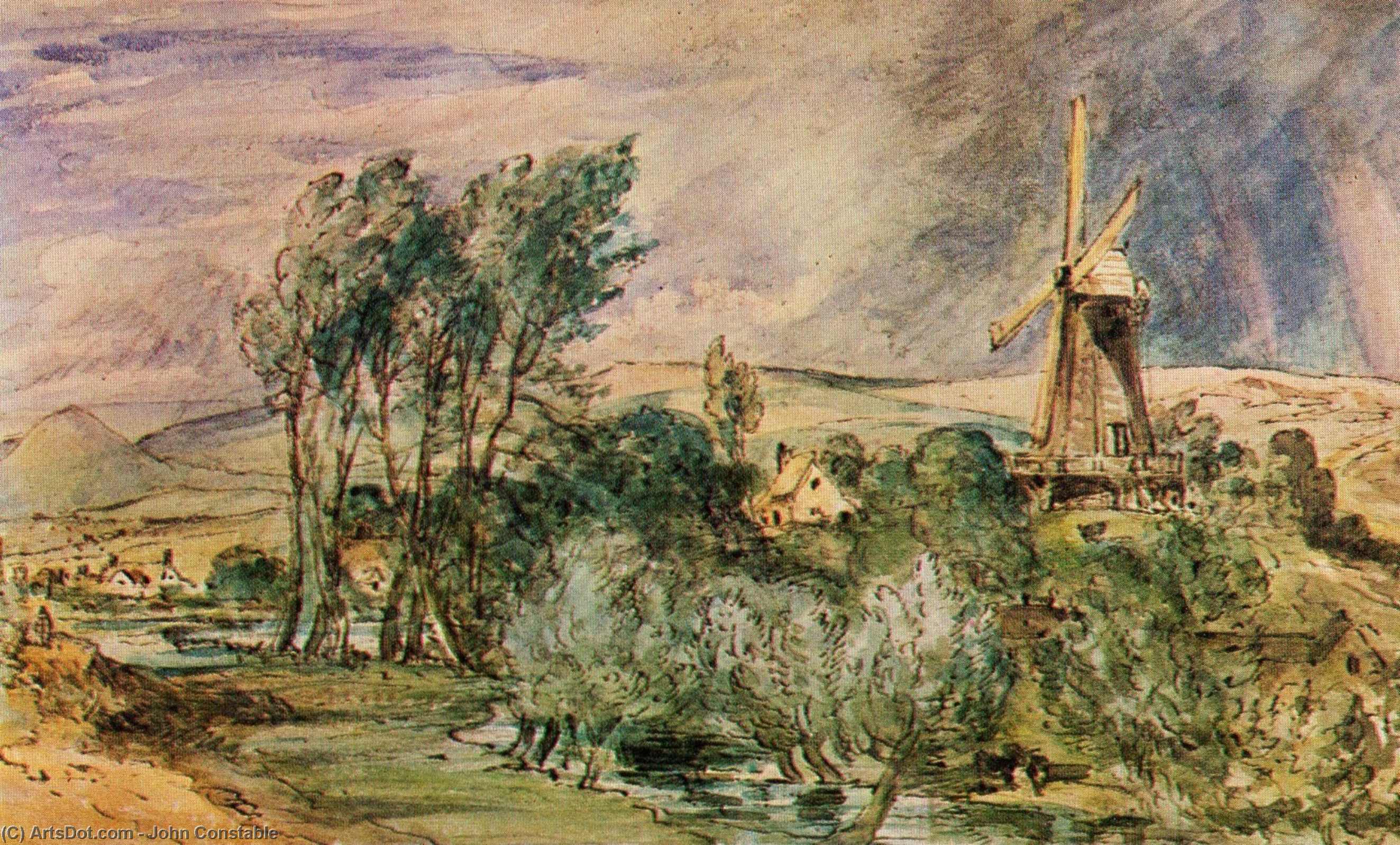
Foord Rd Mill, Folkestone

Constable’s Romantic masterpiece captures serene Folkestone's windmill amidst dappled sunlight, showcasing masterful atmospheric perspective and a profound appreciation for rural labor—a timeless scene inviting you to explore the beauty of Victorian England.

Découvrez John Constable (1776-1837), un peintre de paysages britannique renommé pour sa profondeur émotionnelle et sa beauté naturelle. Influencé par la École de Barbizon, il a pionnier le Romantisme avec des œuvres emblématiques telles que 'Netley Abbey'. Explorez son héritage chez WahooArt!

Giclée / Impression d'art

Impression giclée ou sur toile de qualité musée, avec une production rapide et des finitions au choix.

P118B $10
P118H $10
P118W $10
P438Z $10
P508JH $12
P508YH $12
P805H $10
P805Z $10
P919BZ $10
P919G $10
P919XJ $10
P959ZH $10
P968JZ $12
W106C $8
W218G $10
W218JH $8
W218Y $10
W307PJ $10
W316G $10
W316PJ $8
W316Y $10
W398PJ $8
W4111J $10
W500HY $15
W500JH $15
W692G $12
W849H $8
W940BG $15
W953PJ $8

Standard
custom
CM
INCH

Choisissez parmi nos formats prédéfinis qui respectent les proportions originales de l’œuvre.

largeur
hauteur

Vous pouvez saisir vos propres dimensions pour vous adapter à un cadre ou à un espace spécifique. Si la taille sélectionnée ne correspond pas aux proportions de l'image originale, nous recadrerons l'œuvre ou étendrons l'image avec une bordure en miroir ou une couleur unie. Une maquette numérique vous sera envoyée pour approbation avant le début de la production.
Veuillez noter que l'aperçu à l'écran ne reflète pas le recadrage ou l'extension réelle. Seule la maquette montrera avec précision la composition finale.
Bien que des tailles personnalisées soient disponibles, nous vous recommandons de choisir une dimension dans la liste prédéfinie afin de préserver les proportions originales.

Livraison dans le monde entier () en 2 semaines au lieu des 4/5 semaines habituelles. (3 juillet)

why_choose_icon
Livraison express gratuite dans le monde entier

why_choose_icon
Toile de lin de haute qualité
why_choose_icon
Assurance transport complète
why_choose_icon
Garantie de remboursement des frais de douane
why_choose_icon
Garantie de fidélité des couleurs
why_choose_icon
Politique de retour de 60 jours (uniquement en cas de défaut)
why_choose_icon
Garantie de remboursement à 100%
why_choose_icon
Réduction sur les achats groupés

Prix total

-

reproduction

Foord Rd Mill, Folkestone

Giclée / Impression d'art

Format de reproduction

-

Prix total final

-

En bref

  • Influences: Claude Lorrain
  • Movement: Romanticism
  • Artistic style: Romantic Landscape Painting
  • Artist: John Constable
  • Year: 1833
  • Location: Private Collection
  • Notable elements or techniques: Atmospheric perspective; Detailed depiction of rural landscape.

Quiz d'art

Chaque question ne comporte qu'une seule bonne réponse.

Question 1:
What artistic movement is John Constable’s ‘Foord Rd Mill, Folkestone’ primarily associated with?
Question 2:
The painting depicts a prominent feature of the landscape – what is it?
Question 3:
Where was John Constable born?
Question 4:
What is the overall mood conveyed by Constable’s depiction of Folkestone?
Question 5:
The painting showcases a technique known for capturing the effects of light on natural subjects. What is this technique called?

Description de l'œuvre

A Symphony of Light and Labor: Exploring Constable’s Foord Rd Mill

John Constable’s “Foord Rd Mill, Folkestone,” painted in 1833, isn't merely a depiction of a rural scene; it’s a masterful distillation of Romantic idealism infused with the tangible realities of Victorian England. Situated in Folkestone—a burgeoning seaside town grappling with industrial expansion and seeking to establish itself as an artistic haven—the painting captures a moment of serene beauty amidst the encroaching influence of modernity.

  • Subject Matter: The centerpiece is undoubtedly the windmill, a ubiquitous symbol of English agriculture and industriousness. Constable meticulously rendered its weathered timbers and spinning sails, conveying not just visual accuracy but also an appreciation for the physical labor that sustains rural communities. Scattered figures—likely visitors enjoying the coastal air—add to the narrative depth, suggesting a harmonious coexistence between human activity and the natural world.
  • Style: Constable’s work firmly belongs to the Romantic movement, prioritizing emotional expression over strict academic conventions. Unlike the idealized landscapes favored by artists like Claude Lorrain, “Foord Rd Mill” embraces atmospheric perspective—the subtle gradation of color and tone that creates a sense of depth—a technique championed by Constable himself as he sought to capture the essence of nature’s fleeting moods.
  • Technique: Constable employed oil paint on canvas with remarkable precision. His brushstrokes are loose yet controlled, layering colors to build up texture and luminosity. The artist skillfully utilized light – particularly diffused sunlight filtering through the trees—to illuminate the mill and its surroundings, creating a palpable sense of warmth and vibrancy. This masterful manipulation of pigment contributes significantly to the painting’s emotional impact.
  • Historical Context: Painted during Constable's formative years, “Foord Rd Mill” reflects the broader anxieties and aspirations of Victorian Britain. The Industrial Revolution was transforming England’s landscape and society, prompting artists like Constable to champion the preservation of rural traditions and landscapes as antidotes to urban alienation. Folkestone itself was undergoing rapid development, attracting wealthy tourists and establishing a reputation for artistic patronage.
  • Symbolism: Beyond its literal representation of a windmill and pastoral setting, “Foord Rd Mill” speaks to deeper themes of resilience, continuity, and the sublime beauty found in everyday life. The windmill symbolizes perseverance—the enduring spirit of rural England—while the expansive sky evokes a sense of awe and wonder, reminding viewers of the grandeur of nature.

The painting’s emotional resonance stems from Constable's ability to convey not just what he saw but how he felt. It invites contemplation on the relationship between humanity and environment—a theme that continues to resonate with audiences today. A reproduction of “Foord Rd Mill” offers a window into Constable’s artistic vision and captures the enduring allure of Romantic landscape painting.


Biographie de l'artiste

**Jeunesse et difficultés**

John Constable, un artiste britannique renommé, est né le 23 juin 1776 à East Bergholt, dans le Suffolk. Sa jeunesse a été marquée par une profonde connexion avec la nature, qui allait devenir la marque de fabrique de son style artistique. Malgré les nombreuses difficultés rencontrées sur le marché de l'art anglais, la détermination inébranlable de Constable envers son métier a ouvert la voie à un héritage qui dépasse largement sa propre époque.

**Style artistique et influence**

L’approche distinctive de Constable en matière de peinture paysagère, caractérisée par son accent sur la beauté naturelle et la profondeur émotionnelle, a marqué une évolution significative dans ce genre. Son influence a été particulièrement profonde en France, où elle a joué un rôle clé dans la formation de l'École de Barbizon des peintres. Cette école, connue pour sa focalisation sur le réalisme et la nature, s’est directement inspirée des techniques et des thèmes de Constable.
  • Netley Abbey (huile sur toile), un témoignage de son talent pour capturer l'essence des paysages naturels.
  • The Judges Walk, Hampstead (romantisme, huile), illustrant sa capacité à infuser des touches personnelles dans son travail.
  • A View on the Stour near Dedham (129 x 188 cm, romantisme, huile sur toile), un exemple flagrant de son influence sur le genre du paysage.

**Héritage et mémoire**

Aujourd’hui, John Constable est souvenu non seulement comme peintre de paysages mais aussi comme pionnier qui a ouvert de nouvelles possibilités d'expression émotionnelle dans l’art. Son impact profond sur la trajectoire de la peinture de paysage au 19e siècle et au-delà est indéniable. Points clés : * Influencé dans le développement de l'École de Barbizon en France * A ouvert une nouvelle approche de la peinture de paysages, axée sur la beauté naturelle et la profondeur émotionnelle * A lutté pour être reconnu sur le marché de l’art anglais pendant sa vie

**Conclusion**

L'héritage de John Constable témoigne du pouvoir transformateur de l’art. Son influence sur la peinture de paysages, à la fois dans sa période et au-delà, nous rappelle l'impact profond qu'un artiste peut avoir sur le monde.
John Constable

John Constable

1776 - 1837 , Royaume-Uni

En bref

  • Artistes Influents:
    • Claude Lorrain
    • Jacob van Ruisdael
  • Date De Décès: 1837
  • Date De Naissance: 23 juin 1776
  • Influence Sur Les Artistes: ['École de Barbizon']
  • Lieu De Naissance: East Bergholt, Royaume-Uni
  • Mouvement Artistique: Romantisme
  • Nationalité: Britannique
  • Nom Complet: John Constable
  • Oeuvres Notables:
    • Netley Abbey
    • The Hay Wain
    • Salisbury Cathedral
Explorez des œuvres d'art classées par thèmes, styles et caractéristiques.