Aperçu en situation Aperçu en RA Passer au format impression Passer au format image numérique Partager
Détails Guide imprimable Ajouter aux favoris Télécharger Articles similaires Radiographie Voir le diaporama Statistiques

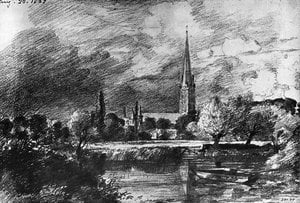
Coastal Scene

Experience John Constable’s ‘Coastal Scene,’ a Romantic masterpiece capturing the raw beauty of Dedham Vale with loose brushstrokes and atmospheric light. This evocative landscape painting transports you to 1814, perfect for art lovers seeking tranquility.

Découvrez John Constable (1776-1837), un peintre de paysages britannique renommé pour sa profondeur émotionnelle et sa beauté naturelle. Influencé par la École de Barbizon, il a pionnier le Romantisme avec des œuvres emblématiques telles que 'Netley Abbey'. Explorez son héritage chez WahooArt!

Reproduction à l'huile faite à la main

Huile sur toile peinte à la main, avec cadre et dimensions personnalisés, réalisée sur commande par nos artistes. ( Passer au format impression Passer au format image numérique)

Corner sample of the P118B picture frame: polystyrène moulé, 5 cm wide and 3 cm thick
P118B €10
Corner sample of the P118H picture frame: polystyrène moulé, 5 cm wide and 3 cm thick
P118H €10
Corner sample of the P118W picture frame: polystyrène moulé, 5 cm wide and 3 cm thick
P118W €10
Corner sample of the P438Z picture frame: polystyrène moulé, 5.5 cm wide and 3.5 cm thick
P438Z €10
Corner sample of the P508JH picture frame: polystyrène moulé, 7 cm wide and 3.5 cm thick
P508JH €12
Corner sample of the P508YH picture frame: polystyrène moulé, 7 cm wide and 3.5 cm thick
P508YH €12
Corner sample of the P805H picture frame: polystyrène moulé, 5 cm wide and 3.5 cm thick
P805H €10
Corner sample of the P805Z picture frame: polystyrène moulé, 5 cm wide and 3.5 cm thick
P805Z €10
Corner sample of the P919BZ picture frame: polystyrène moulé, 7 cm wide and 3.5 cm thick
P919BZ €10
Corner sample of the P919G picture frame: polystyrène moulé, 7 cm wide and 3.5 cm thick
P919G €10
Corner sample of the P919XJ picture frame: polystyrène moulé, 7 cm wide and 3.5 cm thick
P919XJ €10
Corner sample of the P959ZH picture frame: polystyrène moulé, 5 cm wide and 3 cm thick
P959ZH €10
Corner sample of the P968JZ picture frame: polystyrène moulé, 6 cm wide and 4 cm thick
P968JZ €12
Corner sample of the W106C picture frame: bois massif, 5 cm wide and 3 cm thick
W106C €8
Corner sample of the W218G picture frame: bois massif, 5 cm wide and 3 cm thick
W218G €10
Corner sample of the W218JH picture frame: bois massif, 5 cm wide and 3 cm thick
W218JH €8
Corner sample of the W218Y picture frame: bois massif, 5 cm wide and 3 cm thick
W218Y €10
Corner sample of the W307PJ picture frame: bois massif, 6 cm wide and 3 cm thick
W307PJ €10
Corner sample of the W316G picture frame: bois massif, 6 cm wide and 3 cm thick
W316G €10
Corner sample of the W316PJ picture frame: bois massif, 6 cm wide and 3 cm thick
W316PJ €8
Corner sample of the W316Y picture frame: bois massif, 6 cm wide and 3 cm thick
W316Y €10
Corner sample of the W398PJ picture frame: bois massif, 5 cm wide and 3 cm thick
W398PJ €8
Corner sample of the W4111J picture frame: bois massif, 6.5 cm wide and 3.5 cm thick
W4111J €10
Corner sample of the W500HY picture frame: bois massif, 7 cm wide and 5 cm thick
W500HY €15
Corner sample of the W500JH picture frame: bois massif, 7 cm wide and 5 cm thick
W500JH €15
Corner sample of the W692G picture frame: bois massif, 8 cm wide and 4 cm thick
W692G €12
Corner sample of the W849H picture frame: bois massif, 5 cm wide and 3 cm thick
W849H €8
Corner sample of the W940BG picture frame: bois massif, 7.5 cm wide and 4.5 cm thick
W940BG €15
Corner sample of the W953PJ picture frame: bois massif, 6 cm wide and 3.5 cm thick
W953PJ €8

Format standard
personnalisé
CM
INCH

Choisissez parmi nos formats prédéfinis qui respectent les proportions originales de l’œuvre.

largeur
hauteur

Saisissez la largeur et la hauteur souhaitées, pour s'adapter à votre cadre ou à votre mur. Cette œuvre est peinte à la main ; ainsi, pour un format de forme différente, l'artiste peut peindre un peu plus autour du tableau ou réduire légèrement les bords — c'est vous qui choisissez. Nous vous envoyons une maquette numérique pour approbation avant que la peinture ne commence. L'image présentée sur cette page ne reflète pas le résultat réel — seule la maquette le fait.

Exemples de personnalisation possibles : remplacer un visage par la photo du client ; ajouter un animal de compagnie (par exemple, remplacer un chat par un chien) ; inclure un message caché en arrière-plan ; modifier le paysage ou les éléments de l'arrière-plan.
Après la commande, l’équipe WahooArt.com contactera le client par e-mail pour recueillir ses instructions et lui fournira une maquette d’aperçu

Livraison dans le monde entier () en 3 à 4 semaines au lieu des 5 semaines habituelles. (24 octobre). Aucun compromis sur la qualité.

Livraison express gratuite dans le monde entier
Toile de lin de haute qualité
Assurance transport complète
Garantie de remboursement des droits de douane
Garantie de fidélité des couleurs
Garantie de retour de 100 jours (uniquement en cas de défaut)
Garantie de remboursement à 100%
Tarifs dégressifs sur quantité

Prix total

€ 239

Coastal Scene

Technique de reproduction

Format de la reproduction

-

Prix total final

€ 239

L'essentiel de l'œuvre

  • Title: Coastal Scene
  • Subject or theme: Landscape; Coastal scenery
  • Notable elements or techniques: Atmospheric perspective; Detailed observation of nature.
  • Movement: Romanticism
  • Location: Private Collection

Quiz d'art

Chaque question ne comporte qu'une seule bonne réponse.

Question 1:
What artistic movement is John Constable’s ‘Coastal Scene’ primarily associated with?
Question 2:
The painting depicts a coastal landscape featuring rocks and water. What element contributes significantly to the overall mood of tranquility?
Question 3:
Constable’s upbringing in Suffolk profoundly influenced his artistic style. Where did he spend much of his childhood?
Question 4:
Which artist inspired Constable to embrace a more emotive approach to painting landscapes?
Question 5:
What is the primary technique employed by Constable in ‘Coastal Scene’?

A Symphony of Light and Landscape

John Constable's "Coastal Scene" transcends mere depiction; it embodies the very spirit of Romantic landscape painting—a profound communion with nature imbued with emotion and observation. Captured during a period of intense artistic evolution, this artwork stands as a testament to Constable’s revolutionary approach to portraying the natural world. Unlike earlier artists who sought idealized, polished representations of the countryside, Constable relentlessly pursued an honest portrayal of reality, prioritizing atmospheric conditions and the subtle nuances of color over conventional grandeur. In this piece, the viewer is invited into a world where the boundary between the observer and the observed dissolves, replaced by a visceral connection to the elements.

The painting presents a rugged coastline dominated by imposing rocks jutting from a turbulent sea, all bathed in the diffused, golden glow of late afternoon sunlight. These geological anchors ground the composition, providing a sense of permanence against the restless movement of the water. As one gazes upon the scene, the interplay between the sandy shore and the encroaching tide creates a rhythmic tension, suggesting the eternal cycle of the ocean's breath. The presence of a solitary figure near the center of the canvas adds a poignant layer of narrative depth, serving as a surrogate for the viewer—a quiet witness to the immense, unyielding beauty of the coastal landscape.

The Mastery of Atmosphere and Technique

To understand the brilliance of this work, one must look closely at Constable’s technical innovations. His stylistic influence stemmed from the monumental canvases of Claude Lorrain, yet Constable swiftly distinguished himself by rejecting a polished aesthetic in favor of a technique characterized by loose, energetic brushstrokes. He was a master of capturing the fleeting effects of weather; he meticulously studied how sunlight interacted with clouds and water surfaces, painstakingly recreating these phenomena on canvas with remarkable accuracy. This dedication to observation allowed him to convey not just what he saw, but also how he felt about it.

Constable frequently employed a signature impasto technique—the thick, sculptural application of paint—to give physical weight to the sea foam and the turbulent swells. This textured surface does not merely represent the waves; it embodies them, catching the light in ways that mimic the flickering movement of water under a shifting sky. For the discerning collector or interior designer, this tactile quality offers an extraordinary depth that changes with the lighting of a room, bringing a sense of organic movement and life to any sophisticated space.

A Legacy of Emotional Resonance

Beyond its technical prowess, "Coastal Scene" is a work of profound emotional resonance. It belongs to the Romantic tradition, which sought to evoke the sublime—that intoxicating mixture of awe and terror found in nature’s most untamed moments. While Constable is often celebrated for his tranquil depictions of the Dedham Vale, his coastal works reveal a different facet of his soul: one that finds beauty in the rugged, the weathered, and the tempestuous. The painting serves as an emotional interior, reflecting the artist's own deep-seated connection to the rhythms of the natural world.

For those seeking to adorn a home or gallery with a piece of art history, a high-quality reproduction of this masterpiece offers more than just decoration. It provides a window into the 19th-century English landscape, a focal point of quiet contemplation, and an enduring symbol of the human spirit's reverence for nature. Whether placed in a contemporary living area to provide a sense of tranquility or in a traditional study to evoke historical gravity, this work continues to inspire awe through its timeless ability to capture the fleeting dance of light and shadow.

Questions et réponses

De quelle époque date « Coastal Scene » ?

«Coastal Scene» appartient à l'époque 19th Century.

Quelle saturation et quelle intensité «Coastal Scene» de John Constable présente-t-il ?

«Coastal Scene» de John Constable est représenté avec une saturation de Muted et une intensité de Monochromatic.

L'image de «Coastal Scene» de John Constable peut-elle être librement reproduite ?

Le statut des droits d'auteur pour «Coastal Scene» de John Constable : l'œuvre est dans le dans le domaine public - ses droits d'auteur ont expiré. Cela détermine si les reproductions de l'image peuvent être réalisées librement.


Biographie de l'artiste

**Jeunesse et difficultés**

John Constable, un artiste britannique renommé, est né le 23 juin 1776 à East Bergholt, dans le Suffolk. Sa jeunesse a été marquée par une profonde connexion avec la nature, qui allait devenir la marque de fabrique de son style artistique. Malgré les nombreuses difficultés rencontrées sur le marché de l'art anglais, la détermination inébranlable de Constable envers son métier a ouvert la voie à un héritage qui dépasse largement sa propre époque.

**Style artistique et influence**

L’approche distinctive de Constable en matière de peinture paysagère, caractérisée par son accent sur la beauté naturelle et la profondeur émotionnelle, a marqué une évolution significative dans ce genre. Son influence a été particulièrement profonde en France, où elle a joué un rôle clé dans la formation de l'École de Barbizon des peintres. Cette école, connue pour sa focalisation sur le réalisme et la nature, s’est directement inspirée des techniques et des thèmes de Constable.
  • Netley Abbey (huile sur toile), un témoignage de son talent pour capturer l'essence des paysages naturels.
  • The Judges Walk, Hampstead (romantisme, huile), illustrant sa capacité à infuser des touches personnelles dans son travail.
  • A View on the Stour near Dedham (129 x 188 cm, romantisme, huile sur toile), un exemple flagrant de son influence sur le genre du paysage.

**Héritage et mémoire**

Aujourd’hui, John Constable est souvenu non seulement comme peintre de paysages mais aussi comme pionnier qui a ouvert de nouvelles possibilités d'expression émotionnelle dans l’art. Son impact profond sur la trajectoire de la peinture de paysage au 19e siècle et au-delà est indéniable. Points clés : * Influencé dans le développement de l'École de Barbizon en France * A ouvert une nouvelle approche de la peinture de paysages, axée sur la beauté naturelle et la profondeur émotionnelle * A lutté pour être reconnu sur le marché de l’art anglais pendant sa vie

**Conclusion**

L'héritage de John Constable témoigne du pouvoir transformateur de l’art. Son influence sur la peinture de paysages, à la fois dans sa période et au-delà, nous rappelle l'impact profond qu'un artiste peut avoir sur le monde.
John Constable

John Constable

1776 - 1837 , Royaume-Uni

En bref

  • Artistes Influents:
    • Claude Lorrain
    • Jacob van Ruisdael
  • Date De Décès: 1837
  • Date De Naissance: 23 juin 1776
  • Influence Sur Les Artistes: ['École de Barbizon']
  • Lieu De Naissance: East Bergholt, Royaume-Uni
  • Mouvement Artistique: Romantisme
  • Nationalité: Britannique
  • Nom Complet: John Constable
  • Oeuvres Notables:
    • Netley Abbey
    • The Hay Wain
    • Salisbury Cathedral
Explorez des œuvres d'art classées par thèmes, styles et caractéristiques.