x
Aperçu en situationAperçu en situation Visualiser en RAVisualiser en RA Commander l'impression Commander l'impressionAcheter l'image haute résolution Acheter l'image haute résolution EnvoyerEnvoyer
Détails de l'œuvreDétails de l'œuvre Ajouter aux favoris Ajouter aux favoris TéléchargerTélécharger Articles similairesArticles similaires RadiographieRadiographie DiaporamaDiaporama

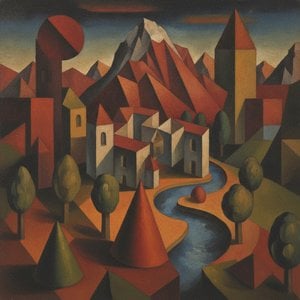
Maternity (La Maternité)

Discover 'Maternity (La Maternité)' by Jean Hyppolyte Marchand – a poignant 1921 Cubist painting. Explore this evocative artwork's historical significance & timeless beauty.

Discover Jean Hyppolyte Marchand: A French Cubist painter known for still lifes & Bloomsbury Group connections. Explore his prints, illustrations & impact on 20th-century art.

Reproduction à l'huile faite à la main

Huile sur toile peinte à la main, avec cadre et dimensions personnalisés, réalisée sur commande par nos artistes. (Commander l'impression Commander l'impressionAcheter l'image haute résolution Acheter l'image haute résolution)

P118B $10
P118H $10
P118W $10
P438Z $10
P508JH $12
P508YH $12
P805H $10
P805Z $10
P919BZ $10
P919G $10
P919XJ $10
P959ZH $10
P968JZ $12
W106C $8
W218G $10
W218JH $8
W218Y $10
W307PJ $10
W316G $10
W316PJ $8
W316Y $10
W398PJ $8
W4111J $10
W500HY $15
W500JH $15
W692G $12
W849H $8
W940BG $15
W953PJ $8

Format standard
sur mesure
CM
INCH

Choisissez parmi nos formats prédéfinis qui respectent les proportions originales de l’œuvre.

largeur
hauteur

Vous pouvez saisir vos propres dimensions pour l'adapter à un cadre ou à un espace spécifique. Si la taille sélectionnée ne correspond pas aux proportions de l'image d'origine, nous recadrerons l'œuvre ou prolongerons la peinture avec des éléments peints à la main supplémentaires. Une maquette numérique vous sera envoyée pour approbation avant le début de la production.
Veuillez noter que l'aperçu à l'écran ne reflète pas le recadrage ou l'extension réels. Seule la maquette montrera fidèlement la composition finale.
Bien que des tailles personnalisées soient disponibles, nous vous recommandons de sélectionner une dimension dans la liste prédéfinie afin de préserver les proportions d'origine.

Exemples de personnalisation possibles : remplacer un visage par la photo du client ; ajouter un animal de compagnie (par exemple, remplacer un chat par un chien) ; inclure un message caché en arrière-plan ; modifier le paysage ou les éléments de l'arrière-plan.
Après la commande, l’équipe WahooArt.com contactera le client par e-mail pour recueillir ses instructions et lui fournira une maquette d’aperçu

Livraison dans le monde entier () en 3 à 4 semaines au lieu des 5 semaines habituelles. (29 août). Aucun compromis sur la qualité.

why_choose_icon
Livraison express gratuite dans le monde entier

why_choose_icon
Toile de lin de qualité supérieure
why_choose_icon
Assurance transport complète
why_choose_icon
Garantie de remboursement des droits de douane
why_choose_icon
Garantie de fidélité des couleurs
why_choose_icon
Politique de retour de 60 jours (uniquement en cas de défaut)
why_choose_icon
Garantie de remboursement à 100%
why_choose_icon
Offre de tarifs dégressifs

Prix total

$ 297

reproduction

Maternity (La Maternité)

Technique de reproduction

Format de la reproduction

-

Prix total

$ 297


Biographie de l'artiste

The Parisian Pulse: The Life and Vision of Jean Hyppolyte Marchand

Jean Hyppolyte Marchand emerged from the vibrant, shifting currents of the early 20th-century Parisian art scene, a period defined by the tension between classical tradition and radical modernity. Born on November 21, 1883, Marchand’s artistic journey began within the prestigious halls of the École des Beaux-Arts. Under the rigorous guidance of Léon Bonnat, he absorbed the foundational principles of classical technique, yet his spirit was far too restless to remain tethered to the past. His early explorations were deeply rooted in the Impressionist tradition, finding profound beauty in the tranquil landscapes of the Midi region. In these early works, one can observe a meticulous devotion to tonal harmony and light, reminiscent of the masters Cézanne and Sisley, as he sought to capture the quiet, sun-drenched essence of rural France.

Beyond the canvas, Marchand’s formative years were enriched by a diverse engagement with the decorative arts. His experience in jewelry design and textiles provided him with a unique tactile understanding of pattern and form, an expertise that would later inform the structural integrity of his more experimental compositions. This intersection of fine art and decorative elegance allowed him to approach the canvas not just as a window into nature, and but as a space for complex geometric interplay.

A Convergence of Minds: The Bloomsbury Connection

One of the most defining chapters in Marchand’s biography was his profound association with the Bloomsbury Group. This legendary circle of intellectuals and artists—including Roger Fry, Clive Bell, Virginia Woolf, and Leonard Woolf—served as a catalyst for his artistic evolution. Through this connection, Marchand was thrust into an environment that championed aesthetic experimentation and challenged the rigid boundaries of Victorian morality and academic art. It was within this influential orbit that his work began to move away from the soft edges of Impressionism toward something far more intellectually rigorous.

The impact of Fry and Bell on Marchand’s trajectory cannot be overstated. Their advocacy for Post-Impressionism provided him with the conceptual framework to embrace the fractured planes and multiple perspectives that were beginning to redefine European art. This period of his life was marked by a daring intellectual fervor, as he grappled with the concepts of simultaneity and spatial ambiguity, seeking to represent the complexity of modern perception through a more structured, analytical lens.

The Cubist Breakthrough and Artistic Legacy

Around 1912, Marchand underwent a transformative stylistic shift, fully embracing the revolutionary language of Cubism. Drawing inspiration from the pioneering techniques of Picasso and Braque, he began to deconstruct his subjects into a series of overlapping planes and geometric facets. His still lifes from this era, such as the celebrated Still Life with Bananas (1910), demonstrate a masterful command of this new vocabulary. These works were not merely exercises in abstraction but were deeply engaged with the physical presence of objects, using light and shadow to navigate the tension between two-dimensional surfaces and three-dimensional depth.

His versatility extended well beyond oil painting into the delicate realms of printmaking and illustration. A notable achievement includes his evocative collaboration with the poet Paul Claudel on Le Chemin de la Croix, where Marchand’s ability to translate spiritual and emotional narratives into visual form was brilliantly displayed. Whether capturing the serene, sun-soaked atmosphere of a Mediterranean village in View in the Midi or exploring the poignant, structured forms of Maternity (La Maternité), Marchand’s oeuvre remains a testament to a life spent at the crossroads of tradition and innovation. His legacy persists as a vital link between the pastoral beauty of the 19th century and the fractured, exhilarating energy of the modern age.

L'essentiel de l'artiste

  • Artistic Movement Or Style: Cubism
  • Artists Or Movements Influenced By This Artist: ['Bloomsbury Group']
  • Artists Who Influenced This Artist: ['Léon Bonnat']
  • Date Of Death: 1940
  • Full Name: Jean Hippolyte Marchand
  • Nationality: French
  • Notable Artworks:
    • Still Life with Bananas
    • Olive Trees, Vence
  • Place Of Birth: Paris, France