


 Acrylique sur toileArt muralEarly Netherlandish Painting
 1437Renaissance
 31.0 x 18.0 cm
 Koninklijk Museum voor Schone Kunsten
Huile sur toile peinte à la main, avec cadre et dimensions personnalisés, réalisée sur commande par nos artistes. ( Commander l'impression Acheter l'image haute résolution)





























Choisissez parmi nos formats prédéfinis qui respectent les proportions originales de l’œuvre.

Vous pouvez saisir vos propres dimensions pour l'adapter à un cadre ou à un espace spécifique. Si la taille sélectionnée ne correspond pas aux proportions de l'image d'origine, nous recadrerons l'œuvre ou prolongerons la peinture avec des éléments peints à la main supplémentaires. Une maquette numérique vous sera envoyée pour approbation avant le début de la production.
Veuillez noter que l'aperçu à l'écran ne reflète pas le recadrage ou l'extension réels. Seule la maquette montrera fidèlement la composition finale.
Bien que des tailles personnalisées soient disponibles, nous vous recommandons de sélectionner une dimension dans la liste prédéfinie afin de préserver les proportions d'origine.
Livraison dans le monde entier () en 3 à 4 semaines au lieu des 5 semaines habituelles. (7 septembre). Aucun compromis sur la qualité.


Saint Barbara
Format de la reproduction
Jan van Eyck, arguably the most celebrated artist of the Northern Renaissance, gifted us with St Barbara—a painting that transcends time and continues to captivate viewers centuries later. Executed in 1437, this artwork resides within the hallowed halls of Koninklijk Museum voor Schone Kunsten (Royal Museum of Fine Arts) in Antwerp, Belgium—a testament to Flemish artistic prowess.
The painting’s distinctive monochrome palette—grisaille—immediately distinguishes it from vibrant color palettes prevalent during the period. This technique, favored by Van Eyck and his contemporaries, involved painstakingly layering shades of gray onto a wooden panel, achieving remarkable realism through subtle tonal variations. Measuring just 31 x 18 cm, St Barbara embodies Van Eyck’s meticulous attention to detail and unwavering commitment to capturing the essence of his subject.
At its core lies Saint Barbara—a figure venerated for her steadfast faith and martyrdom. Depicted seated upon the ground, her hands folded in prayerful repose convey a profound sense of serenity and devotion. Adorned with a crown symbolizing her sanctity and sainthood, she wears a simple dress reflecting the austerity of monastic life.
The scene is populated by several figures—men standing and others seated—adding depth and narrative complexity to the composition. Dominating the artwork are two swords prominently displayed: one positioned near the center-left side and another towards the right frame, serving as potent symbols of sacrifice and spiritual fortitude.
Behind Saint Barbara rises a towering edifice—a Gothic cathedral—representing divine majesty and architectural grandeur. The intricate tracery windows illuminate the interior space with diffused light, enhancing the ethereal atmosphere of the painting.
Jan van Eyck’s masterful use of grisaille represents an innovative approach to artistic representation during his era. It demanded exceptional skill in blending tonal shades and achieving textural nuances—a feat accomplished with unparalleled precision. Beyond its technical brilliance, St Barbara speaks to the humanist ideals of the Renaissance, emphasizing human dignity and spiritual contemplation.
The Koninklijk Museum voor Schone Kunsten in Antwerp stands as a beacon of European art heritage—a repository of masterpieces spanning centuries. Its holdings reflect the artistic tastes and intellectual currents of Antwerp’s elite during the fifteenth and sixteenth centuries.
Alongside Paul Bril's Landscape, Jan Siberechts' The Ford and Jacob Grimmer's View of Kiel, St Barbara exemplifies Van Eyck’s artistic legacy—a timeless symbol of faith and devotion.
For those eager to delve deeper into the artistry of Jan van Eyck and his contemporaries, explore Discover the Masterpieces of Koninklijk Museum voor Schone Kunsten (Belgium) on WahooArt.


1390 - 1441 , Pays-Bas
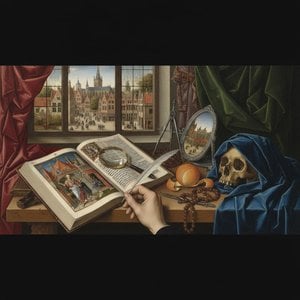
Discover the profound beauty of the Early Netherlandish Renaissance. Explore the revolutionary oil techniques, intricate symbolism, and masterful realism of Northern masters like Jan van Eyck in this expert-led guide for classical art enthusiasts.

 Aperçu en situation
 Envoyer
 Partager
 Détails de l'œuvre

 Télécharger
 Articles similaires
 Radiographie
 Diaporama
 Lire la suite







 L'option verre n'est disponible que pour les dimensions inférieures à 110 cm.


