Aperçu en situation Visualiser en RA Commander la reproduction peinte à la main Passer au format numérique Envoyer
Détails de l'œuvre Guide Ajouter aux favoris Télécharger l'image Articles similaires Radiographie Diaporama Statistiques

Untitled (Homme Nu)

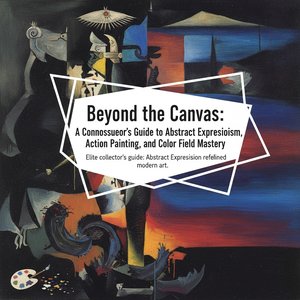
Expérimentez 'Untitled (Homme Nu)' de Jackson Pollock – un chef-d'œuvre expressionniste brut ! Des couleurs intenses, des coups de pinceau dynamiques et une énergie tourbillonnante incarnent la renaissance et le chaos. #Pollock #Expressionnisme Abstrait

Découvrez l'art révolutionnaire de Jackson Pollock (1912-1956), pionnier de l’Expressionnisme Abstrait et de la peinture à gouttes ! Explorez ses œuvres emblématiques, son intensité émotionnelle et son héritage durable.

Giclées et impressions d'art

Impressions giclées ou sur toile de qualité musée, avec une production rapide et des finitions au choix. ( Commander la reproduction peinte à la main Passer au format numérique)

Corner sample of the P118B picture frame: polystyrène moulé, 5 cm wide and 3 cm thick
P118B €10
Corner sample of the P118H picture frame: polystyrène moulé, 5 cm wide and 3 cm thick
P118H €10
Corner sample of the P118W picture frame: polystyrène moulé, 5 cm wide and 3 cm thick
P118W €10
Corner sample of the P438Z picture frame: polystyrène moulé, 5.5 cm wide and 3.5 cm thick
P438Z €10
Corner sample of the P508JH picture frame: polystyrène moulé, 7 cm wide and 3.5 cm thick
P508JH €12
Corner sample of the P508YH picture frame: polystyrène moulé, 7 cm wide and 3.5 cm thick
P508YH €12
Corner sample of the P805H picture frame: polystyrène moulé, 5 cm wide and 3.5 cm thick
P805H €10
Corner sample of the P805Z picture frame: polystyrène moulé, 5 cm wide and 3.5 cm thick
P805Z €10
Corner sample of the P919BZ picture frame: polystyrène moulé, 7 cm wide and 3.5 cm thick
P919BZ €10
Corner sample of the P919G picture frame: polystyrène moulé, 7 cm wide and 3.5 cm thick
P919G €10
Corner sample of the P919XJ picture frame: polystyrène moulé, 7 cm wide and 3.5 cm thick
P919XJ €10
Corner sample of the P959ZH picture frame: polystyrène moulé, 5 cm wide and 3 cm thick
P959ZH €10
Corner sample of the P968JZ picture frame: polystyrène moulé, 6 cm wide and 4 cm thick
P968JZ €12
Corner sample of the W106C picture frame: bois massif, 5 cm wide and 3 cm thick
W106C €8
Corner sample of the W218G picture frame: bois massif, 5 cm wide and 3 cm thick
W218G €10
Corner sample of the W218JH picture frame: bois massif, 5 cm wide and 3 cm thick
W218JH €8
Corner sample of the W218Y picture frame: bois massif, 5 cm wide and 3 cm thick
W218Y €10
Corner sample of the W307PJ picture frame: bois massif, 6 cm wide and 3 cm thick
W307PJ €10
Corner sample of the W316G picture frame: bois massif, 6 cm wide and 3 cm thick
W316G €10
Corner sample of the W316PJ picture frame: bois massif, 6 cm wide and 3 cm thick
W316PJ €8
Corner sample of the W316Y picture frame: bois massif, 6 cm wide and 3 cm thick
W316Y €10
Corner sample of the W398PJ picture frame: bois massif, 5 cm wide and 3 cm thick
W398PJ €8
Corner sample of the W4111J picture frame: bois massif, 6.5 cm wide and 3.5 cm thick
W4111J €10
Corner sample of the W500HY picture frame: bois massif, 7 cm wide and 5 cm thick
W500HY €15
Corner sample of the W500JH picture frame: bois massif, 7 cm wide and 5 cm thick
W500JH €15
Corner sample of the W692G picture frame: bois massif, 8 cm wide and 4 cm thick
W692G €12
Corner sample of the W849H picture frame: bois massif, 5 cm wide and 3 cm thick
W849H €8
Corner sample of the W940BG picture frame: bois massif, 7.5 cm wide and 4.5 cm thick
W940BG €15
Corner sample of the W953PJ picture frame: bois massif, 6 cm wide and 3.5 cm thick
W953PJ €8

Format standard
sur mesure
CM
INCH

Choisissez parmi nos formats prédéfinis qui respectent les proportions originales de l’œuvre.

largeur
hauteur

Saisissez la largeur et la hauteur souhaitées pour qu'elles s'adaptent à votre cadre ou à votre mur. Une impression peut être recadrée, mais jamais agrandie au-delà de l'image originale ; ainsi, un format de forme différente entraînera la perte d'une partie de l'image. Nous vous envoyons une maquette numérique pour approbation avant toute impression. L'image présentée sur cette page ne montre pas le recadrage réel — seule la maquette le permet.

Livraison dans le monde entier () en 2 semaines au lieu des 4/5 semaines habituelles. (25 octobre)

Livraison express gratuite dans le monde entier
Toile de lin de qualité supérieure
Assurance transport complète
Garantie de remboursement des droits de douane
Garantie de fidélité des couleurs
Politique de retour de 100 jours (uniquement en cas de défaut)
Garantie de remboursement à 100%
Offre de tarifs dégressifs

Prix total

€ 60

Untitled (Homme Nu)

Giclées et impressions d'art

Format de la reproduction

-

Prix total

€ 60

Informations clés

  • Notable elements or techniques: Drip painting; Action Painting
  • Subject or theme: Psychological turmoil
  • Year: 1950–53
  • Influences: Surrealism
  • Artist: Paul Jackson Pollock

Quiz d'art

Chaque question ne comporte qu'une seule bonne réponse.

Question 1:
Quel mouvement artistique est associé à cette œuvre ?
Question 2:
Quelle technique picturale caractéristique utilise Jackson Pollock ?
Question 3:
Quel est le thème principal représenté dans cette peinture ?
Question 4:
Dans quel contexte historique et culturel cette œuvre a-t-elle été créée ?
Question 5:
Pourquoi cette peinture est considérée comme une œuvre révolutionnaire ?

Une Figure Forgée dans le Tourment : Exploration de ‘Untitled (Nude Man)’ de Pollock

Cette puissante peinture de Jackson Pollock plonge le spectateur dans un tourbillon d'émotions et d'énergie brute. Représentant une figure masculine nue semblant s’épanouir d'un paysage chaotique et ardent, c'est un exemple premier de sa contribution révolutionnaire à l'Expressionnisme Abstrait. Bien que souvent désignée simplement comme ‘Untitled (Naked Man)’, cette œuvre existe aux côtés d'une version étroitement liée intitulée ‘Untitled (Naked Man with Knife)’ – toutes deux créées autour de 1950-53 et partageant des éléments compositionnels et un poids émotionnel similaires.

Style & Technique : La Naissance de la Peinture d’Action

La technique révolutionnaire de Jackson Pollock est immédiatement perceptible. Abandonnant la peinture traditionnelle sur chevalet, il plaçait la toile au sol et employait une méthode radicale de “goutte à goutte”. De la peinture liquide – souvent des peintures industrielles diluées avec du turpentine – était versée, éclaboussée et projetée sur la surface, créant un réseau dense de lignes et de textures. Ce n'était pas simplement une question d’application de peinture ; c'était *une performance*, une ‘peinture d’action’ où l'acte physique de création devenait intégralement lié à l'œuvre d'art elle-même. La composition résultante se caractérise par son trait de pinceau lâche (ou son absence!), son application intense de la couleur et sa perspective aplatie – autant de caractéristiques de son style mûr. L’impasto lourd crée une surface tactile, invitant à un examen attentif des couches et des gestes.

Sujet & Symbolisme : Renaissance ou Destruction ?

La figure centrale, bien qu'abstraite, est indubitablement présente – une forme masculine musclée luttant pour s’élever au milieu d'un chaos tourbillonnant. Les tons chauds dominants – oranges, rouges et jaunes – évoquent la chaleur, le danger et peut-être même la souffrance. Ces teintes ardentes contrastent avec les subtils bleus et verts plus froids en arrière-plan, ajoutant de la profondeur sans résoudre le sentiment général de désordre. Qu'est-ce que cette figure *signifie* ? Les interprétations sont ouvertes, mais des thèmes de renaissance, de tourment psychologique ou d’émergence de la destruction résonnent fortement. L'absence d'un récit clair permet aux spectateurs de projeter leurs propres émotions et expériences sur l'œuvre. Est-ce une représentation de la lutte primale, une représentation symbolique des démons intérieurs ou un témoignage de la résilience de l’esprit humain ?

Contexte Historique : Une Vision Post-Guerre

La percée artistique de Pollock a eu lieu dans le contexte de la fin de la Seconde Guerre mondiale, une période marquée par une anxiété profonde et des interrogations existentielles. L'Expressionnisme Abstrait est apparu comme une tentative de faire face à ces sentiments, rejetant l’art représentatif au profit de l’expression subjective. Le travail de Pollock, en particulier, reflétait un désir de se libérer des conventions et d’explorer l’inconscient. Ses peintures à goutte n'étaient pas destinées à représenter des objets ou des scènes spécifiques mais plutôt à transmettre une émotion brute et une énergie directement sur la toile. Il est devenu une figure de proue de la Nouvelle École de New York, déplaçant le centre du monde de l’art de Paris.

Impact Émotionnel & Héritage

‘Untitled (Naked Man)’ n'est pas une peinture destinée à une observation passive ; elle exige un engagement. La composition tourbillonnante et les couleurs intenses créent une expérience viscérale, évoquant des sentiments d'inconfort, d'excitation ou même de catharsis. *Le travail* de Pollock continue de captiver le public aujourd’hui, influençant des générations d'artistes et inspirant des collectionneurs et des designers d'intérieur. Son énergie audacieuse et sa beauté inhabituelle en font un point focal saisissant pour tout espace – un témoignage du pouvoir durable de l'art abstrait. La peinture sert de rappel que l’art peut être à la fois profondément personnel et universellement résonnant, offrant un aperçu des complexités de la condition humaine.

Questions et réponses

Quelle atmosphère se dégage de « Untitled (Homme Nu) » ?

«Untitled (Homme Nu)» dégage une atmosphère Dramatique.

Quelle atmosphère et quelle émotion se dégagent de « Untitled (Homme Nu) » ?

Dans « Untitled (Homme Nu) », une atmosphère Dramatique accompagne une émotion Dramatique.

À quelle période de la carrière de Jackson Pollock appartient « Untitled (Homme Nu) » ?

«Untitled (Homme Nu)» appartient à la période Période Mature de la carrière de Jackson Pollock. Cette classification relie l'œuvre à l'évolution de l'artiste.


Biographie de l'artiste

Early Life and the Seeds of Innovation

Paul Jackson Pollock, born in Cody, Wyoming, in 1912, was a restless spirit from the outset. His early life was marked by frequent relocation as his father pursued work as a land surveyor across the vast landscapes of the American West. This itinerant existence instilled in young Pollock a deep connection to the natural world and an exposure to diverse cultures, particularly through encounters with Native American art during those surveying trips – impressions that would subtly permeate his artistic vision later in life.

Pollock’s formal artistic training began at the Manual Arts High School in Los Angeles, followed by studies at the Art Students League of New York under the tutelage of Thomas Hart Benton. Benton, a prominent figure in the Regionalist movement, emphasized rhythmic composition and narrative themes rooted in American life. While Pollock initially absorbed these lessons, his inherent inclination leaned toward more abstract explorations. He was also profoundly impacted by Mexican muralists like José Clemente Orozco, whose powerful depictions of social struggle resonated deeply with him. These early influences laid a foundation, but it was the burgeoning world of Surrealism that truly unlocked Pollock’s artistic potential.

The Birth of Action Painting and a Revolutionary Technique

The 1930s saw Pollock experimenting with various techniques, seeking alternatives to traditional brushwork. He began pouring paint, exploring its fluidity and unpredictable nature. However, it was around 1947 that his artistic trajectory underwent a radical transformation. Abandoning the easel altogether, Pollock laid canvases directly on the floor, initiating what would become known as his “drip painting” technique.

This wasn’t merely about applying paint; it was about embodying the act of creation itself. Pollock's canvases became arenas for physical expression, capturing the immediacy of his gestures and emotions. The resulting paintings are characterized by their “all-over” composition – a lack of central focus that invites the viewer to explore the entire surface as a unified field of energy. Intricate networks of lines and colors intertwine, creating a visual complexity that is both captivating and challenging. He employed unconventional tools—sticks, knives, even syringes—to manipulate the paint in unpredictable ways, further emphasizing the spontaneous nature of his process.

This innovative approach positioned Pollock as a central figure in the burgeoning Abstract Expressionist movement, which emerged in post-World War II New York City. Abstract Expressionism prioritized spontaneous gesture, large scale, and non-representational imagery, reflecting a broader cultural shift away from traditional artistic conventions. His marriage to fellow artist Lee Krasner was also pivotal; she provided unwavering emotional support and actively encouraged his artistic development, recognizing the groundbreaking nature of his work.

Iconic Works and Lasting Legacy

Pollock’s most celebrated works—such as Number 1, 1950 (Lavender Mist), One: Number 31, 1950, Blue Poles: Number 11, 1952, and Convergence—are testaments to his revolutionary technique. These paintings are not simply images; they are records of a performance, imbued with the artist’s physical presence and emotional intensity. The dynamic energy that emanates from these canvases is palpable, drawing viewers into a world of pure abstraction.

His style transcends mere aesthetics; it's an exploration of process over product. Pollock sought to capture the immediacy of his actions and emotions on canvas, rejecting traditional notions of composition and representation. He delved into Jungian psychology, exploring archetypes and the subconscious in his art, seeking to tap into universal symbols and primal energies.

Pollock’s impact on the history of art is immeasurable. He fundamentally altered the way artists approached painting, breaking free from easel-based methods and embracing a more performative approach. His work helped solidify New York City's position as a global center for modern art, shifting the focus away from European dominance. His influence can be seen in the work of countless artists who followed, including those associated with Color Field painting and later forms of abstract expressionism.

Though initially met with mixed reviews—some critics dismissed his work as chaotic or lacking skill—Pollock’s reputation grew steadily after his untimely death in 1956 at age 44. Today, he is universally recognized as one of the most important and influential artists of the 20th century, a visionary who dared to challenge conventions and redefine the boundaries of artistic expression.

Jackson Pollock

Jackson Pollock

1912 - 1956 , États-Unis

L'essentiel de l'artiste

  • Artistic Movement Or Style: Abstract Expressionism
  • Artists Who Influenced This Artist:
    • José Clemente Orozco
    • Thomas Hart Benton
  • Date Of Birth: January 28, 1912
  • Date Of Death: August 11, 1956
  • Full Name: Paul Jackson Pollock
  • Nationality: American
  • Notable Artworks:
    • Number 1, 1950 (Lavender Mist)
    • One: Number 31, 1950
    • Blue Poles: Number 11, 1952
    • Convergence
  • Place Of Birth: Cody, USA
Explorez des œuvres d'art classées par thèmes, styles et caractéristiques.