Aperçu en situation Aperçu en RA Passer au format impression Passer au format image numérique Partager
Détails Guide imprimable Ajouter aux favoris Télécharger Articles similaires Radiographie Voir le diaporama Statistiques

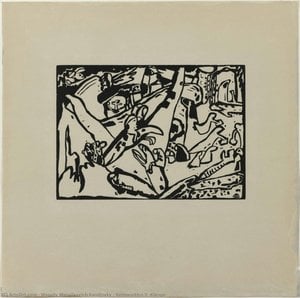
Untitled (13)

"Untitled (13)" de Jackson Pollock : une œuvre emblématique de l'abstraction expressionniste américaine. Découvrez sa composition unique et son influence sur l'art moderne. #JacksonPollock #AbstractionExpressionisme

Découvrez l'art révolutionnaire de Jackson Pollock (1912-1956), pionnier de l’Expressionnisme Abstrait et de la peinture à gouttes ! Explorez ses œuvres emblématiques, son intensité émotionnelle et son héritage durable.

Reproduction à l'huile faite à la main

Huile sur toile peinte à la main, avec cadre et dimensions personnalisés, réalisée sur commande par nos artistes. ( Passer au format impression Passer au format image numérique)

Corner sample of the P118B picture frame: polystyrène moulé, 5 cm wide and 3 cm thick
P118B 10
Corner sample of the P118H picture frame: polystyrène moulé, 5 cm wide and 3 cm thick
P118H 10
Corner sample of the P118W picture frame: polystyrène moulé, 5 cm wide and 3 cm thick
P118W 10
Corner sample of the P438Z picture frame: polystyrène moulé, 5.5 cm wide and 3.5 cm thick
P438Z 10
Corner sample of the P508JH picture frame: polystyrène moulé, 7 cm wide and 3.5 cm thick
P508JH 12
Corner sample of the P508YH picture frame: polystyrène moulé, 7 cm wide and 3.5 cm thick
P508YH 12
Corner sample of the P805H picture frame: polystyrène moulé, 5 cm wide and 3.5 cm thick
P805H 10
Corner sample of the P805Z picture frame: polystyrène moulé, 5 cm wide and 3.5 cm thick
P805Z 10
Corner sample of the P919BZ picture frame: polystyrène moulé, 7 cm wide and 3.5 cm thick
P919BZ 10
Corner sample of the P919G picture frame: polystyrène moulé, 7 cm wide and 3.5 cm thick
P919G 10
Corner sample of the P919XJ picture frame: polystyrène moulé, 7 cm wide and 3.5 cm thick
P919XJ 10
Corner sample of the P959ZH picture frame: polystyrène moulé, 5 cm wide and 3 cm thick
P959ZH 10
Corner sample of the P968JZ picture frame: polystyrène moulé, 6 cm wide and 4 cm thick
P968JZ 12
Corner sample of the W106C picture frame: bois massif, 5 cm wide and 3 cm thick
W106C 8
Corner sample of the W218G picture frame: bois massif, 5 cm wide and 3 cm thick
W218G 10
Corner sample of the W218JH picture frame: bois massif, 5 cm wide and 3 cm thick
W218JH 8
Corner sample of the W218Y picture frame: bois massif, 5 cm wide and 3 cm thick
W218Y 10
Corner sample of the W307PJ picture frame: bois massif, 6 cm wide and 3 cm thick
W307PJ 10
Corner sample of the W316G picture frame: bois massif, 6 cm wide and 3 cm thick
W316G 10
Corner sample of the W316PJ picture frame: bois massif, 6 cm wide and 3 cm thick
W316PJ 8
Corner sample of the W316Y picture frame: bois massif, 6 cm wide and 3 cm thick
W316Y 10
Corner sample of the W398PJ picture frame: bois massif, 5 cm wide and 3 cm thick
W398PJ 8
Corner sample of the W4111J picture frame: bois massif, 6.5 cm wide and 3.5 cm thick
W4111J 10
Corner sample of the W500HY picture frame: bois massif, 7 cm wide and 5 cm thick
W500HY 15
Corner sample of the W500JH picture frame: bois massif, 7 cm wide and 5 cm thick
W500JH 15
Corner sample of the W692G picture frame: bois massif, 8 cm wide and 4 cm thick
W692G 12
Corner sample of the W849H picture frame: bois massif, 5 cm wide and 3 cm thick
W849H 8
Corner sample of the W940BG picture frame: bois massif, 7.5 cm wide and 4.5 cm thick
W940BG 15
Corner sample of the W953PJ picture frame: bois massif, 6 cm wide and 3.5 cm thick
W953PJ 8

Format standard
personnalisé
CM
INCH

Choisissez parmi nos formats prédéfinis qui respectent les proportions originales de l’œuvre.

largeur
hauteur

Saisissez la largeur et la hauteur souhaitées, pour s'adapter à votre cadre ou à votre mur. Cette œuvre est peinte à la main ; ainsi, pour un format de forme différente, l'artiste peut peindre un peu plus autour du tableau ou réduire légèrement les bords — c'est vous qui choisissez. Nous vous envoyons une maquette numérique pour approbation avant que la peinture ne commence. L'image présentée sur cette page ne reflète pas le résultat réel — seule la maquette le fait.

Exemples de personnalisation possibles : remplacer un visage par la photo du client ; ajouter un animal de compagnie (par exemple, remplacer un chat par un chien) ; inclure un message caché en arrière-plan ; modifier le paysage ou les éléments de l'arrière-plan.
Après la commande, l’équipe WahooArt.com contactera le client par e-mail pour recueillir ses instructions et lui fournira une maquette d’aperçu

Livraison dans le monde entier () en 3 à 4 semaines au lieu des 5 semaines habituelles. (18 octobre). Aucun compromis sur la qualité.

Livraison express gratuite dans le monde entier
Toile de lin de haute qualité
Assurance transport complète
Garantie de remboursement des droits de douane
Garantie de fidélité des couleurs
Garantie de retour de 100 jours (uniquement en cas de défaut)
Garantie de remboursement à 100%
Tarifs dégressifs sur quantité

Prix total

€ 237

Untitled (13)

Technique de reproduction

Format de la reproduction

-

Prix total final

€ 237

L'essentiel de l'œuvre

  • Year: 1943
  • Subject or theme: Composition abstraite
  • Artist: Jackson Pollock
  • Title: Untitled (13)
  • Artistic style: Action peinture
  • Movement: Abstract Expressionisme

Jackson Pollock : Un pionnier de l'expressionnisme abstrait

Jackson Pollock (1912-1956) s'impose comme l'une des figures les plus influentes de l'art du XXe siècle, ayant bouleversé de manière irrévocable le paysage de la peinture et établi l'expressionnisme abstrait en tant que mouvement artistique dominant. Né sous le nom de Paul Jackson Pollock à Cody, dans le Wyoming, sa jeunesse fut marquée par des tendances nomades — une caractéristique qui, sans doute, a nourri son esprit créatif tourmenté. Il a perfectionné ses compétences à la Manual Arts High School de Los Angeles et a poursuivi ses études à l'Université de New York ainsi qu'à l'Art Students League, y absorbant les techniques fondamentales des peintres traditionnels tels que Benton et Siqueiros. Pourtant, c'est l'adoption du surréalisme par Pollock et son exploration des thèmes mythologiques qui l'ont véritablement propulsé vers une vision révolutionnaire.

La naissance de l'Action Painting

Le voyage artistique de Pollock a débuté par des paysages figuratifs influencés par l'esthétique régionaliste — un détour stylistique avant qu'il ne bascule de manière décisive vers l'abstraction dans les années 1940. Cette période charnière fut le témoin d'une expérimentation avec des sujets divers, incluant la mythologie et le surréalisme, visant à transmettre de profondes vérités émotionnelles. Sa technique révolutionnaire — le dripping (peinture égouttée) — est née d'un désir de libérer l'art des contraintes conventionnelles et de capturer le mouvement spontané et l'énergie sur la toile. Rejetant le coup de pinceau comme instrument de contrôle, Pollock laissait goutter, éclabousser, projeter et verser le pigment sur des toiles posées horizontalement sur le sol, créant des motifs fascinants qui défiaient la perspective linéaire et les règles compositionnelles traditionnelles. Cette méthode, baptisée « action painting », est devenue indissociable de l'identité artistique de Pollock et a profondément marqué les générations suivantes d'artistes.

« Untitled (13) » – Décoder la complexité

« Untitled (13) », créé en 1943, illustre parfaitement le style emblématique de Pollock — un dessin à la plume mesurant 39 x 34 cm qui se présente initialement comme un rassemblement d'individus autour d'un cercle central. Cependant, un examen plus attentif révèle au moins neuf figures positionnées stratégiquement à travers la composition, mettant en lumière l'attention méticuleuse de l'artiste aux détails et à l'agencement spatial. Dominant la scène, une grande horloge suspendue au mur au-dessus du groupe constitue un élément délibéré qui amplifie le sentiment d'échelle et contribue à une atmosphère de contemplation. La superposition complexe de lignes et de textures dans ce dessin invite le spectateur à plonger dans ses profondeurs symboliques, soulevant des questions sur l'interaction humaine et le passage du temps.

L'héritage de Pollock : Une influence au-delà de la toile

L'influence de Pollock s'est étendue bien au-delà de sa propre production artistique. Il a été profondément marqué par des mouvements tels que le surréalisme et l'art amérindien — des influences qui ont nourri son exploration de thèmes liés à la tragédie et à la spiritualité. Notamment, il a collaboré avec Ernest Briggs, un autre expressionniste abstrait de premier plan, démontorant un engagement partagé à repousser les limites de l'expression artistique. Ses œuvres ultérieures ont adopté des champs de couleur rectangulaires — une marque stylistique qui a consolidé sa position de pionnier du Color Field Painting. Des artistes comme Briggs ont absorbé l'approche innovante de Pollock, favorisant ainsi la diffusion des principes de l'expressionnisme abstrait.

Musées et expositions notables

L'œuvre « Untitled (13) » peut être admirée au sein des collections Jackson Pollock: Untitled 29, Untitled (13), Jackson Pollock: Untitled 6, et Jackson Pollock: Untitled 26 respectivement. La Tate Modern à Londres abrite une collection significative d'art moderne et contemporain — un témoignage de l'influence durable de Pollock sur le discours artistique. Pour en découvrir davantage sur ce musée, rendez-vous sur Tate Modern.
  • Jackson Pollock fut une figure clé du développement de l'expressionnisme abstrait.
  • « Untitled (13) » témoigne de ses premières expérimentations avec les formes abstraites.
  • La composition unique de la peinture et son horloge surdimensionnée ajoutent à sa nature énigmatique.
  • L'influence de Pollock est perceptible dans le travail d'autres artistes tels qu'Ernest Briggs.
  • La Tate Modern est un musée majeur abritant d'importantes collections d'art moderne et contemporain.
L'expressionnisme abstrait — caractérisé par l'accent mis sur la créativité spontanée et l'intensité émotionnelle — continue de captiver le public du monde entier. À travers « Untitled (13) », nous percevons l'évolution artistique de Pollock, qui a jeté les bases de ses chefs-d'œuvre ultérieurs, redéfinissant les frontières de l'art et consolidant sa place d'innovateur visionnaire. En contemplant cette pièce remarquable, nous nous rappelons la contribution profonde de Pollock à l'histoire de la peinture et nous nous laissons inspirer par sa puissance esthétique éternelle.

Questions et réponses

Comment puis-je prévisualiser une reproduction de «Untitled (13)» de Jackson Pollock ?

La page Aperçu de « Untitled (13) » vous permet de prévisualiser l'œuvre avant de passer commande.

Quelle taille et quel format sont recommandés pour un tirage de «Untitled (13)» de Jackson Pollock ?

Pour une impression de «Untitled (13)» de Jackson Pollock, un format Grand format avec une orientation Format portrait est recommandé.

Un téléchargement en haute résolution de « Untitled (13) » est-il disponible ?

« Untitled (13) » est disponible en tant que un téléchargement d'image numérique haute résolution, à acheter directement sur sa page Image numérique.


Biographie de l'artiste

Early Life and the Seeds of Innovation

Paul Jackson Pollock, born in Cody, Wyoming, in 1912, was a restless spirit from the outset. His early life was marked by frequent relocation as his father pursued work as a land surveyor across the vast landscapes of the American West. This itinerant existence instilled in young Pollock a deep connection to the natural world and an exposure to diverse cultures, particularly through encounters with Native American art during those surveying trips – impressions that would subtly permeate his artistic vision later in life.

Pollock’s formal artistic training began at the Manual Arts High School in Los Angeles, followed by studies at the Art Students League of New York under the tutelage of Thomas Hart Benton. Benton, a prominent figure in the Regionalist movement, emphasized rhythmic composition and narrative themes rooted in American life. While Pollock initially absorbed these lessons, his inherent inclination leaned toward more abstract explorations. He was also profoundly impacted by Mexican muralists like José Clemente Orozco, whose powerful depictions of social struggle resonated deeply with him. These early influences laid a foundation, but it was the burgeoning world of Surrealism that truly unlocked Pollock’s artistic potential.

The Birth of Action Painting and a Revolutionary Technique

The 1930s saw Pollock experimenting with various techniques, seeking alternatives to traditional brushwork. He began pouring paint, exploring its fluidity and unpredictable nature. However, it was around 1947 that his artistic trajectory underwent a radical transformation. Abandoning the easel altogether, Pollock laid canvases directly on the floor, initiating what would become known as his “drip painting” technique.

This wasn’t merely about applying paint; it was about embodying the act of creation itself. Pollock's canvases became arenas for physical expression, capturing the immediacy of his gestures and emotions. The resulting paintings are characterized by their “all-over” composition – a lack of central focus that invites the viewer to explore the entire surface as a unified field of energy. Intricate networks of lines and colors intertwine, creating a visual complexity that is both captivating and challenging. He employed unconventional tools—sticks, knives, even syringes—to manipulate the paint in unpredictable ways, further emphasizing the spontaneous nature of his process.

This innovative approach positioned Pollock as a central figure in the burgeoning Abstract Expressionist movement, which emerged in post-World War II New York City. Abstract Expressionism prioritized spontaneous gesture, large scale, and non-representational imagery, reflecting a broader cultural shift away from traditional artistic conventions. His marriage to fellow artist Lee Krasner was also pivotal; she provided unwavering emotional support and actively encouraged his artistic development, recognizing the groundbreaking nature of his work.

Iconic Works and Lasting Legacy

Pollock’s most celebrated works—such as Number 1, 1950 (Lavender Mist), One: Number 31, 1950, Blue Poles: Number 11, 1952, and Convergence—are testaments to his revolutionary technique. These paintings are not simply images; they are records of a performance, imbued with the artist’s physical presence and emotional intensity. The dynamic energy that emanates from these canvases is palpable, drawing viewers into a world of pure abstraction.

His style transcends mere aesthetics; it's an exploration of process over product. Pollock sought to capture the immediacy of his actions and emotions on canvas, rejecting traditional notions of composition and representation. He delved into Jungian psychology, exploring archetypes and the subconscious in his art, seeking to tap into universal symbols and primal energies.

Pollock’s impact on the history of art is immeasurable. He fundamentally altered the way artists approached painting, breaking free from easel-based methods and embracing a more performative approach. His work helped solidify New York City's position as a global center for modern art, shifting the focus away from European dominance. His influence can be seen in the work of countless artists who followed, including those associated with Color Field painting and later forms of abstract expressionism.

Though initially met with mixed reviews—some critics dismissed his work as chaotic or lacking skill—Pollock’s reputation grew steadily after his untimely death in 1956 at age 44. Today, he is universally recognized as one of the most important and influential artists of the 20th century, a visionary who dared to challenge conventions and redefine the boundaries of artistic expression.

Jackson Pollock

Jackson Pollock

1912 - 1956 , États-Unis

En bref

  • Artistic Movement Or Style: Abstract Expressionism
  • Artists Who Influenced This Artist:
    • José Clemente Orozco
    • Thomas Hart Benton
  • Date Of Birth: January 28, 1912
  • Date Of Death: August 11, 1956
  • Full Name: Paul Jackson Pollock
  • Nationality: American
  • Notable Artworks:
    • Number 1, 1950 (Lavender Mist)
    • One: Number 31, 1950
    • Blue Poles: Number 11, 1952
    • Convergence
  • Place Of Birth: Cody, USA
Explorez des œuvres d'art classées par thèmes, styles et caractéristiques.