


 Huile sur toileArt muralRomantic Landscape
 1775L'époque moderne
 91.0 x 121.0 cm
 National Gallery of Art
Huile sur toile peinte à la main, avec cadre et dimensions personnalisés, réalisée sur commande par nos artistes. ( Commander l'impression Acheter l'image haute résolution)





























Choisissez parmi nos formats prédéfinis qui respectent les proportions originales de l’œuvre.

Vous pouvez saisir vos propres dimensions pour l'adapter à un cadre ou à un espace spécifique. Si la taille sélectionnée ne correspond pas aux proportions de l'image d'origine, nous recadrerons l'œuvre ou prolongerons la peinture avec des éléments peints à la main supplémentaires. Une maquette numérique vous sera envoyée pour approbation avant le début de la production.
Veuillez noter que l'aperçu à l'écran ne reflète pas le recadrage ou l'extension réels. Seule la maquette montrera fidèlement la composition finale.
Bien que des tailles personnalisées soient disponibles, nous vous recommandons de sélectionner une dimension dans la liste prédéfinie afin de préserver les proportions d'origine.
Livraison dans le monde entier () en 3 à 4 semaines au lieu des 5 semaines habituelles. (7 septembre). Aucun compromis sur la qualité.


The Ponte Solario
Format de la reproduction
Hubert Robert’s “The Ponte Solario,” completed in 1775, stands as a cornerstone of Romantic landscape painting—a genre that prioritized emotion and imagination over strict adherence to classical ideals. More than just a depiction of crumbling stone and weathered timbers, the canvas embodies Robert's fascination with ruins as symbols of time’s relentless passage and the sublime beauty inherent in decay.
The painting portrays a magnificent castle perched atop a rocky promontory overlooking a tranquil lake. A graceful bridge spans across the water, connecting the castle to the shore—a deliberate compositional element that reinforces the sense of grandeur juxtaposed with vulnerability. Scattered boats dot the surface of the lake, adding dynamism and hinting at human presence within this desolate landscape.
Robert’s approach aligns closely with the burgeoning Romantic movement, anticipating elements of Impressionism decades before its formal emergence. He eschewed meticulous detail in favor of capturing fleeting atmospheric effects—the diffused light filtering through mist, the subtle gradations of color reflecting off the stone surfaces. Robert skillfully employed a technique known as “plein air” painting, venturing outdoors to directly observe and render the natural world, prioritizing immediacy and sensory experience.
Robert's work emerged during the waning years of the Enlightenment, a period characterized by rational thought and scientific inquiry. However, Robert actively resisted these dominant intellectual currents, embracing instead the emotional power of imagination and memory—themes central to Romantic aesthetics. He drew inspiration from the ruins of Roman temples and villas, reflecting a broader cultural preoccupation with antiquity and its perceived moral lessons. The painting speaks to a yearning for beauty amidst ruin, mirroring anxieties about mortality and the inevitable decline of civilization.
Robert’s masterful use of light and shadow elevates decay beyond mere physical deterioration; it becomes an emblem of spiritual transformation. The crumbling castle represents not just structural weakness but also the fading glory of aristocratic power—a poignant commentary on societal change. Yet, the pervasive luminescence imbues the scene with a sense of serenity and wonder, suggesting that even in ruin, beauty persists—a profound meditation on the cyclical nature of existence.
"The Ponte Solario" evokes a powerful emotional response in viewers. Its melancholic atmosphere invites contemplation on themes of loss, remembrance, and acceptance. The painting’s luminous palette captures the sublime grandeur of nature while simultaneously conveying a sense of poignant solitude—a testament to Robert's ability to translate complex psychological ideas into visually arresting imagery.

Hubert Robert fut un peintre français célébré pour ses paysages évocateurs et ses peintures de *capriccio* – des représentations pittoresques semi-fictives de ruines en Italie et en France. Il est considéré comme une figure essentielle reliant les périodes rococo et néoclassique, anticipant des aspects du romantisme avec sa fascination pour la décomposition, l'histoire et les reconstructions imaginatives.
Nicolas Robert, le père de Hubert, était au service de François-Joseph de Choiseul, marquis de Stainville. Robert reçut une éducation jésuite au Collège de Navarre en 1751. Il étudia ensuite la sculpture avec Michel-Ange Slodtz, qui l'encouragea à se consacrer à la peinture. Cette formation précoce lui inculqua une solide base en dessin et en perspective, des éléments cruciaux qui définiraient plus tard son style artistique.
Son séjour à Rome façonna profondément sa vision artistique. La juxtaposition des ruines antiques romaines avec la vie contemporaine suscita son intérêt pour représenter la décomposition aux côtés de la vitalité, un thème récurrent tout au long de sa carrière.
Le succès parisien de Robert provenait de sa capacité à capturer à la fois la grandeur de l'Antiquité classique et la vitalité de la vie contemporaine. Ses œuvres résonnaient auprès d’un public fasciné par l’histoire, l’archéologie et le pittoresque.
L’héritage de Hubert Robert réside dans sa capacité unique à mélanger la rigueur historique avec une vision imaginative. Il a ouvert un genre de peinture qui célébrait à la fois la beauté de la décomposition et le pouvoir durable de la créativité humaine. Son œuvre continue d'inspirer les artistes et de captiver le public, consolidant ainsi sa place en tant que figure significative dans l’art du XVIIIe siècle.
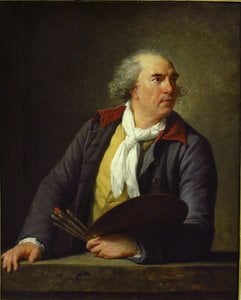
1733 - 1808 , France

Explore the profound emotional power of Romantic landscape art. Discover how masters like Friedrich captured the sublime through breathtaking nature, and learn to curate these evocative masterpieces for your luxury interior collection.

 Aperçu en situation
 Envoyer
 Partager
 Détails de l'œuvre

 Télécharger
 Articles similaires
 Radiographie
 Diaporama
 Lire la suite







 L'option verre n'est disponible que pour les dimensions inférieures à 110 cm.


