Aperçu en situation Visualiser en RA Passer au format impression Passer au format numérique Envoyer
Détails de l'œuvre Guide Ajouter aux favoris Télécharger l'image Articles similaires Radiographie Diaporama Statistiques

Under Boots

A man in distress lies on the ground in this evocative 1928 painting by Hermann Erneste Abeking that captures a somber atmosphere through expressive early 20th-century German artistry, perfect for your private collection.

Explorez les œuvres captivantes de Hermann Ernst Abeking, peintre et illustrateur allemand célèbre pour ses caricatures, ses illustrations de livres et son expression de l'art du début du XXe siècle.

Reproduction à l'huile faite à la main

Huile sur toile peinte à la main, avec cadre et dimensions personnalisés, réalisée sur commande par nos artistes. ( Passer au format impression Passer au format numérique)

Corner sample of the P118B picture frame: polystyrène moulé, 5 cm wide and 3 cm thick
P118B €10
Corner sample of the P118H picture frame: polystyrène moulé, 5 cm wide and 3 cm thick
P118H €10
Corner sample of the P118W picture frame: polystyrène moulé, 5 cm wide and 3 cm thick
P118W €10
Corner sample of the P438Z picture frame: polystyrène moulé, 5.5 cm wide and 3.5 cm thick
P438Z €10
Corner sample of the P508JH picture frame: polystyrène moulé, 7 cm wide and 3.5 cm thick
P508JH €12
Corner sample of the P508YH picture frame: polystyrène moulé, 7 cm wide and 3.5 cm thick
P508YH €12
Corner sample of the P805H picture frame: polystyrène moulé, 5 cm wide and 3.5 cm thick
P805H €10
Corner sample of the P805Z picture frame: polystyrène moulé, 5 cm wide and 3.5 cm thick
P805Z €10
Corner sample of the P919BZ picture frame: polystyrène moulé, 7 cm wide and 3.5 cm thick
P919BZ €10
Corner sample of the P919G picture frame: polystyrène moulé, 7 cm wide and 3.5 cm thick
P919G €10
Corner sample of the P919XJ picture frame: polystyrène moulé, 7 cm wide and 3.5 cm thick
P919XJ €10
Corner sample of the P959ZH picture frame: polystyrène moulé, 5 cm wide and 3 cm thick
P959ZH €10
Corner sample of the P968JZ picture frame: polystyrène moulé, 6 cm wide and 4 cm thick
P968JZ €12
Corner sample of the W106C picture frame: bois massif, 5 cm wide and 3 cm thick
W106C €8
Corner sample of the W218G picture frame: bois massif, 5 cm wide and 3 cm thick
W218G €10
Corner sample of the W218JH picture frame: bois massif, 5 cm wide and 3 cm thick
W218JH €8
Corner sample of the W218Y picture frame: bois massif, 5 cm wide and 3 cm thick
W218Y €10
Corner sample of the W307PJ picture frame: bois massif, 6 cm wide and 3 cm thick
W307PJ €10
Corner sample of the W316G picture frame: bois massif, 6 cm wide and 3 cm thick
W316G €10
Corner sample of the W316PJ picture frame: bois massif, 6 cm wide and 3 cm thick
W316PJ €8
Corner sample of the W316Y picture frame: bois massif, 6 cm wide and 3 cm thick
W316Y €10
Corner sample of the W398PJ picture frame: bois massif, 5 cm wide and 3 cm thick
W398PJ €8
Corner sample of the W4111J picture frame: bois massif, 6.5 cm wide and 3.5 cm thick
W4111J €10
Corner sample of the W500HY picture frame: bois massif, 7 cm wide and 5 cm thick
W500HY €15
Corner sample of the W500JH picture frame: bois massif, 7 cm wide and 5 cm thick
W500JH €15
Corner sample of the W692G picture frame: bois massif, 8 cm wide and 4 cm thick
W692G €12
Corner sample of the W849H picture frame: bois massif, 5 cm wide and 3 cm thick
W849H €8
Corner sample of the W940BG picture frame: bois massif, 7.5 cm wide and 4.5 cm thick
W940BG €15
Corner sample of the W953PJ picture frame: bois massif, 6 cm wide and 3.5 cm thick
W953PJ €8

Format standard
sur mesure
CM
INCH

Choisissez parmi nos formats prédéfinis qui respectent les proportions originales de l’œuvre.

largeur
hauteur

Saisissez la largeur et la hauteur souhaitées, pour s'adapter à votre cadre ou à votre mur. Cette œuvre est peinte à la main ; ainsi, pour un format de forme différente, l'artiste peut peindre un peu plus autour du tableau ou réduire légèrement les bords — c'est vous qui choisissez. Nous vous envoyons une maquette numérique pour approbation avant que la peinture ne commence. L'image présentée sur cette page ne reflète pas le résultat réel — seule la maquette le fait.

Exemples de personnalisation possibles : remplacer un visage par la photo du client ; ajouter un animal de compagnie (par exemple, remplacer un chat par un chien) ; inclure un message caché en arrière-plan ; modifier le paysage ou les éléments de l'arrière-plan.
Après la commande, l’équipe WahooArt.com contactera le client par e-mail pour recueillir ses instructions et lui fournira une maquette d’aperçu

Livraison dans le monde entier () en 3 à 4 semaines au lieu des 5 semaines habituelles. (26 octobre). Aucun compromis sur la qualité.

Livraison express gratuite dans le monde entier
Toile de lin de qualité supérieure
Assurance transport complète
Garantie de remboursement des droits de douane
Garantie de fidélité des couleurs
Politique de retour de 100 jours (uniquement en cas de défaut)
Garantie de remboursement à 100%
Offre de tarifs dégressifs

Prix total

€ 239

Under Boots

Technique de reproduction

Format de la reproduction

-

Prix total

€ 239

Informations clés

  • Artist: Hermann Erneste Abeking
  • Year: 1928
  • Title: Under Boots

A Study in Solitude: The Haunting Depths of Under Boots

In the evocative realm of early 20th-century German art, few works capture the psychological tension of the era as poignantly as Hermann Abeking’s 1928 masterpiece, Under Boots. At first glance, the viewer is drawn into a somber, shadowed interior where the weight of existence seems to press down upon the canvas. The painting depicts a solitary figure reclined on the ground, his head buried in his hands in a gesture of profound despair or perhaps deep introspection. Clad in striking yellow trousers that pierce through the surrounding gloom, the man becomes a focal point of vulnerability amidst a dark, claustrophobic setting. The presence of indistinct figures in the background and the suggestion of heavy boots looming near the subject create an atmosphere of palpable discomfort, as if the very air is thick with the anxiety of a world on the brink of transformation.

Abeking, a versatile talent who moved fluidly between the worlds of fine art and commercial illustration, brings a unique graphic sensibility to this piece. His training in the prestigious academies of Dresden and Berlin allowed him to master a technique that balances representational clarity with an expressive, almost theatrical use of light and shadow. In Under Boots, the interplay of darkness and sudden bursts of color serves not just to define form, but to direct the emotional narrative. The heavy, somber tones evoke the influence of German Expressionism—a movement that sought to strip away academic pretension to reveal the raw, unadulterated truths of human suffering and isolation. Every brushstroke contributes to a sense of mounting pressure, making the viewer feel like an intruder in this private moment of distress.

Historical Resonance and Symbolic Depth

To understand the profound impact of this work, one must consider the historical landscape of 1928 Germany. This was a period of intense social upheaval and psychological fragmentation. Abeking, while deeply connected to the vibrant publishing scene in Berlin, often infused his work with a sense of the existential. The title itself, Under Boots, serves as a powerful metaphor for the crushing weight of societal expectations, political instability, or perhaps the inescapable march of time and authority. The figure’s posture—collapsed and retreating into himself—mirrors the collective fatigue of a generation navigating the turbulent waters between the memory of the Great War and the approaching shadows of another global conflict.

For the discerning collector or interior designer, this painting offers more than mere decoration; it provides a profound conversational centerpiece. The composition’s ability to command attention through its dramatic chiaroscuro makes it an ideal acquisition for spaces that value depth, intellect, and emotional resonance. Whether placed in a quiet study or a contemporary gallery setting, a high-quality reproduction of this work invites contemplation. It serves as a window into a pivotal moment in art history, where the boundaries between illustration and fine art blurred to create something deeply human, hauntingly beautiful, and eternally relevant.

Questions et réponses

Quelle est l'orientation de «Under Boots» de Hermann Ernst Abeking ?

«Under Boots» de Hermann Ernst Abeking présente un format Landscape. Le format décrit les proportions de la composition.

Quelle atmosphère et quelle émotion se dégagent de « Under Boots » ?

«Under Boots» de Hermann Ernst Abeking dégage un sentiment Somber au sein d'une atmosphère globalement Dramatic.

Comment «Under Boots» de Hermann Ernst Abeking lie-t-il Expressionism au pays d'origine de l'artiste ?

«Under Boots» lie le mouvement Expressionism à Allemagne à travers le lieu de naissance de son créateur.


Biographie de l'artiste

un peintre, graveur et illustrateur allemand en devenir

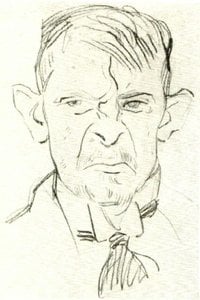
Hermann Ernst Abeking, figure emblématique de l'art allemand du début du XXe siècle, a laissé une empreinte indélébile sur le monde de la peinture, des arts graphiques et de l'illustration. Né à Berlin en 1882, second fils de Hermann George Louis Abeking et de Clara Dinglinger, il semblait dès l'aube de sa vie destiné à une destinée artistique grandiose.

jeunesse et formation

Les années formatrices d'Abeking se sont déroul'au sein des prestigieuses académies d'art de Dresde et de Berlin, où il a perfectionné son talent aux côtés de certains des artistes les plus doués de son époque. Cette période fondamentale n'a pas seulement façonné sa technique, mais a également instillé en lui une profonde appréciation pour la diversité des styles artistiques qui allaient, plus tard, nourrir son œuvre.

carrière artistique

  • Hugdietrichs Brautfahrt, un ouvrage dont il fut chargé de l'illustration à l'âge de vingt ans, a propulsé Abeking sous les projecteurs en tant que caricaturiste accompli.
  • Son lien avec le Brücke-Museum de Berlin, bien qu'il n'en fût pas membre, a profondément influencé ses premiers travaux, reflétant l'accent mis par le mouvement Die Brücke (Le Pont) sur l'expressionnisme et le primitivisme.
  • En tant qu'illustrateur pour les éditions Ullstein Verlag, la polyvalence d'Abeking en tant qu'artiste s'est trouvée magnifiée.
  • Ses caricatures parues dans Lustigen Blätter, The True Jacob et Lachen Links témoignent de sa capacité remarquable à marier l'humour avec une intégrité artistique sans faille.
  • Son adhésion à l'association des illustrateurs allemands a fini par consolider sa position au sein de la communauté artistique allemande.

vie personnelle et dernières années

En 1903, Abeking épousa Elly Grube, une peintre talentueuse elle aussi. La résidence d'été du couple à Althagen, sur la côte du Fischland, acquise en 1904, offrit un cadre serein à leur vie de famille, enrichie par la naissance de deux enfants, Ortrud (née en 1904) et Thomas (né en 1909). Après avoir traversé l'épreuve de la Première Guerre mondiale, Abeking se consacra pleinement à la peinture, laissant derrière lui un héritage d'expressions artistiques d'une grande diversité. Sa disparition à Berlin en 1939 marqua la fin d'une époque, mais scella également sa place dans les annales de l'histoire de l'art allemand. Aujourd'hui, son œuvre voyage à travers diverses collections et musées, notamment ceux présentés sur la page dédiée à Hermann Ernst Abeking sur WahooArt, véritable témoignage de son influence éternelle. Découvrez plus largement la vie et l'œuvre de Hermann Ernst Abeking à travers la collection étendue d'WahooArt : Explorez le processus de peinture d'WahooArt Akademie der bildenden Künste Wien (Vienne, Autriche) - Un guide complet
Hermann Ernst Abeking

Hermann Ernst Abeking

1882 - 1939 , Allemagne