Aperçu en situation Aperçu en RA Passer au format impression Passer au format image numérique Partager
Détails Guide imprimable Ajouter aux favoris Télécharger Articles similaires Radiographie Voir le diaporama Statistiques

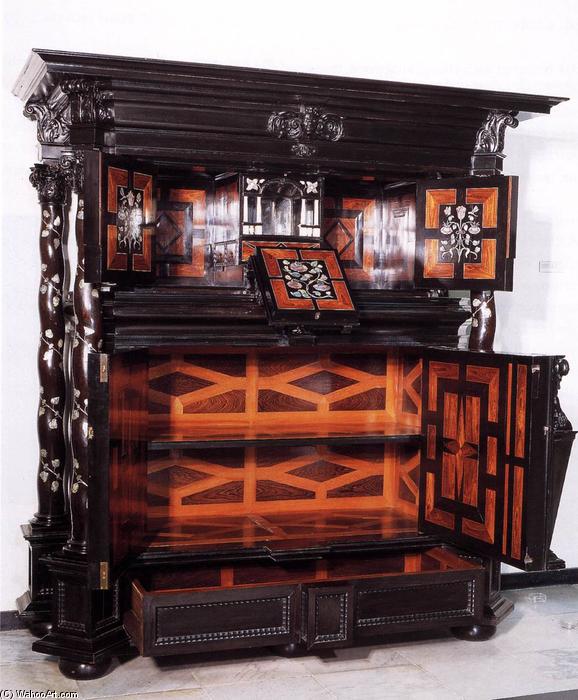
Cupboard (interior)

Marvel at Herman Doomer's 'Cupboard (Interior)' – a stunning 17th-century masterpiece showcasing intricate ebony, mother-of-pearl, and vibrant wood details from the Rijksmuseum. A true Dutch golden age treasure!

Artisan éminent de l'Âge d'or néerlandais, célèbre pour ses meubles en ébène et son célèbre Buffet (Intérieur), découvrez l'art complexe qui a défini une ère d'un artisanat opulent.

Reproduction à l'huile faite à la main

Huile sur toile peinte à la main, avec cadre et dimensions personnalisés, réalisée sur commande par nos artistes. ( Passer au format impression Passer au format image numérique)

Corner sample of the P118B picture frame: polystyrène moulé, 5 cm wide and 3 cm thick
P118B 10
Corner sample of the P118H picture frame: polystyrène moulé, 5 cm wide and 3 cm thick
P118H 10
Corner sample of the P118W picture frame: polystyrène moulé, 5 cm wide and 3 cm thick
P118W 10
Corner sample of the P438Z picture frame: polystyrène moulé, 5.5 cm wide and 3.5 cm thick
P438Z 10
Corner sample of the P508JH picture frame: polystyrène moulé, 7 cm wide and 3.5 cm thick
P508JH 12
Corner sample of the P508YH picture frame: polystyrène moulé, 7 cm wide and 3.5 cm thick
P508YH 12
Corner sample of the P805H picture frame: polystyrène moulé, 5 cm wide and 3.5 cm thick
P805H 10
Corner sample of the P805Z picture frame: polystyrène moulé, 5 cm wide and 3.5 cm thick
P805Z 10
Corner sample of the P919BZ picture frame: polystyrène moulé, 7 cm wide and 3.5 cm thick
P919BZ 10
Corner sample of the P919G picture frame: polystyrène moulé, 7 cm wide and 3.5 cm thick
P919G 10
Corner sample of the P919XJ picture frame: polystyrène moulé, 7 cm wide and 3.5 cm thick
P919XJ 10
Corner sample of the P959ZH picture frame: polystyrène moulé, 5 cm wide and 3 cm thick
P959ZH 10
Corner sample of the P968JZ picture frame: polystyrène moulé, 6 cm wide and 4 cm thick
P968JZ 12
Corner sample of the W106C picture frame: bois massif, 5 cm wide and 3 cm thick
W106C 8
Corner sample of the W218G picture frame: bois massif, 5 cm wide and 3 cm thick
W218G 10
Corner sample of the W218JH picture frame: bois massif, 5 cm wide and 3 cm thick
W218JH 8
Corner sample of the W218Y picture frame: bois massif, 5 cm wide and 3 cm thick
W218Y 10
Corner sample of the W307PJ picture frame: bois massif, 6 cm wide and 3 cm thick
W307PJ 10
Corner sample of the W316G picture frame: bois massif, 6 cm wide and 3 cm thick
W316G 10
Corner sample of the W316PJ picture frame: bois massif, 6 cm wide and 3 cm thick
W316PJ 8
Corner sample of the W316Y picture frame: bois massif, 6 cm wide and 3 cm thick
W316Y 10
Corner sample of the W398PJ picture frame: bois massif, 5 cm wide and 3 cm thick
W398PJ 8
Corner sample of the W4111J picture frame: bois massif, 6.5 cm wide and 3.5 cm thick
W4111J 10
Corner sample of the W500HY picture frame: bois massif, 7 cm wide and 5 cm thick
W500HY 15
Corner sample of the W500JH picture frame: bois massif, 7 cm wide and 5 cm thick
W500JH 15
Corner sample of the W692G picture frame: bois massif, 8 cm wide and 4 cm thick
W692G 12
Corner sample of the W849H picture frame: bois massif, 5 cm wide and 3 cm thick
W849H 8
Corner sample of the W940BG picture frame: bois massif, 7.5 cm wide and 4.5 cm thick
W940BG 15
Corner sample of the W953PJ picture frame: bois massif, 6 cm wide and 3.5 cm thick
W953PJ 8

Format standard
personnalisé
CM
INCH

Choisissez parmi nos formats prédéfinis qui respectent les proportions originales de l’œuvre.

largeur
hauteur

Saisissez la largeur et la hauteur souhaitées, pour s'adapter à votre cadre ou à votre mur. Cette œuvre est peinte à la main ; ainsi, pour un format de forme différente, l'artiste peut peindre un peu plus autour du tableau ou réduire légèrement les bords — c'est vous qui choisissez. Nous vous envoyons une maquette numérique pour approbation avant que la peinture ne commence. L'image présentée sur cette page ne reflète pas le résultat réel — seule la maquette le fait.

Exemples de personnalisation possibles : remplacer un visage par la photo du client ; ajouter un animal de compagnie (par exemple, remplacer un chat par un chien) ; inclure un message caché en arrière-plan ; modifier le paysage ou les éléments de l'arrière-plan.
Après la commande, l’équipe WahooArt.com contactera le client par e-mail pour recueillir ses instructions et lui fournira une maquette d’aperçu

Livraison dans le monde entier () en 3 à 4 semaines au lieu des 5 semaines habituelles. (22 octobre). Aucun compromis sur la qualité.

Livraison express gratuite dans le monde entier
Toile de lin de haute qualité
Assurance transport complète
Garantie de remboursement des droits de douane
Garantie de fidélité des couleurs
Garantie de retour de 100 jours (uniquement en cas de défaut)
Garantie de remboursement à 100%
Tarifs dégressifs sur quantité

Prix total

€ 239

Cupboard (interior)

Technique de reproduction

Format de la reproduction

-

Prix total final

€ 239

L'essentiel de l'œuvre

  • Dimensions: 218x196x84cm
  • Year: 1640
  • Influences: Rembrandt
  • Location: Rijksmuseum, Amsterdam
  • Medium: Oak & Ebony

A Glimpse into Dutch Opulence: The Cupboard (Interior) by Herman Doomer

Herman Doomer’s “Cupboard (Interior),” a remarkable piece housed within the hallowed halls of the Rijksmuseum in Amsterdam, is more than just a display case; it's a meticulously crafted window into 17th-century Dutch artistry and the lavish tastes of its wealthy patrons. Completed around 1640, this cupboard offers a breathtaking immersion into a world of intricate detail, vibrant color, and masterful craftsmanship – a testament to Doomer’s exceptional skill as a cabinetmaker and his profound understanding of materials and design.

The piece immediately captivates with its scale—measuring an impressive 218 x 196 cm. Constructed primarily from oak veneered with ebony, kingwood, and rosewood, the cupboard’s exterior speaks to a sophisticated appreciation for exotic woods, reflecting the burgeoning trade routes that connected Europe with distant lands. However, it is the interior that truly commands attention. The use of contrasting materials—the dark, rich tones of ebony juxtaposed against the warmer hues of rosewood and the shimmering accents of mother-of-pearl—creates a dramatic visual interplay, drawing the eye deeper into its depths.

A Symphony of Materials: Technique and Craftsmanship

Doomer’s mastery lies not only in his selection of materials but also in the techniques he employed to transform them. The intricate marquetry, painstakingly inlaid with mother-of-pearl and ivory, is a marvel of precision. Each tiny piece is carefully positioned to create delicate floral patterns and geometric designs—a testament to the artist's patience and skill. The use of baleen, a material derived from whalebone, adds another layer of textural complexity, demonstrating Doomer’s innovative approach to ornamentation. The cabinetmaker skillfully combined these materials, creating a harmonious blend of textures and colors that elevates the piece beyond mere functionality.

Furthermore, the cupboard's construction reveals a deep understanding of woodworking principles. The use of dovetail joints—a hallmark of fine craftsmanship—ensures structural integrity while allowing for seamless assembly. The subtle curves and flowing lines of the design contribute to its overall elegance and grace, reflecting the prevailing aesthetic sensibilities of the period.

Symbolism and Context: A Reflection of Status

To fully appreciate “Cupboard (Interior),” it’s crucial to understand the historical context in which it was created. The Dutch Golden Age—the 17th century—witnessed an unprecedented flourishing of art, commerce, and culture. Wealthy merchants and aristocrats sought to demonstrate their status through opulent furnishings like this cupboard, a symbol of prosperity and refined taste. The use of exotic woods and precious materials underscored the owner’s connections to global trade networks and his ability to afford luxury goods.

The cabinet itself served as more than just storage; it was a statement piece—a focal point within a grand interior, designed to impress guests and reflect the homeowner's position in society. The intricate details and lavish ornamentation were intended to evoke admiration and convey a sense of wealth and sophistication.

A Legacy Enduring: Doomer’s Influence

Herman Doomer’s work profoundly influenced the development of Dutch furniture making, establishing him as one of the era's most celebrated cabinetmakers. His innovative use of materials, combined with his impeccable craftsmanship and artistic vision, set a new standard for quality and design. The portrait by Rembrandt, painted around the same time, further cemented Doomer’s place in art history, capturing not only the artist’s likeness but also the essence of his character and creative spirit.

Today, “Cupboard (Interior)” stands as a remarkable example of 17th-century Dutch artistry—a captivating blend of technical skill, aesthetic beauty, and historical significance. It offers a rare glimpse into the world of wealthy merchants and aristocrats, revealing their aspirations, tastes, and values.

Questions et réponses

Comment les couleurs de "Cupboard (interior)" s'harmonisent-elles entre elles ?

«Cupboard (interior)» de Herman Doomer présente une harmonie de couleurs Balanced Harmony.

«Cupboard (interior)» de Herman Doomer est-il une peinture, un dessin ou une estampe ?

« Cupboard (interior) » est une œuvre de type WallArt.

Quelle est la forme et les dimensions de «Cupboard (interior)» de Herman Doomer ?

«Cupboard (interior)» de Herman Doomer est une œuvre au format Portrait de 218 x 196 cm.


Biographie de l'artiste

L'Artisan de l'Âge d'Or

Si l'histoire réserve souvent ses projecteurs les plus éclatants aux peintres qui ont su capturer la lumière de l'Âge d'Or néerlandais, l'histoire de Herman Doomer offre un aperçu profond des mains expertes qui ont encadré et bâti cette époque même. Né à Anrath, près de Venlo, Doomer n'était pas un artiste visuel au sens traditionnel du terme, mais plutôt un maître artisan dont la vie fut définie par la beauté tactile de l'ébène et du bois. En tant que menuisier et cadreur prospère, son travail a fourni la structure physique à la culture bourgeonnante de l'Amsterdam du XVIIe siècle. Il dirigeait une entreprise florissante spécialisée dans le mobilier en placage d'ébène et les cadres complexes, parcourant les rues animées de la Kalverstraat, Gasthuismolensteeg et Hartenstraat avec l'assurance d'un homme situé au cœur d'un carrefour commercial mondial.

Savoir-faire et Connexions

L'héritage de Herman Doomer est inextricablement lié aux géants artistiques de son temps. Sa maîtrise de matériaux tels que l'ébène et le fanon coloré lui a permis de contribuer à l'opulence esthétique de la République néerlandaise, créant des pièces qui reflétaient la richesse et le goût d'une nouvelle classe moyenne. Son réseau professionnel était profondément ancré dans les plus hauts cercles de la communauté créative d'Amsterdam ; il était connu pour collaborer avec des figures telles que Pieter Quuest et Johannes Lutma. Plus significatif encore, son rôle de fournisseur de cadres l'a placé en contact direct avec Rembrandt van Rijn. Cette connexion a donné naissance à l'un des portraits les plus durables de l'époque, où Rembrandt a capturé Doomer non pas simplement comme un sujet, mais comme un professionnel digne, immortalisant la force tranquille de l'artisan qui se tient derrière la toile.

Un Héritage Matériel Durable

Bien que son nom ne figure pas parmi les signatures sur les toiles, l'influence de Doomer persiste à travers les objets physiques pérennes qu'il a créés. Son œuvre, telle que le remarquable Cupboard (Interior) conservé au Rijksmuseum, sert de fenêtre sur les goûts luxueux et l'art méticuleux de la période. Ces pièces étaient bien plus que de simples objets utilitaires ; elles étaient l'incarnation de l'innovation et du savoir-faire néerlandais. Par son métier spécialisé, Doomer a aidé à façonner l'environnement visuel du XVIIe siècle, laissant derrière lui une histoire matérielle qui continue de témoigner d'un âge défini par la prospérité, le détail complexe et un dévouement inégalé à la beauté de l'artisanat d'excellence.
Herman Doomer

Herman Doomer

1595 - 1650 , Italie

En bref

  • Artistic Movement Or Style: Siècle d'or néerlandais
  • Date Of Birth: 1595
  • Date Of Death: 1650
  • Full Name: Herman Doomer
  • Nationality: Néerlandais
  • Notable Artworks:
    • Buffet (Intérieur)
    • Table de cabinet
  • Place Of Birth: Anrath, Allemagne