Aperçu en situation Aperçu en RA Acheter la peinture faite à la main Passer au format image numérique Partager
Détails Guide imprimable Ajouter aux favoris Télécharger Articles similaires Radiographie Voir le diaporama Statistiques

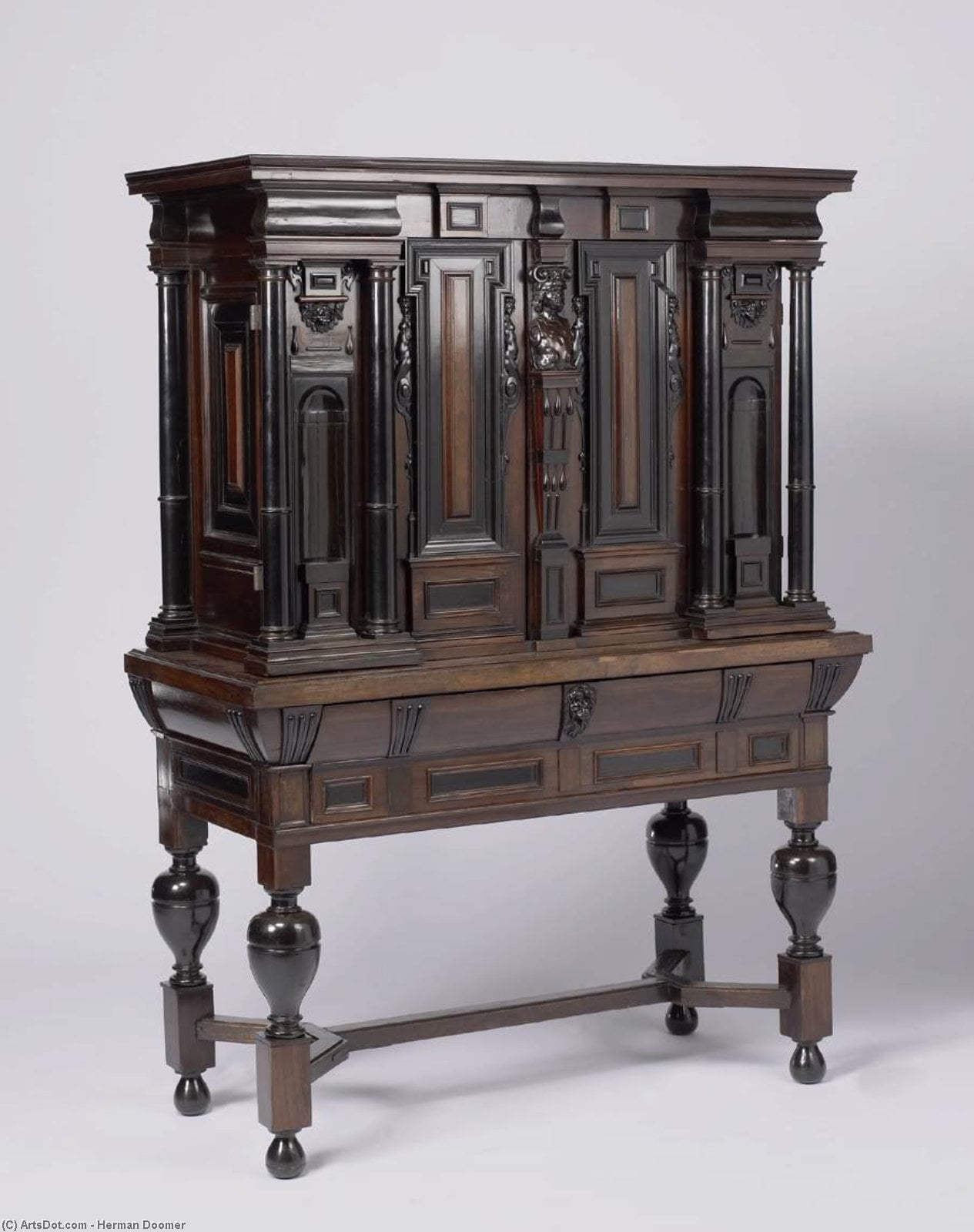
Cabinet table

Marvel at the intricate beauty of 'Cabinet Table' (1635) by Herman Doomer – a stunning German Baroque masterpiece showcasing elaborate wood carvings and masterful craftsmanship from the early 17th century.

Artisan éminent de l'Âge d'or néerlandais, célèbre pour ses meubles en ébène et son célèbre Buffet (Intérieur), découvrez l'art complexe qui a défini une ère d'un artisanat opulent.

Giclées et impressions d'art

Impressions giclées ou sur toile de qualité musée, avec une production rapide et des finitions au choix. ( Acheter la peinture faite à la main Passer au format image numérique)

Corner sample of the P118B picture frame: polystyrène moulé, 5 cm wide and 3 cm thick
P118B €10
Corner sample of the P118H picture frame: polystyrène moulé, 5 cm wide and 3 cm thick
P118H €10
Corner sample of the P118W picture frame: polystyrène moulé, 5 cm wide and 3 cm thick
P118W €10
Corner sample of the P438Z picture frame: polystyrène moulé, 5.5 cm wide and 3.5 cm thick
P438Z €10
Corner sample of the P508JH picture frame: polystyrène moulé, 7 cm wide and 3.5 cm thick
P508JH €12
Corner sample of the P508YH picture frame: polystyrène moulé, 7 cm wide and 3.5 cm thick
P508YH €12
Corner sample of the P805H picture frame: polystyrène moulé, 5 cm wide and 3.5 cm thick
P805H €10
Corner sample of the P805Z picture frame: polystyrène moulé, 5 cm wide and 3.5 cm thick
P805Z €10
Corner sample of the P919BZ picture frame: polystyrène moulé, 7 cm wide and 3.5 cm thick
P919BZ €10
Corner sample of the P919G picture frame: polystyrène moulé, 7 cm wide and 3.5 cm thick
P919G €10
Corner sample of the P919XJ picture frame: polystyrène moulé, 7 cm wide and 3.5 cm thick
P919XJ €10
Corner sample of the P959ZH picture frame: polystyrène moulé, 5 cm wide and 3 cm thick
P959ZH €10
Corner sample of the P968JZ picture frame: polystyrène moulé, 6 cm wide and 4 cm thick
P968JZ €12
Corner sample of the W106C picture frame: bois massif, 5 cm wide and 3 cm thick
W106C €8
Corner sample of the W218G picture frame: bois massif, 5 cm wide and 3 cm thick
W218G €10
Corner sample of the W218JH picture frame: bois massif, 5 cm wide and 3 cm thick
W218JH €8
Corner sample of the W218Y picture frame: bois massif, 5 cm wide and 3 cm thick
W218Y €10
Corner sample of the W307PJ picture frame: bois massif, 6 cm wide and 3 cm thick
W307PJ €10
Corner sample of the W316G picture frame: bois massif, 6 cm wide and 3 cm thick
W316G €10
Corner sample of the W316PJ picture frame: bois massif, 6 cm wide and 3 cm thick
W316PJ €8
Corner sample of the W316Y picture frame: bois massif, 6 cm wide and 3 cm thick
W316Y €10
Corner sample of the W398PJ picture frame: bois massif, 5 cm wide and 3 cm thick
W398PJ €8
Corner sample of the W4111J picture frame: bois massif, 6.5 cm wide and 3.5 cm thick
W4111J €10
Corner sample of the W500HY picture frame: bois massif, 7 cm wide and 5 cm thick
W500HY €15
Corner sample of the W500JH picture frame: bois massif, 7 cm wide and 5 cm thick
W500JH €15
Corner sample of the W692G picture frame: bois massif, 8 cm wide and 4 cm thick
W692G €12
Corner sample of the W849H picture frame: bois massif, 5 cm wide and 3 cm thick
W849H €8
Corner sample of the W940BG picture frame: bois massif, 7.5 cm wide and 4.5 cm thick
W940BG €15
Corner sample of the W953PJ picture frame: bois massif, 6 cm wide and 3.5 cm thick
W953PJ €8

Format standard
personnalisé
CM
INCH

Choisissez parmi nos formats prédéfinis qui respectent les proportions originales de l’œuvre.

largeur
hauteur

Saisissez la largeur et la hauteur souhaitées pour qu'elles s'adaptent à votre cadre ou à votre mur. Une impression ne peut être que découpée, elle ne peut jamais être agrandie au-delà de l'image originale ; ainsi, un format de forme différente entraînera la perte d'une partie de l'image. Nous vous envoyons une maquette numérique pour approbation avant toute impression. L'image présentée sur cette page ne montre pas le recadrage réel — seule la maquette le permet.

Livraison dans le monde entier () en 2 semaines au lieu des 4/5 semaines habituelles. (23 octobre)

Livraison express gratuite dans le monde entier
Toile de lin de haute qualité
Assurance transport complète
Garantie de remboursement des droits de douane
Garantie de fidélité des couleurs
Garantie de retour de 100 jours (uniquement en cas de défaut)
Garantie de remboursement à 100%
Tarifs dégressifs sur quantité

Prix total

€ 60

Cabinet table

Giclées et impressions d'art

Format de la reproduction

-

Prix total final

€ 60

L'essentiel de l'œuvre

  • Artist: herman doomer
  • Influences: Caravaggio
  • Year: 1635
  • Dimensions: 176 x 130 cm
  • Medium: Wood carving

Quiz d'art

Chaque question ne comporte qu'une seule bonne réponse.

Question 1:
What is the primary material used to create this cabinet table?
Question 2:
The date provided (1635) refers to:
Question 3:
What type of decorative elements are prominently featured on the doors and drawers of the cabinet?
Question 4:
The style of the image suggests it is primarily intended for:
Question 5:
The presence of ball-and-claw feet on the table legs is characteristic of:

A Glimpse into the Dutch Golden Age: The Cabinet Table by Herman Doomer

The image before us presents more than just a piece of furniture; it’s a portal into 17th-century Germany, a tangible echo of a period defined by both artistic flourishing and profound social upheaval. This imposing cabinet table, attributed to the hand of Herman Doomer, offers a captivating study in craftsmanship, symbolism, and the evolving aesthetics of the Dutch Golden Age. Doomer’s work, though relatively obscure today, reflects a fascinating confluence of influences – the meticulous detail of Flemish masters, the burgeoning naturalism of Caravaggio, and the distinctly German tradition of intricate wood carving.

The table itself is a testament to the skill of its creator. Constructed from dark-stained oak, it exudes an air of quiet authority, its substantial size suggesting a piece intended for a prominent location within a wealthy household. The multiple doors and drawers are not merely functional; they’re meticulously sculpted with a profusion of floral motifs – roses, lilies, and forget-me-nots – interwoven with scenes depicting figures engaged in everyday life. These aren't idealized portraits but rather glimpses into the realities of the time: a farmer tending his fields, a woman gathering herbs, and even hints of mythological creatures subtly integrated into the decorative scheme. The level of detail is astonishing; one can almost feel the texture of the petals or discern the individual strands of hair on the carved figures.

The Shadowed Influence of Caravaggio

While Doomer’s style ultimately leans towards the restrained elegance favored in Dutch interiors, a clear influence from Michelangelo Merisi da Caravaggio is discernible. Like Caravaggio, Doomer masterfully employs dramatic chiaroscuro – the interplay of light and shadow – to draw attention to specific elements within the carving. Notice how the light catches on the folds of fabric or highlights the intricate details of a face, creating a sense of depth and immediacy. This technique, borrowed from the Italian painter’s signature style, elevates the cabinet table beyond mere decoration, imbuing it with a palpable sense of drama and emotional resonance. The use of strong contrasts also serves to emphasize the richness and texture of the wood itself.

A Window into 17th-Century German Life

The date – 1635 – places this cabinet table firmly within the tumultuous period following the Thirty Years’ War. Germany, ravaged by conflict and political fragmentation, experienced a remarkable cultural resurgence during this era, often referred to as the Dutch Golden Age's sister movement. Furniture from this time reflects both the desire for opulent display and a subtle resistance to the devastation of war – a celebration of beauty amidst hardship. The scenes depicted on the cabinet table offer glimpses into the lives of ordinary people, reminding us that even in times of conflict, life continued, marked by routines, traditions, and a deep connection to the natural world.

Symbolism and the Language of Form

Beyond its decorative elements, the cabinet table is rich with symbolic meaning. The abundance of floral motifs speaks to themes of fertility, prosperity, and the cyclical nature of life. The figures depicted – farmers, women, mythical creatures – represent a complex interplay between earthly concerns and spiritual aspirations. The turned legs and ball-and-claw feet, a common feature in traditional German furniture design, ground the piece firmly in its regional context while adding an element of visual stability and elegance. The overall composition suggests a harmonious balance between order and chaos, restraint and exuberance – reflecting the complexities of the era in which it was created.

A Timeless Piece for the Connoisseur

Reproductions of this cabinet table offer a remarkable opportunity to bring a touch of 17th-century German artistry into any interior space. The intricate carvings, combined with the rich dark wood finish, create a statement piece that is both visually stunning and historically significant. Whether displayed in a grand hall or a more intimate setting, this cabinet table serves as a reminder of the enduring power of craftsmanship and the captivating beauty of a bygone era. Its presence evokes a sense of quiet contemplation, inviting viewers to reflect on the stories embedded within its intricate details.

Questions et réponses

Quel est le format et les dimensions de « Cabinet table » ?

Le format de « Cabinet table » est Portrait, et l'original mesure 176 x 130 cm. Ces deux informations sont utiles lors de la planification d'une reproduction.

Pour quelle pièce «Cabinet table» de Herman Doomer est-il recommandé ?

«Cabinet table» de Herman Doomer est recommandé pour une Living Room. Cette suggestion s'appuie sur le sujet, les couleurs et l'atmosphère de l'œuvre.

Qui est l'auteur de « Cabinet table », et dans quel mouvement ?

« Cabinet table » a été créé par Herman Doomer dans le style Baroque Painting. L'artiste et le mouvement définissent la tradition de l'œuvre.


Biographie de l'artiste

L'Artisan de l'Âge d'Or

Si l'histoire réserve souvent ses projecteurs les plus éclatants aux peintres qui ont su capturer la lumière de l'Âge d'Or néerlandais, l'histoire de Herman Doomer offre un aperçu profond des mains expertes qui ont encadré et bâti cette époque même. Né à Anrath, près de Venlo, Doomer n'était pas un artiste visuel au sens traditionnel du terme, mais plutôt un maître artisan dont la vie fut définie par la beauté tactile de l'ébène et du bois. En tant que menuisier et cadreur prospère, son travail a fourni la structure physique à la culture bourgeonnante de l'Amsterdam du XVIIe siècle. Il dirigeait une entreprise florissante spécialisée dans le mobilier en placage d'ébène et les cadres complexes, parcourant les rues animées de la Kalverstraat, Gasthuismolensteeg et Hartenstraat avec l'assurance d'un homme situé au cœur d'un carrefour commercial mondial.

Savoir-faire et Connexions

L'héritage de Herman Doomer est inextricablement lié aux géants artistiques de son temps. Sa maîtrise de matériaux tels que l'ébène et le fanon coloré lui a permis de contribuer à l'opulence esthétique de la République néerlandaise, créant des pièces qui reflétaient la richesse et le goût d'une nouvelle classe moyenne. Son réseau professionnel était profondément ancré dans les plus hauts cercles de la communauté créative d'Amsterdam ; il était connu pour collaborer avec des figures telles que Pieter Quuest et Johannes Lutma. Plus significatif encore, son rôle de fournisseur de cadres l'a placé en contact direct avec Rembrandt van Rijn. Cette connexion a donné naissance à l'un des portraits les plus durables de l'époque, où Rembrandt a capturé Doomer non pas simplement comme un sujet, mais comme un professionnel digne, immortalisant la force tranquille de l'artisan qui se tient derrière la toile.

Un Héritage Matériel Durable

Bien que son nom ne figure pas parmi les signatures sur les toiles, l'influence de Doomer persiste à travers les objets physiques pérennes qu'il a créés. Son œuvre, telle que le remarquable Cupboard (Interior) conservé au Rijksmuseum, sert de fenêtre sur les goûts luxueux et l'art méticuleux de la période. Ces pièces étaient bien plus que de simples objets utilitaires ; elles étaient l'incarnation de l'innovation et du savoir-faire néerlandais. Par son métier spécialisé, Doomer a aidé à façonner l'environnement visuel du XVIIe siècle, laissant derrière lui une histoire matérielle qui continue de témoigner d'un âge défini par la prospérité, le détail complexe et un dévouement inégalé à la beauté de l'artisanat d'excellence.
Herman Doomer

Herman Doomer

1595 - 1650 , Italie

En bref

  • Artistic Movement Or Style: Siècle d'or néerlandais
  • Date Of Birth: 1595
  • Date Of Death: 1650
  • Full Name: Herman Doomer
  • Nationality: Néerlandais
  • Notable Artworks:
    • Buffet (Intérieur)
    • Table de cabinet
  • Place Of Birth: Anrath, Allemagne