

Impressions giclées ou sur toile de qualité musée, avec une production rapide et des finitions au choix. ( Commander la reproduction peinte à la main Passer au format numérique)





























Choisissez parmi nos formats prédéfinis qui respectent les proportions originales de l’œuvre.

Saisissez la largeur et la hauteur souhaitées pour qu'elles s'adaptent à votre cadre ou à votre mur. Une impression peut être recadrée, mais jamais agrandie au-delà de l'image originale ; ainsi, un format de forme différente entraînera la perte d'une partie de l'image. Nous vous envoyons une maquette numérique pour approbation avant toute impression. L'image présentée sur cette page ne montre pas le recadrage réel — seule la maquette le permet.
Livraison dans le monde entier () en 2 semaines au lieu des 4/5 semaines habituelles. (8 novembre)
Henry Mackenzie
Format de la reproduction
To stand before Sir Henry Raeburn’s Henry Mackenzie is to encounter more than a mere likeness; it is to engage in a silent dialogue with the very essence of Romanticism. Completed around 1820, this monumental oil painting serves as a profound testament to the Scottish novelist's celebrated sensitivity. As the author of The Man of Feeling, Mackenzie was a figure synonymous with the exploration of human empathy and the nuances of the heart, and Raeb urn captures this perfectly. The portrait does not simply present a face; it presents a psyche. Through a masterful command of light and shadow, Raeburn transcends the traditional boundaries of portraiture, moving away from the rigid formality of Neoclassicism toward a more intimate, psychological realism that invites the viewer into the subject's contemplative world.
The technical brilliance of the piece lies in its dramatic use of chiaroscuro. Raeburn, a master of sculpting form through contrast, utilizes a deep, mahogany-toned background to push the subject forward, creating an almost three-dimensional presence on the canvas. The light source, appearing to descend from the upper left, strikes Mackenzie’s forehead and cheekbones with surgical precision, highlighting the intellectual vigor behind his gaze. This interplay of brilliance and obscurity does more than define the physical contours of the man; it mirrors the duality of the human condition—the light of reason clashing with the shadows of melancholy. The brushwork, though smooth and meticulously blended to achieve a lifelike skin texture, possesses an underlying energy that breathes life into the heavy fabrics of his attire and the soft curls of his hair.
Every element within this composition is steeped in the symbolic language of the Scottish Romantic movement. The subject’s gaze, directed unflinchingly at the observer, establishes a sense of profound dignity and self-assurance. Yet, upon closer inspection, there is an unmistakable trace of melancholy etched into the subtle shading around his eyes. This tension between strength and vulnerability is the hallmark of Raeburn's genius. The dark, minimalist setting strips away the distractions of status or setting, forcing a singular focus on the man’s character. In this way, the painting becomes an emblem of the Enlightenment's transition into Romanticism—a shift from the celebration of external order to the veneration of internal emotion.
For the discerning collector or interior designer, Henry Mackenzie offers a timeless elegance that transcends modern trends. Its monochromatic depth and rich, tonal complexity make it an extraordinary centerpiece for a curated space, particularly in settings that value historical gravity and intellectual sophistication. Whether placed in a private library, a formal study, or a contemporary gallery, this reproduction brings with it the weight of history and the quiet power of a masterpiece. It is not merely a decoration; it is an invitation to reflection, a piece of art that commands respect and inspires a sense of enduring grace.
« Henry Mackenzie » est idéal pour Accent et s'intègre parfaitement dans une Living Room.
Concernant les droits d'auteur, « Henry Mackenzie » est dans le dans le domaine public - ses droits d'auteur sont tombés dans le domaine public.
Les thèmes récurrents de Henry Raeburn incluent scottish tradition, neoclassical style, royal patronage, human dignity, romantic ideal ; « Henry Mackenzie » se concentre sur portraiture, scottish painter, romantic era, formal dignity, dramatic lighting, realistic detail, british art.

Henry Raeburn a connu une enfance difficile, orphelin à un jeune âge. Il fut pris en charge par son frère William et placé à l'Heriot's Hospital, où il reçut une éducation de base. À 15 ans, il devint apprenti chez James Gilliland, un joaillier et orfèvre d'Édimbourg. Cette expérience lui permit de développer ses compétences en dessin précis et en gravure sur ivoire, des techniques essentielles pour la réalisation de miniatures.
Raeburn a progressivement évolué vers la peinture à l'huile, abandonnant les miniatures pour se consacrer au portrait. Son style est caractérisé par une approche directe du sujet, sans esquisses préparatoires, ce qui confère à ses œuvres une spontanéité et une vitalité remarquables. Il utilisait une technique de "touché carré", un terme désignant sa manière distinctive d'appliquer la peinture en touches visibles et angulaires, créant ainsi des textures riches et dynamiques. Son utilisation innovante de la lumière et de l’ombre contribue à donner du volume et de la profondeur à ses portraits.
Raeburn a rapidement acquis une grande renommée en Écosse, devenant le peintre officiel des principaux personnages de la société écossaise. Ses portraits ornent les galeries nationales et les demeures nobles à travers le pays.
Sir Henry Raeburn a laissé une empreinte durable sur l'art écossais. Son approche novatrice du portrait, son style unique et sa capacité à capturer la personnalité de ses sujets en font un artiste majeur du XVIIIe siècle. Il est considéré comme un pionnier dans le domaine de la peinture de portraits en Écosse et a influencé de nombreux artistes qui l'ont suivi. Son œuvre continue d’être admirée pour sa qualité artistique, son réalisme et sa contribution à la documentation visuelle de l’histoire écossaise.

1756 - 1823 , Royaume-Uni
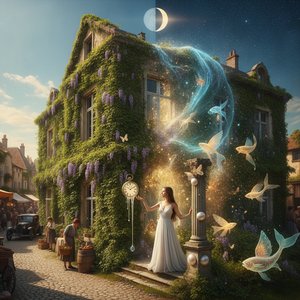
Explore the enigmatic world of Magic Realism. From its German origins to Latin American mastery, discover how this sophisticated movement blends reality with the extraordinary—perfect for discerning collectors seeking depth and wonder in fine art.

Explore the refined world of Neoclassical portraiture. Discover the mastery of line, light, and order through an expert exploration of academic art history, from Jacques-Louis David to Jean-Antoine Houdon. Immerse yourself in the timeless elegance of classical realism.

Explore the profound beauty of Academic Painting and Realism. Discover how master artists capture truth through meticulous technique, offering discerning collectors unparalleled excellence in hand-painted oil reproductions and bespoke fine art commissions.
 Aperçu en situation
 Envoyer
 Partager
 Détails de l'œuvre
 Guide
Guide

 Télécharger l'image
 Articles similaires
 Radiographie
 Diaporama
 Questions et réponses
 Statistiques


 Lire la suite









 L'option verre n'est disponible que pour les dimensions inférieures à 110 cm.


