Aperçu en situation Aperçu en RA Acheter la peinture faite à la main Passer au format image numérique Partager
Détails Guide Ajouter aux favoris Télécharger Articles similaires Radiographie Voir le diaporama Statistiques

untitled (5751)

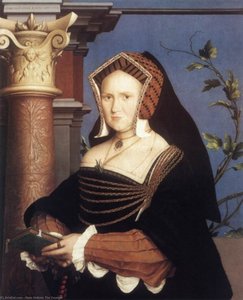
Witness the masterful portraiture of Hans Holbein the Younger! This iconic painting, likely depicting royalty, showcases his unparalleled realism and psychological depth – a cornerstone of the Northern Renaissance. Explore a timeless masterpiece!

Hans Holbein le Jeune (1497-1543) : Maître du portrait de la Renaissance du Nord, réputé pour son réalisme saisissant et sa capacité à capturer la noblesse de la cour Tudor, comme Henri VIII. Explorez ses études détaillées, ses compositions innovantes et son héritage durable.

Giclées et impressions d'art

Impressions giclées ou sur toile de qualité musée, avec une production rapide et des finitions au choix. ( Acheter la peinture faite à la main Passer au format image numérique)

P118B $10
P118H $10
P118W $10
P438Z $10
P508JH $12
P508YH $12
P805H $10
P805Z $10
P919BZ $10
P919G $10
P919XJ $10
P959ZH $10
P968JZ $12
W106C $8
W218G $10
W218JH $8
W218Y $10
W307PJ $10
W316G $10
W316PJ $8
W316Y $10
W398PJ $8
W4111J $10
W500HY $15
W500JH $15
W692G $12
W849H $8
W940BG $15
W953PJ $8

Format standard
personnalisé
CM
INCH

Choisissez parmi nos formats prédéfinis qui respectent les proportions originales de l’œuvre.

largeur
hauteur

Vous pouvez saisir vos propres dimensions pour vous adapter à un cadre ou à un espace spécifique. Si la taille sélectionnée ne correspond pas aux proportions de l'image originale, nous recadrerons l'œuvre ou étendrons l'image avec une bordure en miroir ou une couleur unie. Une maquette numérique vous sera envoyée pour approbation avant le début de la production.
Veuillez noter que l'aperçu à l'écran ne reflète pas le recadrage ou l'extension réelle. Seule la maquette montrera avec précision la composition finale.
Bien que des tailles personnalisées soient disponibles, nous vous recommandons de choisir une dimension dans la liste prédéfinie afin de préserver les proportions originales.

Livraison dans le monde entier () en 2 semaines au lieu des 4/5 semaines habituelles. (21 septembre)

why_choose_icon
Livraison express gratuite dans le monde entier
why_choose_icon
Toile de lin de haute qualité
why_choose_icon
Assurance transport complète
why_choose_icon
Garantie de remboursement des droits de douane
why_choose_icon
Garantie de fidélité des couleurs
why_choose_icon
Garantie de retour de 100 jours (uniquement en cas de défaut)
why_choose_icon
Garantie de remboursement à 100%
why_choose_icon
Tarifs dégressifs sur quantité

Prix total

$ 68

reproduction

untitled (5751)

Giclées et impressions d'art

Format de la reproduction

-

Prix total final

$ 68

L'essentiel de l'œuvre

  • Location: Private Collection
  • Medium: Painting
  • Artistic style: Portraiture, Religious
  • Subject or theme: Religious scene
  • Notable elements or techniques: Realistic detail
  • Movement: Northern Renaissance

Quiz d'art

Chaque question ne comporte qu'une seule bonne réponse.

Question 1:
What is the primary subject depicted in "untitled (5751)"?
Question 2:
The description mentions a distinctive red ribbon around one figure's neck. What does this likely symbolize?
Question 3:
Hans Holbein the Younger is best known for which artistic style?
Question 4:
According to the provided information, in what city was Hans Holbein the Younger born?
Question 5:
The description highlights a ‘carpeted floor and an ornate design’ in the background. What does this suggest about the setting?

The Ambassadors: A Window into Tudor Ambition

Hans Holbein the Younger’s “The Ambassadors,” painted in 1533 during the artist's second and most significant period in England, is far more than a mere portrait of two men. It’s a meticulously constructed tableau – a visual embodiment of humanist ideals, intellectual ambition, and the precarious political landscape of Henry VIII’s court. The painting, currently residing within the National Gallery in London, continues to captivate viewers with its astonishing detail and subtle layers of meaning, offering a rare glimpse into the mindset of a pivotal era.

  • Subject & Composition: The central figures are Jean de Dinteville, the French ambassador to England, and Charles Brandon, 1st Duke of Suffolk, a prominent member of Henry VIII’s court. They stand shoulder-to-shoulder, engaged in what appears to be a scholarly discussion, yet their postures subtly reveal an underlying tension – a reflection of the complex diplomatic relations between England and France at the time. The composition is remarkably balanced, drawing the eye across the meticulously rendered details.
  • Technique & Materials: Holbein’s mastery of oil paint is immediately apparent. He employed a glazing technique, layering thin washes of color to achieve an unparalleled luminosity and depth of tone. The textures – from the velvet of the cushions to the sheen of the silver – are rendered with astonishing realism. Note the use of black chalk for the detailed drawing under the paint layers, a common practice in Holbein’s work that adds to the painting's richness and longevity.

Symbolism Woven into the Scene

“The Ambassadors” is saturated with symbolism, reflecting the intellectual currents of the Renaissance and the specific concerns of Tudor England. The objects scattered across the table are not merely decorative; they carry profound significance. The globe represents the world’s knowledge and ambition, while the celestial sphere symbolizes divine order and human aspiration. The musical instruments – a lute, a recorder, and a viola da gamba – represent the pursuit of artistic excellence and intellectual refinement. The presence of the book, open to a passage from Euclid's *Elements*, underscores the importance of mathematics and reason in understanding the universe.

  • The Skull: Perhaps the most unsettling element is the small skull resting on the table. It serves as a stark reminder of mortality – a subtle yet powerful commentary on the fleeting nature of earthly achievements and the vanity of human ambition.
  • The Dutch Delftware: The distinctive blue and white Delftware vases are not just decorative items; they represent the burgeoning trade between England and the Netherlands, highlighting the economic opportunities available during this period.

A Portrait of a Court – And Its Uncertainties

Beyond its individual portraits, “The Ambassadors” offers a valuable insight into the atmosphere of Henry VIII’s court. The painting reflects the era's fascination with humanism, classical learning, and worldly pursuits. However, beneath this veneer of sophistication lies an undercurrent of uncertainty – symbolized by the skull and the tense expressions of the figures. Holbein was acutely aware of the political machinations surrounding him, and his work subtly acknowledges the dangers inherent in navigating the treacherous waters of courtly life.

Painted during a period of immense change—the break with Rome, the dissolution of monasteries, and the expansion of England’s influence on the world stage— “The Ambassadors” stands as a powerful testament to the ambition, intellect, and anxieties of a nation at a critical juncture in its history. It is a masterpiece that continues to challenge and inspire viewers centuries later.


Biographie de l'artiste

jeune vie et formation

Hans Holbein le Jeune, figure marquante de la Renaissance du Nord, est né en 1497 à Augsbourg, en Allemagne. Bien qu'il soit souvent confondu avec son père, Hans Holbein le Vieux, artiste et graveur renommé, l'œuvre de Holbein le Jeune est distincte et remarquable à sa propre échelle.

carrière artistique

La carrière artistique de Holbein le Jeune a commencé sous la tutelle de son père. Il a ensuite voyagé en Angleterre, où il est devenu peintre de cour pour le roi Henri VIII. Cette position lui a permis de capturer l'essence de la famille royale et de la noblesse anglaise émergente. Son œuvre se caractérise par :

œuvres notables et héritage

L'œuvre de Holbein le Jeune se trouve dans divers musées, notamment les Musées d'État de Berlin (Allemagne, en Allemagne), où son gentleman inconnu avec livres de musique et luth (huile sur panneau) est exposé. Son influence sur le mouvement de la Renaissance du Nord est indéniable, et son œuvre continue d'inspirer les artistes aujourd'hui. Holbein le Jeune est décédé en 1543, mais son héritage perdure grâce à ses portraits captivants et à ses études détaillées. Voir plus des œuvres de Hans Holbein le Jeune sur WahooArt.
Hans Holbein le Jeune

Hans Holbein le Jeune

1497 - 1543 , Italie

En bref

  • Artistes Influents:
    • Hans Holbein l'Ancien
    • Albrecht Dürer
  • Date De Décès: 1543
  • Date De Naissance: 1497
  • Lieu De Naissance: Augsbourg, Italie
  • Mouvement Artistique: Renaissance du Nord
  • Nationalité: Allemand
  • Nom Complet: Hans Holbein le Jeune
  • Oeuvres Notables:
    • Portrait d'une dame inconnue
    • Sir William Butts
    • Les Ambassadeurs
    • Portrait de Henri VIII
    • Portrait d'Erasme
Explorez des œuvres d'art classées par thèmes, styles et caractéristiques.