Premières années et carrière
Giuseppe Arcimboldo, un peintre italien renommé, est né en 1527 à Milan, en Italie. Son père, Biagio Arcimboldo, était également artiste, ce qui a probablement influencé l'intérêt précoce de Giuseppe pour l'art. À l’âge de 21 ans, Giuseppe a commencé sa carrière en tant que concepteur de vitraux et de fresques dans les cathédrales locales.
Peintre de cour des Habsbourg
En 1562, Arcimboldo est devenu peintre de cour de Ferdinand I à la cour des Habsbourg à Vienne, en Autriche. Il a ensuite servi comme peintre de Maximilien II et de son fils Rodolphe II à la cour de Prague. Cette période de sa vie est marquée par son travail de décorateur de cour et de créateur de costumes.
Le chef-d'œuvre maniériste : Portraits d’objets
Les œuvres conventionnelles d'Arcimboldo sur des sujets religieux traditionnels ont largement été oubliées, mais ses portraits composés d'objets tels que des fruits, des légumes, des fleurs, des créatures marines et des racines d'arbres continuent de fasciner les amateurs d'art. Ces œuvres, caractérisées par l'utilisation d'objets du quotidien pour créer des formes anatomiques humaines, n’étaient pas seulement décoratives mais véhiculaient également un sens plus profond.
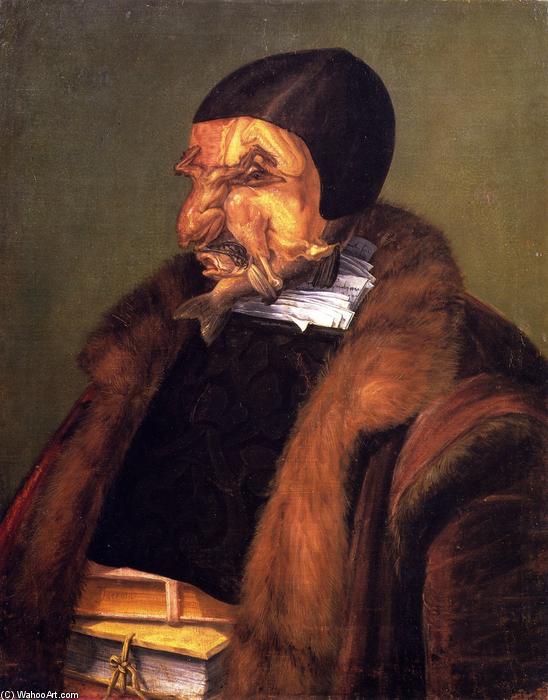
- Le Bibliothécaire, un portrait fait d'objets signifiant la culture livresque de l'époque, n'était pas seulement une création fantaisiste, mais aussi une critique des personnes fortunées qui collectionnaient des livres sans les lire.
- Ces œuvres n’étaient pas aléatoires ; chaque objet était soigneusement choisi pour se rapporter à la caractérisation du sujet.
Style artistique et héritage
Le style artistique d'Arcimboldo, bien que souvent débattu comme étant fantaisiste ou le produit de l'esprit d'une personne dérangée, est largement considéré par les érudits comme répondant au goût de la Renaissance pour les énigmes, les puzzles et le bizarre. Son utilisation d’objets pour créer des formes humaines était un aspect unique de son travail, ce qui le distinguait des autres artistes maniéristes.
Œuvres notables :
- Nature morte florale (1590), une peinture incarnant le mouvement maniériste italien, est un exemple emblématique du style unique d'Arcimboldo.
- Les Quatre Saisons, un portrait composite de Rodolphe II, met en valeur la maîtrise d’Arcimboldo de l’art maniériste.
Musées et collections
Les œuvres d'Arcimboldo peuvent être trouvées dans divers musées, notamment le Kunsthistorisches Museum de Vienne et le château Habsbourg d'Ambras à Innsbruck.
Héritage et influence
Arcimboldo est décédé à Milan, en Italie, après avoir pris sa retraite du service de Prague. Son héritage est célébré par la poésie et les manuscrits honorant sa carrière illustre.


 Aperçu en situation
 Acheter la peinture faite à la main
 Partager
 Partager
 Détails
 Guide
Guide

 Télécharger
 Articles similaires
 Radiographie
 Voir le diaporama
 Statistiques


 Afficher la suite






































 L'option verre n'est disponible que pour les dimensions inférieures à 110 cm.