A Window into Florentine Faith
To stand before Giovanni da Milano’s Ognissanti Polyptych: lateral panel is to encounter a moment suspended in time, a profound meditation rendered in pigment and gold. Created around 1360, this remarkable piece serves as a poignant emblem of the Proto-Renaissance fervor that gripped Florence during its formative years. More than mere pigment on wood, it acts as an intimate invitation to contemplate themes of devotion and spiritual connection. The panel, now housed within the hallowed halls of the Galleria degli Uffizi, captures a sense of spiritual solemnity that transcends the centuries, offering a glimpse into the very soul of 14th-century Italian piety.
The composition is a masterclass in emotional resonance and structural harmony. The lateral panel depicts figures positioned within a richly ornamented architectural setting that reflects the theological significance of its original home, the Basilica di Santa Maria degli Angeli e dei Martiri. Within this sacred space, the artist captures a sense of quietude; the figures appear caught mid-conversation or perhaps engaged in shared prayer against a luminous, gold-accented background. This setting elevates the earthly scene into something celestial, inviting the viewer to look beyond the physical wood and tempera into a realm of divine grace.
The Mastery of Tempera and Light
Giovanni da Milano’s technique—tempera on wood—was a cornerstone of the era, prioritizing both luminosity and durability. Unlike the later dominance of oil paint, tempera utilizes pigments bound with egg yolk, a method that requires meticulous precision and results in exceptionally vibrant hues that retain their brilliance across centuries. The artist applied thin, delicate layers of pigment to the wooden panel, achieving remarkable detail and textural nuance. One can observe the subtle gradations of color that contribute to an ethereal atmosphere, mirroring the spiritual solemnity intended by its creators.
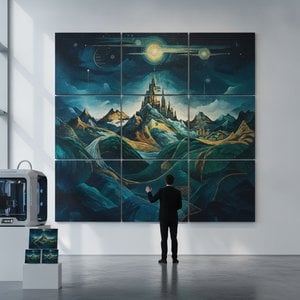
The visual impact is further heightened by the interplay of light and shadow within the architectural motifs. A stylized castle façade, adorned with vibrant elements, evokes the stained glass windows frequently found in Florentine churches, designed to simulate the celestial light of heaven. For the collector or interior designer, this piece offers a unique way to introduce historical depth and a sense of warmth into a space. The golden tones and rich textures provide a sophisticated focal point that commands attention while maintaining an air of serene elegance.
Symbolism and the Legacy of the Proto-Renaissance
Every element within the panel is steeped in meaning, serving as a bridge between the graceful lyricism of the Gothic period and the burgeoning naturalism of the Renaissance. The figures are adorned with attributes emblematic of their roles; for instance, the presence of floral motifs can symbolize purity and divine grace, while specific handheld objects serve as symbols of authority and spiritual leadership. These symbolic layers ensure that the artwork is not merely a decorative object but a narrative tool designed to elevate the viewer's faith.
As a pioneer of the Florentine Proto-Renaissance, Giovanni da Milano’s work represents a pivotal moment in art history. His ability to infuse religious iconography with a sense of human tenderness and anatomical awareness paved the way for the masters who followed. Owning a high-quality reproduction of this lateral panel allows one to bring a piece of this transformative era into a modern setting, offering an enduring connection to the artistic revolution that shaped the Western world.



 Aperçu en situation
 Acheter la peinture faite à la main
 Partager
 Partager
 Détails
 Guide
Guide

 Télécharger
 Articles similaires
 Radiographie
 Voir le diaporama
 Statistiques


 Afficher la suite






































 L'option verre n'est disponible que pour les dimensions inférieures à 110 cm.