Aperçu en situation Aperçu en RA Passer au format impression Acheter la peinture faite à la main Partager
Détails Ajouter aux favoris Télécharger Articles similaires Radiographie Voir le diaporama Statistiques

Warwick Castle

Admire Canaletto's masterful depiction of Warwick Castle’s renovation project – a vibrant panorama showcasing Capability Brown’s landscape enhancements and the bustling activity of the era.

Découvrez "Le Grand Canal & la Salute" de Canaletto – un chef-d'œuvre vénitien de 1730 à couper le souffle ! Admirez les détails complexes, les couleurs chaudes et le charme historique. Parfait pour les amateurs d'art et les collectionneurs.

Acquérez une image numérique haute résolution et optimisée, d'une qualité bien supérieure à l'aperçu en ligne.

Chaque fichier est méticuleusement préparé par nos spécialistes internes à l'aide d'outils avancés et d'une retouche manuelle experte. Nous garantissons que chaque image possède une clarté exceptionnelle, une précision des couleurs irréprochable et un niveau de détail fin.

Le fichier final est livré par e-mail sous 72 heures, optimisé pour une utilisation immédiate dans des contextes professionnels, éditoriaux et d'impression. Il offre la même qualité de confiance que celle utilisée par les plus grands studios de création, éditeurs et galeries.

Image numérique

Téléchargez un fichier haute résolution pour votre usage personnel, l'impression et vos projets créatifs. ( Passer au format impression Acheter la peinture faite à la main)

Prix total

$ 24,90

Inclus avec chaque commande d'image numérique

Livraison numérique experte, garantie.

En choisissant WahooArt.com, vous n'obtenez pas seulement une simple image : vous recevez une œuvre numérique sublimée avec professionnalisme, conçue avec précision et accompagnée d'une garantie de satisfaction. Voici tout ce qui accompagne automatiquement votre commande :

shipping_icon
Livraison rapide par e-mail

Votre fichier d'image numérique haute résolution vous sera envoyé par e-mail sous 72 heures après votre commande — prêt à un usage immédiat.

canvas_icon
Fichier numérique optimisé par l'IA

Votre œuvre d'art bénéficie d'une optimisation professionnelle grâce à des outils d'IA avancés et une retouche manuelle, garantissant un niveau maximal de détail, de clarté et de fidélité chromatique.

insurance_icon
Réexpédition gratuite à vie

Vous avez accidentellement supprimé ou perdu votre fichier ? Pas d'inquiétude — nous vous le renverrons gratuitement, quand vous le souhaitez.

tax_icon
Aucuns frais de douane — À jamais

Profitez de votre œuvre d'art instantanément sans frais de douane ni de livraison — les téléchargements numériques sont toujours exonérés de taxes.

color_icon
Garantie de fidélité des couleurs

Nous garantissons que votre image numérique reproduit les couleurs de l'original aussi fidèlement que possible grâce à des outils professionnels et une gestion rigoureuse des couleurs.

return_icon
Garantie de satisfaction de 100 jours

Si vous n'êtes pas satisfait de votre image numérique, nous la retoucherons ou vous rembourserons 100% sous 100 jours — sans poser de questions.

guarantee_icon
Garantie de remboursement à 100%

Pas satisfait ? Obtenez un remboursement intégral dans les 100 jours suivant la réception de votre fichier numérique — sans aucune question posée.

discount_icon
Remises sur les commandes groupées

Achetez 3 images, économisez 10% - Achetez 5, économisez 15% - Achetez 10+, économisez 20%. Idéal pour les projets créatifs, les galeries et les agences.

L'essentiel de l'œuvre

  • Medium: Oil on canvas
  • Influences: Capability Brown
  • Title: Warwick Castle
  • Dimensions: 37 3/4 × 56 1/4 × 3 1/2 inches (95.9 × 142.9 × 8.9 cm)
  • Artistic style: Topographical
  • Year: 1749
  • Subject or theme: Castle Architecture; Landscape Gardening

Quiz d'art

Chaque question ne comporte qu'une seule bonne réponse.

Question 1:
What is the title of the artwork depicted?
Question 2:
In what year was this painting created?
Question 3:
Which artist is credited with creating this work?
Question 4:
What element suggests the castle was once used for transportation or defense in the scene?
Question 5:
Canaletto is known for developing a signature style of painting, which is best described as:

A Glimpse into English Grandeur: Warwick Castle by Canaletto

To gaze upon this depiction of Warwick Castle is to be transported across the centuries, standing at the confluence of medieval might and Rococo elegance. Painted in 1749, this work captures more than just stone and mortar; it encapsulates a moment in time when history was both preserved and presented for admiration. Canaletto, the master chronicler of Italian light and grand vistas, brought his unparalleled skill to document this magnificent English landmark. The sheer scale suggested by the many towers and turrets speaks to centuries of strategic importance, making the castle itself a monumental subject worthy of such detailed artistic reverence.

The Artistry of Topographical Mastery

Canaletto’s signature style shines through with breathtaking clarity. While he is perhaps most famous for his luminous portrayals of Venice, his ability to render architectural grandeur in any setting remains evident here. Observe the meticulous detail applied to the stonework; every angle and curve seems captured with scientific precision, yet it breathes with life. The composition is masterfully balanced, drawing the eye from the foreground activity—the strolling figures suggesting leisurely promenade—back towards the imposing bulk of the castle itself. This technical brilliance allows the viewer to appreciate both the solid permanence of the architecture and the ephemeral nature of human life passing before it.

Life in the Courtyard: Narrative and Atmosphere

What elevates this piece beyond mere architectural record is the vibrant sense of narrative woven throughout the scene. The inclusion of several people meandering through the grounds suggests a day of pleasure, perhaps during a grand festival or royal visit. Further enhancing this liveliness are the birds soaring in the azure sky, their flight adding a delicate, airy counterpoint to the heavy stone below. Even the presence of a boat upon the water hints at the castle's enduring connection to its surrounding waterways—a vital artery for both defense and daily commerce. It is a scene brimming with implied sound: the murmur of conversation, the cry of gulls, and the gentle lapping of water against ancient foundations.

A Timeless Echo for Modern Spaces

For the collector or designer seeking to infuse a space with depth, history, and unparalleled artistry, this reproduction offers profound resonance. It speaks to an appreciation for enduring beauty—the kind that withstands the passage of time. Imagine this piece gracing a drawing-room or library; it acts as a sophisticated conversation starter, inviting contemplation on eras past. Canaletto’s ability to marry documentary accuracy with romantic atmosphere ensures that the artwork feels both scholarly and deeply emotional, making it a centerpiece that anchors any grand interior design scheme.


Biographie de l'artiste

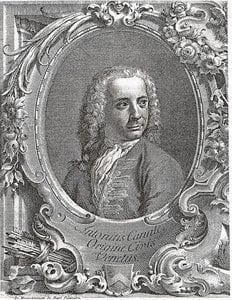
Giovanni Antonio Canal

Giovanni Antonio Canal, commonly known as canaletto, was born in Venice on October 18, 1697, to Bernardo Canal, a painter of theatrical scene settings, and Artemisia Barbieri. He was the son of a noble family steeped in artistic tradition—Bernardo Canal himself had been a respected artist, establishing a lineage dedicated to visual representation. Canaletto’s early training commenced with his father, who instilled within him the fundamental principles of painting, shaping his formative years into an immersion in artistic craftsmanship. This familial influence would prove pivotal in nurturing his innate talent and guiding his subsequent artistic pursuits.

The Making of a Master

In 1718, Canaletto embarked on a transformative journey to Rome—a city renowned for its artistic fervor and intellectual dynamism. During this period, he actively participated in the production of scenery for two operas by Alessandro Scarlatti, immersing himself in the theatrical world and honing his skills in designing immersive environments. This experience profoundly impacted his artistic development, exposing him to innovative techniques and fostering a keen understanding of visual storytelling—a cornerstone of his distinctive style. The collaboration with Scarlatti wasn’t merely professional; it was an encounter with the very essence of Baroque aesthetics. Upon returning to Venice, Canaletto swiftly established himself as a leading figure in Venetian landscape painting, adopting a technique that would soon earn him international acclaim: *veduta*. He meticulously crafted detailed depictions of the city's architectural grandeur and bustling public life—capturing not just what was seen but conveying an emotional resonance. His preparatory drawings were remarkably precise, reflecting his unwavering commitment to accuracy while simultaneously allowing for artistic interpretation. Canaletto’s method mirrored that of Giovanni Paolo Pannini, a Venetian artist who pioneered topographical art, emphasizing observation and meticulous documentation.

Notable Works and Collaborations

Canaletto's oeuvre comprises numerous masterpieces that exemplify the zenith of Venetian landscape painting—a genre characterized by its luminous palette and masterful perspective. Among his most celebrated works are “The Stonemason’s Yard” (c. 1725), a captivating portrayal of Venetian craftsmanship, and “Regatta on the Grand Canal” (c. 1730), which vividly captures the splendor of Venice's ceremonial processions—a testament to Canaletto’s ability to convey both visual accuracy and emotional depth. His depiction of Eton College (1746-1756) stands as a poignant reminder of his influence in England, where he collaborated closely with Bernardo Bellotto, who became an equally accomplished artist. Together, they produced breathtaking panoramas of Dresden and Vienna—works that continue to inspire admiration for their compositional elegance and technical virtuosity.

Artistic Style and Technique

Canaletto’s distinctive artistic style is inextricably linked to his pioneering use of the camera obscura—a darkened room equipped with a lens that projects an inverted image of the outside world onto a surface illuminated by candlelight. This ingenious device allowed him to achieve unparalleled topographical accuracy, ensuring that his paintings faithfully reproduced the contours and textures of Venice and London. However, Canaletto’s artistic vision extended beyond mere replication; he skillfully manipulated perspective and employed subtle tonal variations to create atmospheric effects—transforming ordinary scenes into emotionally evocative landscapes. His meticulous attention to detail—from the reflections in windows to the folds of drapery—elevated his paintings to levels of artistic sophistication rarely achieved by his contemporaries. Canaletto’s legacy resides not only in his technical prowess but also in his ability to imbue his works with a palpable sense of place and time—capturing the spirit of an era with remarkable sensitivity and artistry.
Giovanni Antonio Canal

Giovanni Antonio Canal

1697 - 1768 , Italie

En bref

  • Artistic Movement Or Style: Vedute Venice
  • Artists Or Movements Influenced By This Artist: ['Tintoretto']
  • Artists Who Influenced This Artist: ['Giovanni Paolo Pannini']
  • Date Of Birth: October 18, 1697
  • Date Of Death: April 19, 1768
  • Full Name: Giovanni Antonio Canal
  • Nationality: Italian
  • Notable Artworks:
    • The Stonemason's Yard
    • Regatta on the Grand Canal
    • Eton College
  • Place Of Birth: Venice, Italy