Aperçu en situationAperçu en situation Visualiser en RAVisualiser en RA Commander la reproduction peinte à la main Commander la reproduction peinte à la mainSwitch to Digital Image Switch to Digital Image EnvoyerEnvoyer
Détails de l'œuvreDétails de l'œuvre Ajouter aux favoris Ajouter aux favoris TéléchargerTélécharger Articles similairesArticles similaires RadiographieRadiographie DiaporamaDiaporama StatsStats

Scenes nos. - (4-6)

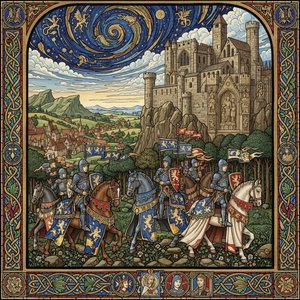
Experience the revolutionary realism of Giotto’s frescoes! This captivating depiction showcases figures engaged in everyday activities—building construction, conversation, and scholarly pursuits—marking a pivotal moment in art history.

Découvrez Giotto di Bondone (1267-1337), le peintre et architecte italien révolutionnaire ! Explorez ses fresques proto-renaissance, son naturalisme, sa profondeur émotionnelle et ses œuvres emblématiques telles que la Chapelle Scrovegni. Une figure fondatrice de l'histoire de l'art européen.

Giclées et impressions d'art

Impressions giclées ou sur toile de qualité musée, avec une production rapide et des finitions au choix. (Commander la reproduction peinte à la main Commander la reproduction peinte à la mainSwitch to Digital Image Switch to Digital Image)

Format standard
sur mesure
CM
INCH

Choisissez parmi nos formats prédéfinis qui respectent les proportions originales de l’œuvre.

largeur
hauteur

Vous pouvez saisir vos propres dimensions pour vous adapter à un cadre ou à un espace spécifique. Si la taille sélectionnée ne correspond pas aux proportions de l'image originale, nous recadrerons l'œuvre ou étendrons l'image avec une bordure en miroir ou une couleur unie. Une maquette numérique vous sera envoyée pour approbation avant le début de la production.
Veuillez noter que l'aperçu à l'écran ne reflète pas le recadrage ou l'extension réelle. Seule la maquette montrera avec précision la composition finale.
Bien que des tailles personnalisées soient disponibles, nous vous recommandons de choisir une dimension dans la liste prédéfinie afin de préserver les proportions originales.

Livraison dans le monde entier () en 2 semaines au lieu des 4/5 semaines habituelles. (8 septembre)

why_choose_icon
Livraison express gratuite dans le monde entier

why_choose_icon
Toile de lin de qualité supérieure
why_choose_icon
Assurance transport complète
why_choose_icon
Garantie de remboursement des droits de douane
why_choose_icon
Garantie de fidélité des couleurs
why_choose_icon
Politique de retour de 100 jours (uniquement en cas de défaut)
why_choose_icon
Garantie de remboursement à 100%
why_choose_icon
Offre de tarifs dégressifs

Prix total

$ 68

reproduction

Scenes nos. - (4-6)

Giclées et impressions d'art

Format de la reproduction

-

Prix total

$ 68

Informations clés

  • Title: Scenes nos. - (4-6)
  • Influences: Byzantine art
  • Movement: Early Renaissance
  • Artistic style: Naturalism
  • Subject or theme: Human figures in various activities
  • Notable elements or techniques: Realistic depiction of figures and landscapes

Quiz d'art

Chaque question ne comporte qu'une seule bonne réponse.

Question 1:
What artistic movement is Giotto’s fresco ‘Scenes nos. - (4-6)’ considered to be a precursor of?
Question 2:
The fresco depicts several figures engaged in various activities. What is one prominent visual element that distinguishes Giotto’s style from earlier Byzantine art?
Question 3:
Giotto's fresco showcases scenes featuring people interacting in everyday life. What is the primary purpose of portraying these scenes?
Question 4:
The fresco utilizes a technique known as fresco painting. Briefly describe how this method contributes to the artwork's durability.
Question 5:
Considering Giotto’s influence on subsequent artists, what is one significant characteristic of his approach to portraying human figures?

A Window Into Medieval Emotion: Exploring Giotto’s “Scenes nos. - (4-6)”

Giotto di Bondone's frescoes adorning the Scrovegni Chapel in Padua represent more than just decorative artistry; they constitute a watershed moment in European art history, marking the decisive break from Byzantine formalism and ushering in an era of humanist observation and expressive realism. Painted between 1305 and 1310 during Giotto’s prolific artistic peak, “Scenes nos. - (4-6)” offer a profound glimpse into the spiritual concerns and daily life of thirteenth-century Florence – a world grappling with theological upheaval and striving for a deeper understanding of human experience.
  • Subject Matter & Narrative Depth: The frescoes depict biblical narratives—primarily episodes from Genesis—but Giotto eschews the stylized depictions favored by his predecessors. Instead, he presents figures engaged in tangible activities: constructing a building with scaffolding, conversing earnestly, holding objects like bowls and cups – actions imbued with palpable emotion. This deliberate focus on observable reality distinguishes Giotto’s work fundamentally from the ethereal grandeur of Byzantine iconography.
  • Style & Technique - The Birth of Naturalism: Giotto revolutionized painting technique by abandoning the illusionistic flatness characteristic of Byzantine art. He achieved depth and volume through careful modeling of figures, utilizing subtle gradations of color and shading—a groundbreaking innovation that anticipates Renaissance chiaroscuro. The frescoes demonstrate a masterful understanding of anatomy and perspective, conveying a sense of physicality absent in earlier artistic traditions.

Historical Context: Florence Amidst Reform

Giotto’s Padua Chapel was conceived as a testament to piety and devotion—a response to the burgeoning Gregorian Reforms that sought to purify the Church and reaffirm its moral authority. The chapel's walls are adorned with scenes from Genesis, illustrating God’s creation and humanity’s fall from grace. Giotto’s depiction of these narratives isn’t merely illustrative; it aims to evoke contemplation and inspire faith by portraying human characters with compassion and vulnerability—a humanist impulse that foreshadowed the intellectual currents of the Renaissance.

Symbolism & Emotional Resonance

Beyond its technical brilliance, “Scenes nos. - (4-6)” resonate deeply with symbolic meaning. The scaffolding represents labor and construction – a visual metaphor for God’s divine plan unfolding in time. The gestures of the figures convey emotion—concern, contemplation, and connection—reflecting the medieval preoccupation with spiritual aspiration. Giotto's masterful use of color contributes to this emotional impact, creating an atmosphere of solemn beauty that transcends mere representation.

A Legacy Enduring Inspiration

Giotto’s frescoes stand as a cornerstone of Western art heritage and continue to captivate audiences today. His pioneering approach to naturalism established a new standard for artistic expression—a legacy that profoundly influenced subsequent generations of painters, including Masaccio and Michelangelo. Reproductions of “Scenes nos. - (4-6)” offer an unparalleled opportunity to experience the transformative power of Giotto’s vision—to appreciate not only his technical prowess but also the enduring relevance of his exploration of human emotion and spiritual contemplation.


Biographie de l'artiste

**Une vie d’innovation et de révolution artistique**

Giotto di Bondone, le peintre et architecte italien renommé, a laissé une marque indélébile sur le monde de l’art grâce à ses contributions novatrices aux périodes du proto-renaissance et gothique. Né en 1267 à Florence, en Italie, la vie de Giotto reste quelque peu enveloppée de mystère, mais son héritage artistique est incontestable.

**Contributions et innovations artistiques**

L’œuvre la plus célèbre de Giotto, la Chapelle Scrovegni (ou Chapelle Arena) à Padoue, achevée vers 1305, témoigne de son esprit innovant. Cette fresque représentant la vie de la Vierge et la vie du Christ ne se contente pas de démontrer son génie artistique, mais illustre également une capacité narrative qui constituait une rupture significative avec l’approche stylisée byzantine.
  • Révolutionnant la peinture : L'accent mis par Giotto sur le naturalisme, l'attention aux émotions humaines et l’exploration des figures spatiales et volumétriques dans la peinture ont jeté les bases du développement de l’art occidental qui a suivi.
  • Contributions architecturales : Sa commande en 1334 de la commune florentine pour concevoir le nouveau campanile (clocher) de la cathédrale de Florence affirme son double talent d'artiste et d'architecte.

**Œuvres notables et leur signification**

**Héritage et influence**

L’influence de Giotto sur l’art occidental est profonde, jetant les bases du mouvement artistique de la Renaissance. Son accent sur le naturalisme, les émotions humaines et la conscience spatiale dans la peinture a perduré, assurant sa place en tant que figure fondamentale de l'histoire de l'art européen. Explorez davantage des œuvres et l’héritage de Giotto di Bondone sur WahooArt.com.
Giotto di Bondone

Giotto di Bondone

1267 - 1337 , Italie

L'essentiel de l'artiste

  • Artistes Influents: ['Cimabue']
  • Date De Décès: 1337
  • Date De Naissance: 1267
  • Influence Sur Les Artistes:
    • Masaccio
    • Léonard de Vinci
  • Lieu De Naissance: Florence, Italie
  • Mouvement Artistique: Proto-Renaissance, Gothique
  • Nationalité: Italienne
  • Nom Complet: Giotto di Bondone
  • Oeuvres Notables:
    • Chapelle Scrovegni
    • Madone d'Ognissanti
    • Fresques de Saint-François
Explorez des œuvres d'art classées par thèmes, styles et caractéristiques.