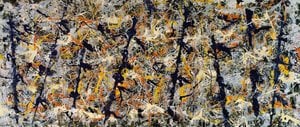
Obtenez un fichier prêt pour l'impression qui dépasse de loin la qualité de l'aperçu web. Chaque image numérique que nous proposons est issue d'un fichier maître haute résolution de notre base de données — mesurant généralement entre 5 000 et 15 000 pixels de large — vous permettant ainsi d'imprimer en grand format, de recadrer avec précision ou de reproduire les détails les plus fins en toute confiance.
Aucun fichier ne quitte notre studio sans être retouché. Un expert numérique vérifie la colorimétrie par rapport à l'œuvre originale et la corrige si nécessaire, puis améliore la clarté et les détails à l'aide d'outils de retouche professionnels — tout en restant toujours fidèle au coup de pinceau et au style de l'artiste. Le résultat est une image qui ressemble au tableau, et non à un simple scan filtré.
Validez avant de finaliser : notre expert vous envoie l'image par e-mail sous 72 heures pour examen. Non satisfait ? Demandez des améliorations ou des corrections, ou demandez un remboursement si la qualité ne répond pas à vos attentes.
C'est une qualité sur laquelle s'appuient éditeurs, studios de création, galeries et ateliers d'impression.
Téléchargez un fichier haute résolution pour votre usage personnel, l'impression et vos projets créatifs. ( Passer au format impression Commander la reproduction peinte à la main)
En choisissant WahooArt.com, vous n'obtenez pas seulement une simple image : vous recevez une œuvre numérique sublimée avec professionnalisme, conçue avec précision et accompagnée d'une garantie de satisfaction. Voici tout ce qui accompagne automatiquement votre commande :
Votre fichier d'image numérique haute résolution vous sera envoyé par e-mail sous 72 heures après votre commande — prêt à un usage immédiat.
Votre œuvre d'art bénéficie d'une optimisation professionnelle grâce à des outils d'IA avancés et une retouche manuelle, garantissant un niveau maximal de détail, de clarté et de fidélité chromatique.
Vous avez accidentellement supprimé ou perdu votre fichier ? Pas d'inquiétude — nous vous le renverrons gratuitement, quand vous le souhaitez.
Profitez de votre œuvre d'art instantanément sans frais de douane ni de livraison — les téléchargements numériques sont toujours exonérés de taxes.
Nous garantissons que votre image numérique reproduit les couleurs de l'original aussi fidèlement que possible grâce à des outils professionnels et une gestion rigoureuse des couleurs.
Si vous n'êtes pas satisfait de votre image numérique, nous la retoucherons ou vous rembourserons 100% sous 100 jours — sans poser de questions.
Pas satisfait ? Obtenez un remboursement intégral dans les 100 jours suivant la réception de votre fichier numérique — sans aucune question posée.
Achetez 3 images, économisez 10% - Achetez 5, économisez 15% - Achetez 10+, économisez 20%. Idéal pour les projets créatifs, les galeries et les agences.
Giorgio Vasari's “The Annunciation,” painted circa 1567, isn’t merely a depiction of a biblical scene; it’s a carefully constructed tableau brimming with symbolic weight and technical mastery. This remarkable work, often considered a pivotal study for a larger ceiling painting, offers a rare glimpse into the artist’s process – a testament to his dedication to capturing not just likeness but also the profound emotional resonance of faith. The image, rendered in the delicate hues of carta azzurra (azure paper), immediately draws the eye with its ethereal quality and remarkable sense of spatial depth.
Vasari’s choice of blue pigment is crucial to understanding the painting's impact. The specific shade, a pale, almost luminous azure, was highly prized in Renaissance Italy for its ability to create an airy, atmospheric effect. It’s not simply a color; it’s a key element in conveying the divine presence and the sense of otherworldly grace that permeates the scene. The artist skillfully employs washes of ink and delicate highlights – a technique reminiscent of tempera painting – to build up layers of texture and luminosity, avoiding the heavy impasto favored by some of his contemporaries. This restrained approach allows for an astonishing level of detail, particularly in the rendering of Mary’s face and the angel Gabriel's flowing robes.
Beyond its exquisite color palette, “The Annunciation” is distinguished by its sophisticated architectural design. Vasari masterfully integrates architectural elements – a coffered ceiling, a portal in the background, and a tent-shaped baldachin – to reinforce the composition’s clarity and stability. These aren't merely decorative flourishes; they serve as visual anchors, guiding the viewer’s eye through the scene and creating a sense of depth and perspective. The low vantage point, characteristic of ceiling paintings, emphasizes the scale of the figures and the grandeur of the event. Notice how Vasari uses linear perspective to create the illusion of receding space – the distant portal subtly diminishing in size, drawing us into the narrative.
The arrangement of the figures is equally deliberate. Gabriel, positioned on the left, extends his arm towards Mary, who sits serenely in the center of the frame. The subtle gestures and expressions convey a sense of reverence and anticipation. Even the secondary figures – a man near the top-left corner and another at the bottom-right – contribute to the scene’s dynamism, suggesting a broader context and inviting contemplation. The inclusion of a simple chair and vase adds a touch of domesticity, grounding the divine event within a recognizable human setting.
Giorgio Vasari (1511-1574) was more than just a painter; he was a polymath – an architect, sculptor, historian, and biographer. His “Lives of the Most Excellent Painters, Sculptors, and Architects,” published in 1550, established a framework for understanding Renaissance art that continues to influence scholars today. Vasari’s work profoundly shaped our perception of the period, elevating the status of artists and establishing Florence as the epicenter of artistic innovation. “The Annunciation” exemplifies his commitment to capturing both the beauty and the spiritual significance of religious subjects.
Further research reveals that this painting was originally intended for a ceiling in the Chapel of Santa Michele in the Torre Pia, Vatican Palace, alongside three other roundels depicting the Nativity, the Annunciation, Zacharias and the Angel, and the Liberation of St. Peter. The rediscovery of these related works has illuminated Vasari’s artistic process and provided valuable insights into the history of Renaissance art. The image's presence in the Louvre Museum and its detailed documentation through online resources – such as WikiArt and Google Arts & Culture – ensure that this remarkable masterpiece remains accessible to a global audience.
A high-quality reproduction of Vasari’s “The Annunciation” offers a stunning opportunity to bring the drama and beauty of this Renaissance painting into your home or office. The delicate color palette, masterful composition, and profound symbolism will undoubtedly captivate viewers and evoke a sense of serenity and contemplation. Consider commissioning a hand-painted replica – a faithful recreation that captures the essence of Vasari’s original work, allowing you to experience the artistry firsthand.
«The Annunciation» de Giorgio Vasari est dans le dans le domaine public - ses droits d'auteur sont tombés dans le domaine public. Ce statut régit les modalités de reproduction de l'image de l'œuvre.
«The Annunciation» de Giorgio Vasari est une composition en Portrait mesurant 19 x 22 cm dans l'original.
«The Annunciation» de Giorgio Vasari présente un contraste Serene entre ses zones claires et ses zones sombres.


1511 - 1574 , Italie
 Aperçu en situation
 Envoyer
 Partager
 Détails de l'œuvre
 Guide
Guide

 Télécharger l'image
 Articles similaires
 Radiographie
 Diaporama
 Questions et réponses
 Statistiques

 Lire la suite