Aperçu en situation Aperçu en RA Acheter la peinture faite à la main Passer au format image numérique Partager
Détails Guide imprimable Ajouter aux favoris Télécharger Articles similaires Radiographie Voir le diaporama Statistiques

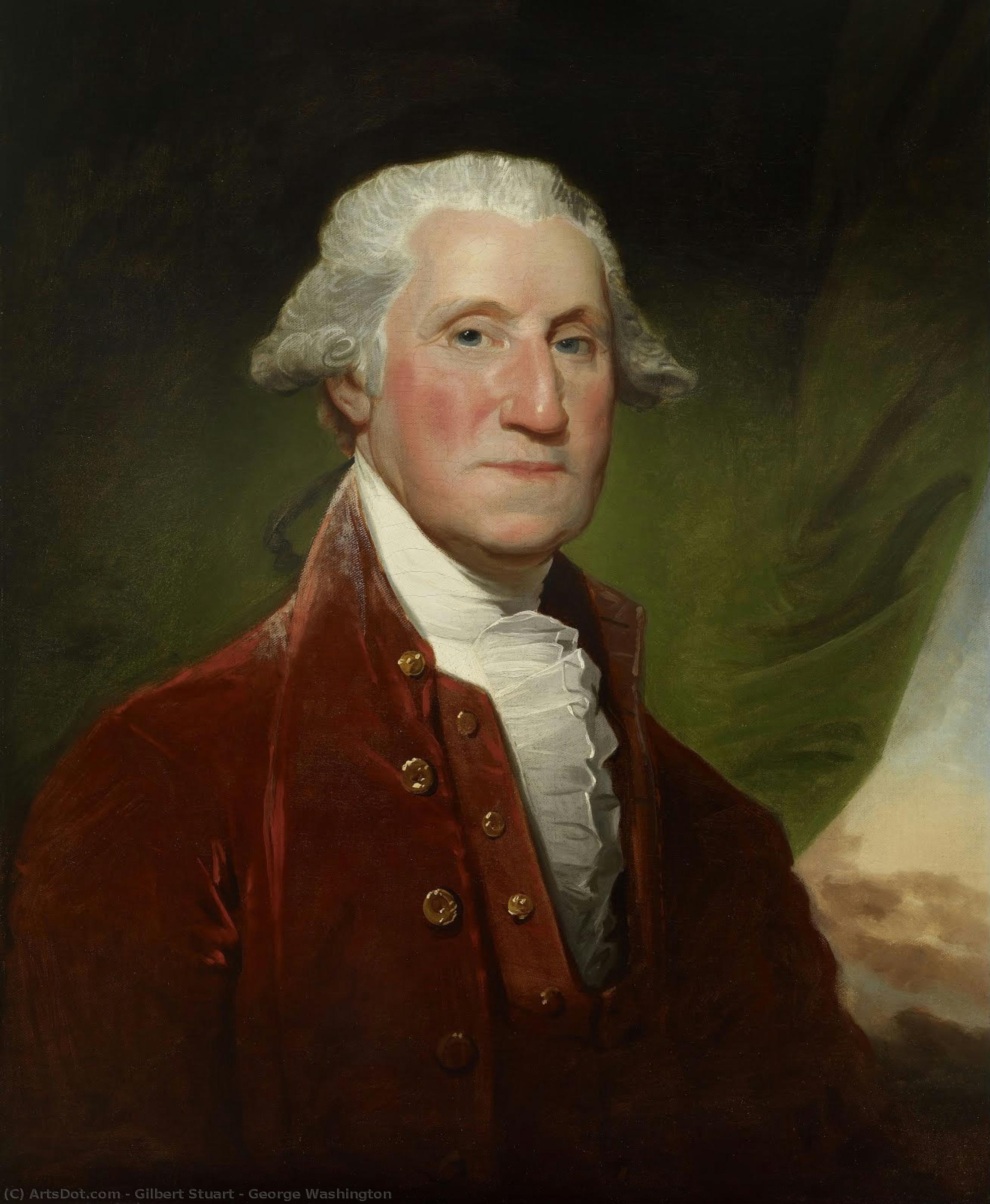
George Washington

Experience Gilbert Stuart's iconic 1796 portrait of George Washington – ‘The Vaughan Type.’ Admire the neoclassical detail and historical significance of this masterpiece, a key piece of American art.

Découvrez Gilbert Stuart (1755-1828), portraitiste américain emblématique ! Explorez son style néoclassique et son héritage, notamment le célèbre portrait de Washington.

Giclées et impressions d'art

Impressions giclées ou sur toile de qualité musée, avec une production rapide et des finitions au choix. ( Acheter la peinture faite à la main Passer au format image numérique)

Corner sample of the P118B picture frame: polystyrène moulé, 5 cm wide and 3 cm thick
P118B €10
Corner sample of the P118H picture frame: polystyrène moulé, 5 cm wide and 3 cm thick
P118H €10
Corner sample of the P118W picture frame: polystyrène moulé, 5 cm wide and 3 cm thick
P118W €10
Corner sample of the P438Z picture frame: polystyrène moulé, 5.5 cm wide and 3.5 cm thick
P438Z €10
Corner sample of the P508JH picture frame: polystyrène moulé, 7 cm wide and 3.5 cm thick
P508JH €12
Corner sample of the P508YH picture frame: polystyrène moulé, 7 cm wide and 3.5 cm thick
P508YH €12
Corner sample of the P805H picture frame: polystyrène moulé, 5 cm wide and 3.5 cm thick
P805H €10
Corner sample of the P805Z picture frame: polystyrène moulé, 5 cm wide and 3.5 cm thick
P805Z €10
Corner sample of the P919BZ picture frame: polystyrène moulé, 7 cm wide and 3.5 cm thick
P919BZ €10
Corner sample of the P919G picture frame: polystyrène moulé, 7 cm wide and 3.5 cm thick
P919G €10
Corner sample of the P919XJ picture frame: polystyrène moulé, 7 cm wide and 3.5 cm thick
P919XJ €10
Corner sample of the P959ZH picture frame: polystyrène moulé, 5 cm wide and 3 cm thick
P959ZH €10
Corner sample of the P968JZ picture frame: polystyrène moulé, 6 cm wide and 4 cm thick
P968JZ €12
Corner sample of the W106C picture frame: bois massif, 5 cm wide and 3 cm thick
W106C €8
Corner sample of the W218G picture frame: bois massif, 5 cm wide and 3 cm thick
W218G €10
Corner sample of the W218JH picture frame: bois massif, 5 cm wide and 3 cm thick
W218JH €8
Corner sample of the W218Y picture frame: bois massif, 5 cm wide and 3 cm thick
W218Y €10
Corner sample of the W307PJ picture frame: bois massif, 6 cm wide and 3 cm thick
W307PJ €10
Corner sample of the W316G picture frame: bois massif, 6 cm wide and 3 cm thick
W316G €10
Corner sample of the W316PJ picture frame: bois massif, 6 cm wide and 3 cm thick
W316PJ €8
Corner sample of the W316Y picture frame: bois massif, 6 cm wide and 3 cm thick
W316Y €10
Corner sample of the W398PJ picture frame: bois massif, 5 cm wide and 3 cm thick
W398PJ €8
Corner sample of the W4111J picture frame: bois massif, 6.5 cm wide and 3.5 cm thick
W4111J €10
Corner sample of the W500HY picture frame: bois massif, 7 cm wide and 5 cm thick
W500HY €15
Corner sample of the W500JH picture frame: bois massif, 7 cm wide and 5 cm thick
W500JH €15
Corner sample of the W692G picture frame: bois massif, 8 cm wide and 4 cm thick
W692G €12
Corner sample of the W849H picture frame: bois massif, 5 cm wide and 3 cm thick
W849H €8
Corner sample of the W940BG picture frame: bois massif, 7.5 cm wide and 4.5 cm thick
W940BG €15
Corner sample of the W953PJ picture frame: bois massif, 6 cm wide and 3.5 cm thick
W953PJ €8

Format standard
personnalisé
CM
INCH

Choisissez parmi nos formats prédéfinis qui respectent les proportions originales de l’œuvre.

largeur
hauteur

Vous pouvez saisir vos propres dimensions pour vous adapter à un cadre ou à un espace spécifique. Si la taille sélectionnée ne correspond pas aux proportions de l'image originale, nous recadrerons l'œuvre ou étendrons l'image avec une bordure en miroir ou une couleur unie. Une maquette numérique vous sera envoyée pour approbation avant le début de la production.
Veuillez noter que l'aperçu à l'écran ne reflète pas le recadrage ou l'extension réelle. Seule la maquette montrera avec précision la composition finale.
Bien que des tailles personnalisées soient disponibles, nous vous recommandons de choisir une dimension dans la liste prédéfinie afin de préserver les proportions originales.

Livraison dans le monde entier () en 2 semaines au lieu des 4/5 semaines habituelles. (13 octobre)

Livraison express gratuite dans le monde entier
Toile de lin de haute qualité
Assurance transport complète
Garantie de remboursement des droits de douane
Garantie de fidélité des couleurs
Garantie de retour de 100 jours (uniquement en cas de défaut)
Garantie de remboursement à 100%
Tarifs dégressifs sur quantité

Prix total

€ 59

George Washington

Giclées et impressions d'art

Format de la reproduction

-

Prix total final

€ 59

L'essentiel de l'œuvre

  • Artistic style: Portraiture
  • Medium: Oil on canvas
  • Influences:
    • Romney
    • Hoppner
  • Location: Frick Collection, NYC
  • Title: George Washington
  • Subject or theme: Presidential portrait

The Weight of Authority: Gilbert Stuart’s “George Washington”

Gilbert Stuart's "George Washington," painted in 1796, isn’t merely a portrait; it’s a carefully constructed embodiment of the nascent American republic. This remarkable work, now housed within the Frick Collection in New York City, transcends the simple act of representation and delves into the very essence of leadership, virtue, and the weighty responsibility of guiding a new nation. Stuart, a master of his craft, skillfully captures Washington’s dignified presence, imbuing him with an aura of both strength and quiet contemplation – qualities desperately needed in the years following the Revolutionary War.

The painting itself is a testament to Stuart's Neoclassical training, evident in its balanced composition and restrained palette. The muted tones of brown, gray, and green create a sense of gravitas, drawing the viewer’s eye directly to Washington’s face – a study in subtle expressions that convey both resolve and humility. The artist meticulously rendered every detail, from the texture of the fabric of his coat to the delicate lines etched by time around his eyes, revealing an almost obsessive attention to realism. Yet, it's not a literal depiction; Stuart employs chiaroscuro—the dramatic contrast between light and shadow—to sculpt Washington’s form and emphasize his importance within the scene.

A Portrait of a Nation Forged in Virtue

The historical context surrounding “George Washington” is crucial to understanding its significance. Painted just a few years after the end of the Revolutionary War, the portrait coincided with a fervent desire to establish a stable and virtuous government. Stuart’s decision to portray Washington in a formal, three-quarter pose – a departure from earlier, more informal depictions – immediately elevates him to the status of an ideal statesman. The red coat, a symbol of military honor, subtly references his role as commander-in-chief, while the white collar and cravat speak to his adherence to social decorum and respect for tradition.

Interestingly, this particular version – often referred to as the “Vaughan type” – differs slightly from other known portraits of Washington. The subtle shift in the color of the coat is a key distinguishing feature, suggesting that Stuart may have been experimenting with his technique or responding to specific requests from John Vaughan, one of the painting’s patrons. The background, a simple yet evocative landscape, reinforces the idea of Washington as a man deeply connected to the land and its future.

Symbolism Woven into the Canvas

Beyond the obvious symbolism of military rank and civic virtue, “George Washington” is rich with subtle visual cues. The careful arrangement of his hands – one resting on a book, a symbol of knowledge and wisdom, and the other holding a quill pen, representing his role as a writer and communicator – speaks to his commitment to education and informed governance. The slight furrow in his brow suggests a thoughtful consideration of the challenges facing the new nation, while his steady gaze conveys an unwavering determination to uphold its ideals.

Furthermore, the painting’s scale—measuring 74 x 61 cm—contributes to its impact. It's large enough to command attention and invite prolonged contemplation, reflecting the monumental task of building a new nation. The portrait wasn’t simply intended as a likeness; it was designed to inspire confidence and instill a sense of shared purpose within the American populace.

A Timeless Legacy for Art & Design

Gilbert Stuart's “George Washington” remains an enduring masterpiece, admired for its technical brilliance, historical significance, and profound emotional resonance. It’s a painting that speaks to the ideals upon which America was founded – liberty, justice, and self-governance – and continues to captivate viewers centuries later. Today, high-quality reproductions of this iconic portrait offer art enthusiasts and interior designers alike an opportunity to bring a touch of American history and enduring artistic excellence into their homes or offices. The painting’s dignified presence and subtle complexities make it a truly timeless addition to any collection.

Questions et réponses

Quelle harmonie de couleurs «George Washington» de Gilbert Stuart présente-t-il ?

L'harmonie colorée de « George Washington » est décrite comme étant Softly Mixed Palette.

Quelle technique a été utilisée pour « George Washington » et quand a-t-elle été créée ?

«George Washington» a été réalisé en 1796, en Acrylic On Canvas.

Quelle taille est suggérée pour "George Washington" dans un(e) Living Room ?

Dans une Living Room, nous suggérons un format d'impression de Large pour « George Washington ».

Quelle technique et quel style caractérisent «George Washington» de Gilbert Stuart ?

«George Washington» de Gilbert Stuart allie la technique de Acrylic On Canvas au style Neoclassical Portraiture. La technique et le mouvement décrivent respectivement la réalisation et le style de l'œuvre.

Puis-je utiliser la réalité augmentée pour voir «George Washington» de Gilbert Stuart dans ma pièce ?

Vous pouvez prévisualiser «George Washington» de Gilbert Stuart sur votre propre mur grâce à la page Aperçu RA de l'œuvre, en utilisant la réalité augmentée sur un appareil compatible.

Quel est le niveau de contraste dans «George Washington» de Gilbert Stuart ?

Le niveau de contraste de «George Washington» de Gilbert Stuart est Gentle.

Comment les couleurs de «George Washington» de Gilbert Stuart se rapportent-elles à l'émotion qui s'en dégage ?

La palette Earthy de «George Washington» de Gilbert Stuart s'harmonise avec son ton émotionnel Reflective. La couleur est l'un des moyens par lesquels une œuvre transmet une émotion.

Comment peut-on intégrer «George Washington» de Gilbert Stuart dans la décoration intérieure ?

L'utilisation (Statement) et l'espace (Living Room) sont les deux recommandations enregistrées pour «George Washington» de Gilbert Stuart.


Biographie de l'artiste

Gilbert Stuart : Une Vie au Service du Portrait

  • Né: 3 décembre 1755, Saunderstown, Rhode Island
  • Décédé: 9 juillet 1828, Boston, Massachusetts
  • Nationalité: Américain
  • Mouvement: Néo-classicisme
  • Connu pour: Le portrait, en particulier les portraits de figures importantes de l'histoire américaine précoce.

Jeunesse et Formation

  • Gilbert Stuart est né dans une famille d’origine écossaise ; son père, également nommé Gilbert, était un inventeur qui a établi la première usine à tabac de Rhode Island.
  • Son talent artistique s'est manifesté dès son plus jeune âge, démontrant des compétences même encore enfant.
  • À 14 ans, il a peint "Dr. Hunter's Spaniels", témoignant d’une promesse précoce.
  • Il s'est rendu en Écosse vers 1771 pour étudier sous la direction de Cosmo Alexander, mais est retourné après le décès d'Alexander en 1775.
  • Une formation supplémentaire a eu lieu à Londres avec Benjamin West, un peintre américain important résidant en Angleterre, de 1775 à 1780. Cette période a été cruciale pour développer son style artistique et gagner une reconnaissance au sein de la Royal Academy.

Carrière Artistique et Œuvres Majeures

  • La carrière de Stuart a rencontré des difficultés pendant la Révolution américaine, ce qui l'a incité à déménager en Angleterre en 1775.
  • Il a obtenu un succès précoce avec "The Skater" (1782), un portrait qui a établi sa réputation.
  • Son œuvre la plus célèbre est le portrait inachevé de George Washington, connu sous le nom de portrait de l'Athénée (commencé en 1796). Cette image est devenue emblématique, apparaissant sur la monnaie et les timbres américains. Stuart a produit de nombreux copies de ce portrait pour des mécènes à travers l’Amérique et l’Europe.
  • Il a peint les portraits de plusieurs autres figures importantes, notamment John Adams, Thomas Jefferson, James Madison et de nombreux membres de l'élite fédéraliste.
  • Le style de Stuart était caractérisé par une approche néoclassique, mettant l'accent sur le réalisme et capturant la ressemblance et le caractère de ses sujets. Il utilisait souvent un usage dramatique de la lumière et de l’ombre pour améliorer l’impact des portraits.

Influences et Développement

  • Cosmo Alexander a fourni une formation précoce en technique et composition.
  • L'influence de Benjamin West était significative, façonnant la compréhension de Stuart du portrait et des principes artistiques.
  • Le mouvement néoclassique, avec son insistance sur les formes classiques et les idéaux, a fortement influencé son style.
  • Les propres observations et interactions de Stuart avec ses sujets ont contribué à la profondeur psychologique et au réalisme dans ses portraits. Il visait à capturer non seulement une ressemblance mais aussi le caractère et la personnalité de ceux qu'il peignait.

Signification Historique et Héritage

  • Gilbert Stuart est considéré comme l’un des plus grands portraitistes américains, jouant un rôle essentiel dans la documentation des premières années des États-Unis.
  • Le portrait de George Washington de l'Athénée est devenu un symbole durable de l'identité et du leadership américain.
  • Ses portraits fournissent des informations historiques précieuses sur les vies et les apparences de figures importantes de la fin du XVIIIe et du début du XIXe siècle.
  • L’œuvre de Stuart est représentée dans les principaux musées des États-Unis et d'Europe, garantissant que son héritage continue d’être apprécié par les générations futures.
  • Il a établi un style américain distinctif de portraiture qui mélangeait les techniques européennes avec une sensibilité américaine unique.
Gilbert Stuart

Gilbert Stuart

1755 - 1828 , Royaume-Uni

En bref

  • Artistes Influents:
    • Cosmo Alexander
    • Benjamin West
  • Date De Décès: 9 juillet 1828
  • Date De Naissance: 3 décembre 1755
  • Lieu De Naissance: Saunderstown, Royaume-Uni
  • Mouvement Artistique: Néoclassicisme
  • Nationalité: Américaine
  • Nom Complet: Gilbert Charles Stuart
  • Oeuvres Notables:
    • Dr. Hunter's Spaniels
    • The Skater
    • Athenaeum Portrait de Washington
Explorez des œuvres d'art classées par thèmes, styles et caractéristiques.