L'Architecte de l'Esprit Romain : La Vie et l'Héritage de Giacomo della Porta
Giacomo della Porta (1533–1602) était bien plus qu'un simple bâtisseur ; il était un visionnaire dont les mains et l'intellect ont aidé à sculpter l'âme même de la Rome de la fin de la Renaissance. Né dans le paysage serein de Porlezza, en Italie, son parcours, d'apprenti lombard à architecte prééminent de l'ère maniériste, témoigne du pouvoir transformateur de la formation classique. Sous l'œil attentif de son père, Cristofolo della Porta, sculpteur talentueux, Giacomo apprit le langage délicat de la pierre et de la forme. Cette immersion précoce dans les réalités tactiles de la sculpture allait plus tard nourrir ses prouesses architecturales, lui permettant de traiter des édifices entiers comme des canevas monumentaux en trois dimensions. Son talent fut davantage enflammé au sein des grands ateliers de la cathédrale de Milan, où l'ombre du monumentalisme de Michel-Ange se faisait sentir, lui enseignant que l'architecture pouvait atteindre une grandeur divine et musclée.
À mesure que sa carrière mûrissait, della Porta devint une figure indispensable au sein des cours papales de Paul III et de Pie IV. Il possédait une capacité rare à jeter un pont entre l'esthétique complexe et souvent intellectualisée du maniérisme et la puissance émotive émergente du baroque. Son œuvre se caractérisait par une compréhension sophistiquée de la proportion et une approche audacieuse de l'innovation structurelle, fortement influencée par les principes de Vignole. Cette synthèse de l'ordre classique et du mouvement dramatique lui permit de naviguer à travers les marées religieuses et politiques changeantes de la Contre-Réforme, créant des espaces à la fois intellectuellement rigoureux et spirituellement bouleversants.
Chefs-d'œuvre de Pierre et d'Eau
L'héritage architectural de della Porta se ressent avec le plus de vivacité dans les rues et les sanctuaires de Rome et de Naples. Sa contribution à la
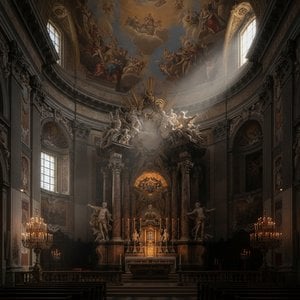
Chiesa del Gesù Nuovo s'érige comme le sommet de sa production créative. En concevant sa façade, il s'est éloigné des surfaces planes et statiques pour tendre vers un jeu dynamique d'ombre et de lumière. En utilisant des motifs géométriques complexes et des reliefs sculpturaux élaborés, il a transformé l'extérieur en un récit théologique, où chaque pilastre et chaque fronton servait à diriger le regard du spectateur vers les cieux. Cette maîtrise de la façade a aidé à établir les standards de l'architecture baroque qui allait suivre dans les siècles à venir.
Au-delà des murs des églises, le génie de della Porta coulait dans les veines de la ville à travers ses magnifiques ouvrages hydrauliques. Il avait compris que l'eau était un élément vivant du design urbain, capable d'apporter mouvement et vie à la pierre pesante de Rome. Sa participation à la création de fontaines emblématiques, telles que la
Fontana delle Tartarughe (Fontaine des Tortues), démontre sa capacité à mêler la sculpture délicate à l'ingénierie fonctionnelle. Dans ces œuvres, on peut observer :
- L'intégration parfaite de figures mythologiques classiques avec un mouvement fluide et organique.
- Une maîtrise profonde de l'acoustique et de l'impact visuel de l'eau en cascade.
- L'utilisation du détail sculptural pour créer des moments intimes, à l'échelle humaine, au sein d'un paysage urbain grandiose.
Une Empreinte Durable sur la Ville Éternelle
La signification historique de Giacomo della Porta réside dans son rôle de titan de transition. Il se tenait au carrefour des époques, portant le flambeau de la Haute Renaissance tout en éclairant la voie du Baroque. Son travail méticuleux sur la reconstruction du dôme de la
Basilique Saint-Pierre a permis au site le plus important de la chrétienté de posséder l'intégrité structurelle et la majesté esthétique requises par son statut. Grâce à ses efforts, le langage architectural de Rome est devenu celui de la force, du drame et d'une profonde permanence.
Même dans ses contributions sculpturales les plus détaillées, comme les éléments complexes de la
Fontaine d'Atlas, della Porta a fait preuve d'une obsession pour la condition humaine et le poids du mythe classique. Sa capacité à insuffler au marbre froid la tension du muscle et la grâce du mouvement demeure une marque de fabrique de son style. Aujourd'hui, lorsque nous parcourons les centres historiques d'Italie, nous ne faisons pas que passer devant des bâtiments ; nous traversons une expérience orchestrée d'espace et d'émotion, conçue par un homme qui voyait le monde comme un chef-d'œuvre en devenir. L'œuvre de sa vie demeure un dialogue éternel entre le poids terrestre de la pierre et les aspirations éthérées de l'esprit humain.



 Aperçu en situation
 Commander la reproduction peinte à la main
 Envoyer
 Partager
 Détails de l'œuvre
 Guide
Guide

 Télécharger l'image
 Articles similaires
 Radiographie
 Diaporama
 Statistiques


 Lire la suite






































 L'option verre n'est disponible que pour les dimensions inférieures à 110 cm.