Aperçu en situation Aperçu en RA Passer au format impression Passer au format image numérique Partager
Détails Guide imprimable Ajouter aux favoris Télécharger Articles similaires Radiographie Voir le diaporama Statistiques

Heraklith

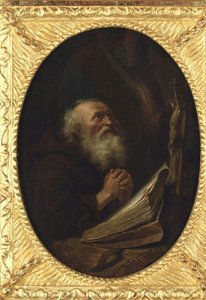
Admire 'Heraklith' by Gerrit Dou (1632), a captivating portrait of an elderly scholar in oil on canvas. Explore its realism, chiaroscuro & symbolic depth – a masterpiece of the Dutch Golden Age.

Découvrez Gerrit (Gérard) Dou (1613-1675), maître du 'fijnschilder' néerlandais ! Genre, trompe-l’œil et lumière maîtrisée dans ses scènes d'intérieur. Explorez son héritage !

Reproduction à l'huile faite à la main

Huile sur toile peinte à la main, avec cadre et dimensions personnalisés, réalisée sur commande par nos artistes. ( Passer au format impression Passer au format image numérique)

Corner sample of the P118B picture frame: polystyrène moulé, 5 cm wide and 3 cm thick
P118B 10
Corner sample of the P118H picture frame: polystyrène moulé, 5 cm wide and 3 cm thick
P118H 10
Corner sample of the P118W picture frame: polystyrène moulé, 5 cm wide and 3 cm thick
P118W 10
Corner sample of the P438Z picture frame: polystyrène moulé, 5.5 cm wide and 3.5 cm thick
P438Z 10
Corner sample of the P508JH picture frame: polystyrène moulé, 7 cm wide and 3.5 cm thick
P508JH 12
Corner sample of the P508YH picture frame: polystyrène moulé, 7 cm wide and 3.5 cm thick
P508YH 12
Corner sample of the P805H picture frame: polystyrène moulé, 5 cm wide and 3.5 cm thick
P805H 10
Corner sample of the P805Z picture frame: polystyrène moulé, 5 cm wide and 3.5 cm thick
P805Z 10
Corner sample of the P919BZ picture frame: polystyrène moulé, 7 cm wide and 3.5 cm thick
P919BZ 10
Corner sample of the P919G picture frame: polystyrène moulé, 7 cm wide and 3.5 cm thick
P919G 10
Corner sample of the P919XJ picture frame: polystyrène moulé, 7 cm wide and 3.5 cm thick
P919XJ 10
Corner sample of the P959ZH picture frame: polystyrène moulé, 5 cm wide and 3 cm thick
P959ZH 10
Corner sample of the P968JZ picture frame: polystyrène moulé, 6 cm wide and 4 cm thick
P968JZ 12
Corner sample of the W106C picture frame: bois massif, 5 cm wide and 3 cm thick
W106C 8
Corner sample of the W218G picture frame: bois massif, 5 cm wide and 3 cm thick
W218G 10
Corner sample of the W218JH picture frame: bois massif, 5 cm wide and 3 cm thick
W218JH 8
Corner sample of the W218Y picture frame: bois massif, 5 cm wide and 3 cm thick
W218Y 10
Corner sample of the W307PJ picture frame: bois massif, 6 cm wide and 3 cm thick
W307PJ 10
Corner sample of the W316G picture frame: bois massif, 6 cm wide and 3 cm thick
W316G 10
Corner sample of the W316PJ picture frame: bois massif, 6 cm wide and 3 cm thick
W316PJ 8
Corner sample of the W316Y picture frame: bois massif, 6 cm wide and 3 cm thick
W316Y 10
Corner sample of the W398PJ picture frame: bois massif, 5 cm wide and 3 cm thick
W398PJ 8
Corner sample of the W4111J picture frame: bois massif, 6.5 cm wide and 3.5 cm thick
W4111J 10
Corner sample of the W500HY picture frame: bois massif, 7 cm wide and 5 cm thick
W500HY 15
Corner sample of the W500JH picture frame: bois massif, 7 cm wide and 5 cm thick
W500JH 15
Corner sample of the W692G picture frame: bois massif, 8 cm wide and 4 cm thick
W692G 12
Corner sample of the W849H picture frame: bois massif, 5 cm wide and 3 cm thick
W849H 8
Corner sample of the W940BG picture frame: bois massif, 7.5 cm wide and 4.5 cm thick
W940BG 15
Corner sample of the W953PJ picture frame: bois massif, 6 cm wide and 3.5 cm thick
W953PJ 8

Format standard
personnalisé
CM
INCH

Choisissez parmi nos formats prédéfinis qui respectent les proportions originales de l’œuvre.

largeur
hauteur

Vous pouvez saisir vos propres dimensions pour l'adapter à un cadre ou à un espace spécifique. Si la taille sélectionnée ne correspond pas aux proportions de l'image d'origine, nous recadrerons l'œuvre ou prolongerons la peinture avec des éléments peints à la main supplémentaires. Une maquette numérique vous sera envoyée pour approbation avant le début de la production.
Veuillez noter que l'aperçu à l'écran ne reflète pas le recadrage ou l'extension réels. Seule la maquette montrera fidèlement la composition finale.
Bien que des tailles personnalisées soient disponibles, nous vous recommandons de sélectionner une dimension dans la liste prédéfinie afin de préserver les proportions d'origine.

Exemples de personnalisation possibles : remplacer un visage par la photo du client ; ajouter un animal de compagnie (par exemple, remplacer un chat par un chien) ; inclure un message caché en arrière-plan ; modifier le paysage ou les éléments de l'arrière-plan.
Après la commande, l’équipe WahooArt.com contactera le client par e-mail pour recueillir ses instructions et lui fournira une maquette d’aperçu

Livraison dans le monde entier () en 3 à 4 semaines au lieu des 5 semaines habituelles. (12 octobre). Aucun compromis sur la qualité.

Livraison express gratuite dans le monde entier
Toile de lin de haute qualité
Assurance transport complète
Garantie de remboursement des droits de douane
Garantie de fidélité des couleurs
Garantie de retour de 100 jours (uniquement en cas de défaut)
Garantie de remboursement à 100%
Tarifs dégressifs sur quantité

Prix total

€ 235

Heraklith

Technique de reproduction

Format de la reproduction

-

Prix total final

€ 235

L'essentiel de l'œuvre

  • Year: 1632
  • Artist: Gerrit Dou
  • Medium: Oil on Canvas
  • Artistic style: Fijnschilder
  • Notable elements or techniques: Chiaroscuro, Trompe l'oeil
  • Subject or theme: Scholarship, Knowledge

Quiz d'art

Chaque question ne comporte qu'une seule bonne réponse.

Question 1:
What is the primary subject of Gerrit Dou's 'Heraklith'?
Question 2:
Which technique is used by Dou to create a dramatic interplay between light and shadow in this painting?
Question 3:
What object is the man focused on, serving as a symbol of exploration and scientific inquiry?
Question 4:
Which artistic style is characterized by meticulous detail and is associated with Gerrit Dou?
Question 5:
What is the dominant color palette of the artwork?

Heraklith: A Portrait of Scholarly Reflection

“Heraklith,” painted in 1632 by Gerrit Dou, stands as a testament to the Dutch Golden Age’s fascination with realism and psychological depth. More than just a depiction of an elderly man—likely a scholar or astronomer—it's a carefully constructed tableau designed to convey wisdom, contemplation, and the profound influence of knowledge.

  • Subject Matter: The artwork portrays a dignified gentleman seated at a table before him, illuminated by candlelight. His gaze is downward, focused on a globe – a potent symbol representing exploration, scientific inquiry, and an awareness of the vastness of the universe.
  • Style & Technique: Dou’s signature ‘fijnschilder’ style—characterized by meticulous detail and masterful chiaroscuro—is evident throughout. The artist employs subtle shading to sculpt the man's face and torso, creating a palpable sense of volume and texture. This technique elevates the portrait beyond mere representation, imbuing it with emotional resonance.
  • Composition & Perspective: The oval frame lends an air of formality to the scene, while the shallow perspective draws the viewer’s eye directly to the central figure. Lines delineate facial features and clothing folds, guiding the gaze and reinforcing the composition's balance.
  • Color Palette: Dominated by muted browns, creams, and dark reds, the color palette contributes to an atmosphere of solemn dignity. The subdued hues underscore the subject’s intellectual pursuits and evoke a feeling of quiet contemplation.

Exploring Dou’s Mastery of Light & Shadow

Gerrit Dou's unparalleled skill in chiaroscuro—the dramatic interplay between light and shadow—is arguably his most distinctive achievement. As seen prominently in “Heraklith,” this technique isn’t merely decorative; it serves to heighten the emotional impact of the portrait. The candlelight casts a soft glow upon the man’s face, highlighting wrinkles and emphasizing the contours of his features – details that reveal not only physical appearance but also the passage of time and experience.

  • Symbolism: Beyond its aesthetic qualities, “Heraklith” carries significant symbolic weight. The globe represents intellectual curiosity and a desire to understand the world around us. It speaks to Dou’s belief in the transformative power of knowledge and invites viewers to consider the profound implications of scientific discovery.
  • Historical Context: Painted during the Dutch Golden Age, “Heraklith” reflects the era's burgeoning interest in humanist ideals and its celebration of intellectual achievement. Dou’s work aligns with a broader artistic movement that sought to capture human psychology and emotion with unprecedented accuracy.

A Legacy of Detail & Emotion

"Heraklith" exemplifies Gerrit Dou’s dedication to capturing the essence of his subjects—both physically and psychologically. The artist's meticulous brushwork ensures that every nuance is rendered faithfully, creating a portrait that transcends mere likeness. It’s a piece that invites viewers to pause and contemplate the complexities of human experience, reminding us of the enduring beauty found in quiet reflection and intellectual pursuit.

  • Collecting & Inspiration: Reproductions of “Heraklith” offer an opportunity to appreciate Dou's artistic genius and bring a touch of Dutch Golden Age elegance into any interior space. Explore similar artworks at WikiArt.org for further inspiration!

Questions et réponses

Quelle ambiance "Heraklith" apporterait-elle à une pièce ?

«Heraklith» de Gerrit Dou possède une atmosphère Elegant et est recommandé pour une Living Room. L'ambiance correspond à ce que l'œuvre apporte à l'espace qui l'entoure.

Quel est le niveau de contraste dans «Heraklith» de Gerrit Dou ?

Le niveau de contraste de «Heraklith» de Gerrit Dou est Statement.

«Heraklith» de Gerrit Dou est-il une peinture, un dessin ou une estampe ?

« Heraklith » est une œuvre de type WallArt.

Quel emplacement convient au format de «Heraklith» de Gerrit Dou ?

Le format Portrait de «Heraklith» de Gerrit Dou est recommandé pour une Living Room. Le format et l'espace guident ensemble l'emplacement d'une reproduction.

Quelle émotion les couleurs de «Heraklith» de Gerrit Dou dégagent-elles ?

«Heraklith» de Gerrit Dou associe une palette Earthy à un ton Reflective.

Quel usage et quel espace sont recommandés pour «Heraklith» de Gerrit Dou ?

L'utilisation (Accent) et l'espace (Living Room) sont les deux recommandations enregistrées pour «Heraklith» de Gerrit Dou.

Est-ce que « Heraklith » est représentatif de ce que Gerrit Dou créait habituellement ?

Parmi les thèmes récurrents de Gerrit Dou — caravaggism influence, baroque realism", intellectual pursuit, symbol of knowledge, dutch golden age ideals, scholarly portraiture, contemplative mood, dou's signature style — « Heraklith » met l'accent sur portrait, scholar, globe, knowledge, wisdom, age, reflection, chiaroscuro.

Dans quel musée se trouve l'original de « Heraklith » ?

Vous pouvez admirer l'original de « Heraklith » au Musée de l'Ermitage, Saint Petersburg, Russia.


Biographie de l'artiste

Biographie de Gerrit Dou

Gerrit (Gerard) Dou, né le 7 avril 1613 à Leyde aux Pays-Bas et décédé le 9 février 1675, est un peintre néerlandais majeur de l'âge d'or. Son œuvre, caractérisée par une finesse extrême et un rendu minutieux des détails, continue de fasciner les amateurs d’art du monde entier.

Jeunesse et Formation

  • Naissance et Famille : Gerrit Dou est né dans une famille modeste à Leyde. Son père était fabricant de vitraux, ce qui a peut-être influencé sa sensibilité aux couleurs et à la lumière.
  • Premiers Pas Artistiques : Il étudie le dessin sous la direction de Bartholomäus Dolendo avant d'intégrer l'atelier de Pieter Couwenhorn, où il se familiarise avec le travail du verre.
  • Apprentissage auprès de Rembrandt : À l’âge de quatorze ans, Dou entre comme élève dans l'atelier de Rembrandt van Rijn (1606-1669), un des plus grands peintres de tous les temps. Il y reste pendant environ trois ans et acquiert une maîtrise des techniques du clair-obscur et de la composition.

Style Artistique et Œuvre

  • Le Fijnsschilder : Dou est considéré comme l'un des principaux représentants du fijnschilder, un courant néerlandais caractérisé par une extrême finesse d’exécution et un souci du détail obsessionnel.
  • Scènes de Genre et Trompe-l'œil : Ses œuvres se concentrent principalement sur les scènes de genre, représentant des intérieurs bourgeois avec une grande précision. Il est également connu pour ses peintures trompe-l’œil, créant l'illusion d'objets réels sortant de la toile.
  • Maîtrise du Clair-obscur : Dou utilise magistralement le clair-obscur, notamment dans ses scènes éclairées par des bougies ou des lanternes, pour créer une atmosphère mystérieuse et captivante.
  • Techniques Spécifiques : Il est réputé pour avoir utilisé des lentilles concaves et des miroirs convexes afin d'améliorer sa perception et de reproduire fidèlement les détails. On raconte qu’il passait cinq jours à peindre une seule main.

Influences et Héritage

  • Rembrandt : L'influence de Rembrandt est indéniable dans ses premières œuvres, notamment dans l'utilisation du clair-obscur et des effets dramatiques.
  • Élèves et Successeurs : Gerrit Dou a formé plusieurs élèves influents, dont Frans van Mieris l’Ancien et Gabriel Metsu, qui ont contribué à diffuser son style et ses techniques.
  • Impact sur l'Art Néerlandais : Son travail a marqué durablement la peinture néerlandaise du XVIIe siècle, contribuant au développement du genre de la scène intérieure et influençant une génération d’artistes.

Œuvres Majeures et Collections

  • L'Astronome à la Lumière des Chandelles : Cette œuvre emblématique illustre parfaitement sa maîtrise du clair-obscur et son souci du détail. Elle est visible sur WahooArt.com.
  • La Collection de Leyde, New York : Plusieurs œuvres de Dou sont conservées dans cette collection prestigieuse. Pour plus d'informations, consultez le guide complet sur WahooArt.com.
  • Musée Huis Ten Bosch (La Haye) : Ce musée abrite une importante collection d’art européen du XVIe au XVIIIe siècle, incluant des œuvres de Gerrit Dou.
Gerrit Dou

Gerrit Dou

1613 - 1675 , Pays-Bas

En bref

  • Artistes Influents: ['Rembrandt']
  • Date De Décès: 9 février 1675
  • Date De Naissance: 7 avril 1613
  • Influence Sur Les Artistes:
    • Frans van Mieris l'Ancien
    • Gabriel Metsu
  • Lieu De Naissance: Leiden, Pays-Bas
  • Mouvement Artistique: Fijnschilders de Leiden
  • Nationalité: Néerlandais
  • Nom Complet: Gerrit (Gerard) Dou
  • Œuvres Notables: ["L'astronome à la chandelle"]
Explorez des œuvres d'art classées par thèmes, styles et caractéristiques.