CONSEIL EN ART GRATUIT

x
Commander la reproduction Commander la reproductionAcheter l'image haute résolution Acheter l'image haute résolution PartagerPartager
DétailsDétails Ajouter aux favoris Ajouter aux favoris TéléchargerTélécharger Articles similairesArticles similaires RadiographieRadiographie DiaporamaDiaporama

Untitled

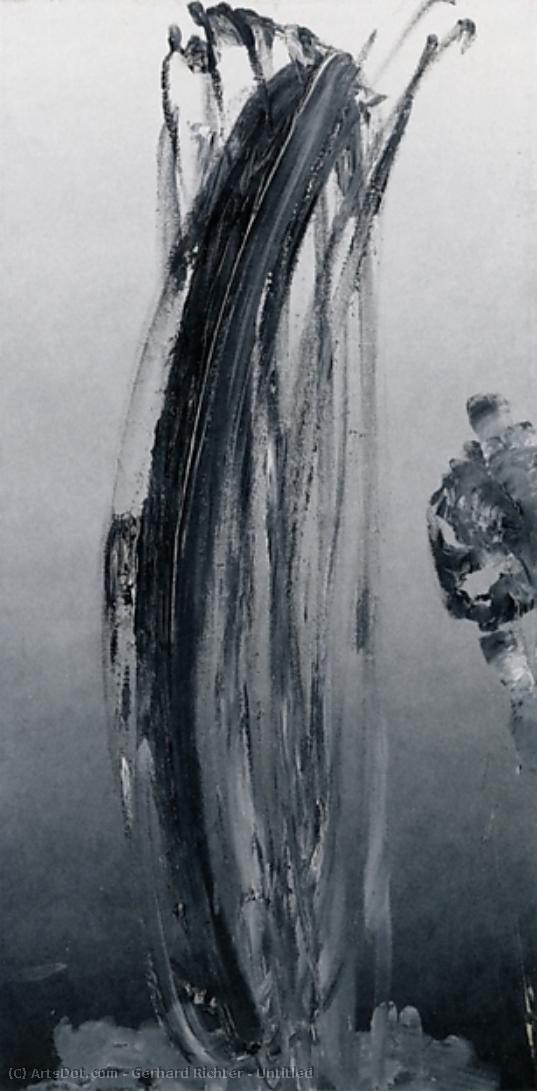
Explore Gerhard Richter’s Untitled (1968) – a powerful abstract painting in shades of grey & black. Thick impasto & fluid forms evoke energy and chaos. A key work by the German master.

Explorez l'art novateur de Gerhard Richter (né en 1932), un artiste allemand de premier plan, connu pour ses peintures abstraites et photorréalistes, 'Réalisme capitaliste', et ses tableaux aux couleurs à grande échelle. Découvrez ses records d'enchères et son influence sur l'art contemporain.

Giclée / Impression d'art

Impression giclée ou sur toile de qualité musée, avec une production rapide et des finitions au choix.

P118B $10
P118H $10
P118W $10
P438Z $10
P508JH $12
P508YH $12
P805H $10
P805Z $10
P919BZ $10
P919G $10
P919XJ $10
P959ZH $10
P968JZ $12
W106C $8
W218G $10
W218JH $8
W218Y $10
W307PJ $10
W316G $10
W316PJ $8
W316Y $10
W398PJ $8
W4111J $10
W500HY $15
W500JH $15
W692G $12
W849H $8
W940BG $15
W953PJ $8

Standard
custom
CM
INCH

Choisissez parmi nos formats prédéfinis qui respectent les proportions originales de l’œuvre.

largeur
hauteur

Vous pouvez saisir vos propres dimensions pour vous adapter à un cadre ou à un espace spécifique. Si la taille sélectionnée ne correspond pas aux proportions de l'image originale, nous recadrerons l'œuvre ou étendrons l'image avec une bordure en miroir ou une couleur unie. Une maquette numérique vous sera envoyée pour approbation avant le début de la production.
Veuillez noter que l'aperçu à l'écran ne reflète pas le recadrage ou l'extension réelle. Seule la maquette montrera avec précision la composition finale.
Bien que des tailles personnalisées soient disponibles, nous vous recommandons de choisir une dimension dans la liste prédéfinie afin de préserver les proportions originales.

Livraison dans le monde entier () en 2 semaines au lieu des 4/5 semaines habituelles. (3 juillet)

why_choose_icon
Livraison express gratuite dans le monde entier
why_choose_icon
Toile de lin de haute qualité
why_choose_icon
Assurance transport complète
why_choose_icon
Garantie de remboursement des frais de douane
why_choose_icon
Garantie de fidélité des couleurs
why_choose_icon
Politique de retour de 60 jours (uniquement en cas de défaut)
why_choose_icon
Garantie de remboursement à 100%
why_choose_icon
Réduction sur les achats groupés

Prix total

-

reproduction

Untitled

Giclée / Impression d'art

Format de reproduction

-

Prix total final

-

En bref

  • Movement: Abstract Expressionism
  • Dimensions: 80 x 40 cm
  • Year: 1968
  • Influences: None Specified
  • Subject or theme: Flow; Chaos
  • Artistic style: Gestural abstraction
  • Medium: Oil paint on canvas

Quiz d'art

Chaque question ne comporte qu'une seule bonne réponse.

Question 1:
What artistic movement is Gerhard Richter’s Untitled most closely associated with?
Question 2:
The painting utilizes a technique known as impasto. What does ‘impasto’ refer to in the context of art?
Question 3:
Considering the description mentions ‘diffuse lighting,’ what effect does this contribute to the overall mood and visual experience of the artwork?
Question 4:
What is a key characteristic of Richter’s style that distinguishes it from representational painting?
Question 5:
The artwork's composition is asymmetrical. How does this asymmetry impact the viewer’s perception?

Description de l'œuvre

A Fragmented Landscape of Emotion: Exploring Gerhard Richter’s Untitled (1968)

The painting “Untitled” by Gerhard Richter stands as a cornerstone of Abstract Expressionism, embodying the anxieties and uncertainties that characterized postwar Germany. Executed in 1968, it's not merely pigment on canvas; it’s a distillation of experience—a visual echo of Richter’s upbringing amidst political upheaval and displacement. Measuring 80 x 40 cm, this monumental piece immediately commands attention with its dominant palette of grey and black, punctuated by subtle tonal variations that convey an atmosphere of profound contemplation.

Composition and Technique: The Fluid Gesture

At first glance, the artwork presents a deceptively simple visual language. However, beneath the surface lies a complex interplay of formal elements. Richter employs a technique known as wet-on-wet—a method championed by artists like Pollock and Rothko—allowing for an astonishing fluidity within the paint itself. Thick impasto strokes dominate the canvas, creating a palpable textural richness that invites tactile engagement. These gestures aren’t precise or controlled; they are spontaneous expressions of feeling, mirroring the turbulent emotional landscape of Richter's formative years. The vertical form, reminiscent of a waterfall or ribbon, ascends towards a denser central area, subtly guiding the viewer’s gaze upwards—a deliberate choice reflecting perhaps an aspiration for stability amidst chaos.

Historical Context: Echoes of Division

The painting emerged during a period of significant political transformation in Germany. Richter's artistic sensibility was profoundly shaped by the trauma of World War II and the subsequent division of the nation into East and West blocs. This experience instilled within him a preoccupation with fragmentation—a visual representation of the fractured realities faced by individuals navigating turbulent times. The absence of recognizable imagery isn’t accidental; it serves to elevate the painting beyond specific narratives, focusing instead on universal themes of emotion and psychological exploration. Richter deliberately avoids offering easy answers or comforting illusions, mirroring the disillusionment prevalent in intellectual circles during the late 1960s.

Symbolism: Texture as Emotional Resonance

The pervasive grey and black hues contribute to the artwork’s symbolic weight. These colors are often associated with mourning, contemplation, and introspection—reflecting Richter's own internal struggles. More importantly, however, the textured surface embodies a deeper significance. The impasto technique isn’t merely decorative; it represents the artist’s attempt to capture the intangible essence of experience—the feeling of movement, energy, and vulnerability. Like ripples spreading outwards from a stone dropped into water, the brushstrokes convey an impression of dynamism and instability, mirroring the anxieties inherent in navigating a rapidly changing world.

Emotional Impact: A Silent Dialogue

Ultimately, “Untitled” transcends mere visual representation. It invites viewers to engage in a silent dialogue—to contemplate the complexities of emotion and memory without resorting to explicit symbolism. Richter’s masterful manipulation of color and texture achieves an extraordinary feat: conveying profound psychological depth through understated formalism. The painting lingers in the mind long after viewing, prompting reflection on themes of displacement, resilience, and the enduring power of artistic expression. It stands as a testament to Richter's ability to transform personal experience into universal aesthetic contemplation—a legacy that continues to inspire artists and collectors alike.

Œuvres apparentées


Biographie de l'artiste

**Jeunesse et Éducation**

Gerhard Richter, artiste visuel allemand renommé, est né le 9 février 1932 à l'hôpital de Dresde-Neustadt, à Dresde, en Saxe. Il a grandi à Reichenau, Basse Silésie (aujourd’hui Bogatynia, Pologne), et à Waltersdorf (Zittauer Gebirge), dans la campagne supérieure de Lusace. Le père de Richter, Horst Richter, était étudiant en mathématiques et en physique à l'Technische Hochschule de Dresde.

**Carrière artistique**

Richter a commencé son parcours artistique comme apprenti peintre décorateur et a ensuite étudié à l’Académie des Beaux-Arts de Dresde. Ses premières œuvres ont été influencées par les styles de Picasso et Jean Arp, ce qui est évident dans ses peintures abstraites et photoréalistes. En 1957, Richter a travaillé comme stagiaire maître à l'académie, réalisant des commandes pour l'époque de la République Démocratique allemande de l’Est.

**Œuvres notables et réalisations**

* Abstrait (2012) a établi un prix de vente aux enchères record pour une peinture d'un artiste vivant à 34 millions de dollars (£21 million). * Domplatz, Mailand (Place de la cathédrale, Milan) (1968) a été vendu pour 37,1 millions de dollars (£24,4 million) à New York. * Abstrait (2015) a été vendu pour 44,52 millions de dollars (£30,4 million) lors de la vente aux enchères contemporaine de Sotheby's.

**Style et mouvement artistique**

Le travail de Richter est caractérisé par son éclectisme, combinant des styles abstraits et photoréalistes. Avec Sigmar Polke, il a introduit le terme Kapitalistischer Realismus (Réalisme capitaliste), un anti-style d'art qui s'approprie le langage pictural de la publicité.

**Vie personnelle**

Richter a épousé Marianne Eufinger en 1957 et a eu une fille. Il a plus tard épousé Isa Genzken en 1982 et Sabine Moritz en 1995, avec qui il a eu deux fils et une fille. **Note :** Cet article est basé sur les informations fournies et peut ne pas être une biographie complète. Pour plus d’informations détaillées, veuillez consulter les sources liées.
Gerhard Richter

Gerhard Richter

1932 - , Allemagne

En bref

  • Artistes Influents:
    • Picasso
    • Jean Arp
  • Date De Naissance: 9 février 1932
  • Lieu De Naissance: Dresde, Allemagne
  • Mouvement Artistique:
    • Abstraction
    • Photoréalisme
  • Nationalité: Allemand
  • Nom Complet: Gerhard Richter
  • Oeuvres Notables:
    • Abstraktes Bild (2012)
    • Domplatz, Milan (1968)
    • Nuages
    • S. avec enfant
  • Style Artistique: Réalisme capitaliste
Explorez des œuvres d'art classées par thèmes, styles et caractéristiques.