x
Aperçu en situationAperçu en situation Visualiser en RAVisualiser en RA Commander la reproduction peinte à la main Commander la reproduction peinte à la mainAcheter l'image haute résolution Acheter l'image haute résolution EnvoyerEnvoyer
Détails de l'œuvreDétails de l'œuvre Ajouter aux favoris Ajouter aux favoris TéléchargerTélécharger Articles similairesArticles similaires RadiographieRadiographie DiaporamaDiaporama

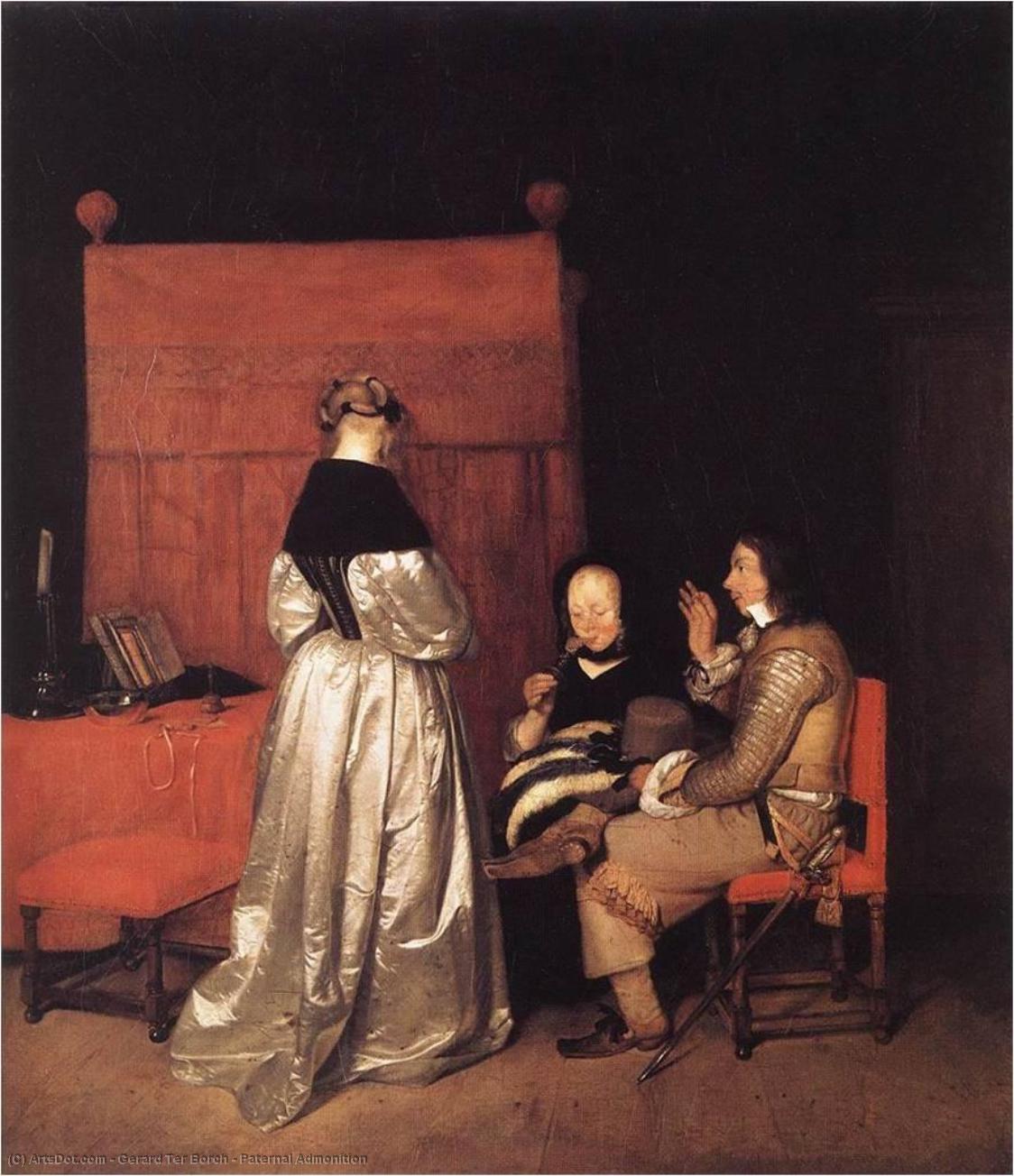
Paternal Admonition

Explore Gerard ter Borch's 'Paternal Admonition,' a captivating Dutch Golden Age painting depicting an ambiguous encounter between a soldier and a woman, rich with texture & psychological depth.

Découvrez Gerard ter Borch (1617-1681), maître néerlandais de l'âge d'or ! Genre, portraits & scènes de vie réalistes captivent par leur lumière et émotion. 'La Lettre' et bien plus !

Giclées et impressions d'art

Impressions giclées ou sur toile de qualité musée, avec une production rapide et des finitions au choix. (Commander la reproduction peinte à la main Commander la reproduction peinte à la mainAcheter l'image haute résolution Acheter l'image haute résolution)

P118B $10
P118H $10
P118W $10
P438Z $10
P508JH $12
P508YH $12
P805H $10
P805Z $10
P919BZ $10
P919G $10
P919XJ $10
P959ZH $10
P968JZ $12
W106C $8
W218G $10
W218JH $8
W218Y $10
W307PJ $10
W316G $10
W316PJ $8
W316Y $10
W398PJ $8
W4111J $10
W500HY $15
W500JH $15
W692G $12
W849H $8
W940BG $15
W953PJ $8

Format standard
sur mesure
CM
INCH

Choisissez parmi nos formats prédéfinis qui respectent les proportions originales de l’œuvre.

largeur
hauteur

Vous pouvez saisir vos propres dimensions pour vous adapter à un cadre ou à un espace spécifique. Si la taille sélectionnée ne correspond pas aux proportions de l'image originale, nous recadrerons l'œuvre ou étendrons l'image avec une bordure en miroir ou une couleur unie. Une maquette numérique vous sera envoyée pour approbation avant le début de la production.
Veuillez noter que l'aperçu à l'écran ne reflète pas le recadrage ou l'extension réelle. Seule la maquette montrera avec précision la composition finale.
Bien que des tailles personnalisées soient disponibles, nous vous recommandons de choisir une dimension dans la liste prédéfinie afin de préserver les proportions originales.

Livraison dans le monde entier () en 2 semaines au lieu des 4/5 semaines habituelles. (5 septembre)

why_choose_icon
Livraison express gratuite dans le monde entier

why_choose_icon
Toile de lin de qualité supérieure
why_choose_icon
Assurance transport complète
why_choose_icon
Garantie de remboursement des droits de douane
why_choose_icon
Garantie de fidélité des couleurs
why_choose_icon
Politique de retour de 60 jours (uniquement en cas de défaut)
why_choose_icon
Garantie de remboursement à 100%
why_choose_icon
Offre de tarifs dégressifs

Prix total

$ 68

reproduction

Paternal Admonition

Giclées et impressions d'art

Format de la reproduction

-

Prix total

$ 68

Informations clés

  • Subject or theme: Intimate scene
  • Artist: Gerard ter Borch
  • Title: Paternal Admonition
  • Medium: Oil on canvas
  • Movement: Dutch Golden Age
  • Location: Rijksmuseum, Amsterdam
  • Influences:
    • Ter Borch
    • Vermeer

Quiz d'art

Chaque question ne comporte qu'une seule bonne réponse.

Question 1:
What is the primary subject matter depicted in Gerard ter Borch’s ‘Paternal Admonition (Gallant Conversation)’?
Question 2:
According to the provided text, what is particularly notable about the depiction of the woman’s dress in ‘Paternal Admonition (Gallant Conversation)’?
Question 3:
Gerard ter Borch is known for his skill in portraying which of the following elements?
Question 4:
In what century was ‘Paternal Admonition (Gallant Conversation)’ painted?
Question 5:
The text suggests that Ter Borch’s paintings often capture what kind of atmosphere?

A Moment Frozen in Time: Gerard ter Borch’s *Paternal Admonition*

Gerard ter Borch's *Paternal Admonition*, painted around 1654, isn’t merely a portrait; it’s a meticulously crafted tableau of unspoken tension and veiled desire. Within the confines of a modestly furnished room—a subtle blend of domestic comfort and quiet restraint—three figures occupy a space brimming with psychological depth. The painting immediately draws the eye to the woman seated between two men, her posture suggesting both vulnerability and a carefully guarded composure. Her silver satin gown, shimmering with an almost ethereal light, acts as a focal point, demanding attention while simultaneously hinting at a hidden world of pleasure and intrigue.

Ter Borch’s genius lies not in dramatic gestures or overt displays of emotion, but rather in his ability to capture the subtle nuances of human interaction. The man, dressed in the formal attire of a military officer, holds a hat on his lap – a gesture that simultaneously conveys authority and a certain awkwardness. His gaze is directed towards the woman, yet his expression remains ambiguous, leaving us to ponder his intentions. The third figure, partially obscured behind the seated woman, adds another layer of complexity to the scene, suggesting a silent observer or perhaps even a participant in this unspoken exchange.

A Masterclass in Light and Texture

Technically, *Paternal Admonition* is a remarkable achievement. Ter Borch was a pioneer in Dutch genre painting, renowned for his unparalleled skill in rendering texture and light. He employed a technique of carefully layered glazes to create an astonishingly realistic depiction of fabrics – the luxurious sheen of the satin, the velvet upholstery, even the delicate folds of the woman’s dress are rendered with breathtaking detail. The use of chiaroscuro—the dramatic contrast between light and shadow—further enhances the painting's depth and atmosphere, drawing our attention to key elements while simultaneously creating a sense of mystery.

Notice how the light source seems to originate from an unseen window, casting soft shadows that accentuate the contours of the figures and their surroundings. This masterful manipulation of light not only adds visual interest but also contributes significantly to the painting’s overall mood—a blend of intimacy, restraint, and underlying tension.

Decoding a Silent Conversation

The initial interpretation of *Paternal Admonition* as a scene of paternal guidance has been largely superseded by more nuanced readings. While the man undoubtedly holds a position of authority, many scholars now believe that the painting depicts an amorous negotiation between a soldier and a prostitute within a brothel setting. The presence of the bed, the mirror, and the various objects of feminine beauty on the table all lend credence to this interpretation.

However, Ter Borch’s genius lies in his refusal to offer easy answers. He presents us with a scene pregnant with ambiguity, inviting us to interpret the unspoken dynamics between the figures. The woman's averted gaze and the man's hesitant posture suggest a delicate dance of power and desire—a silent conversation that transcends simple categorization.

A Window into 17th-Century Life

*Paternal Admonition* offers a fascinating glimpse into the social customs and moral sensibilities of 17th-century Holland. The painting reflects a society where appearances were carefully cultivated, and private interactions often concealed deeper desires. Ter Borch’s ability to capture this complex interplay of public and private life is what makes his work so enduringly captivating.

Reproductions of *Paternal Admonition* can bring this world into your own space, offering a subtle yet powerful reminder of the complexities of human relationships and the enduring allure of unspoken desires. Its quiet intensity and masterful technique make it a truly exceptional addition to any art collection or interior design scheme.


Biographie de l'artiste

**Une Vie Dédiée à la Maîtrise du Genre : Gerard ter Borch**

Gerard ter Borch, également connu sous le nom de Gerard Terburg, est un peintre néerlandais du Siècle d'Or, reconnu pour son approche novatrice et sa capacité à capturer l’intimité de la vie quotidienne. Né en décembre 1617 à Zwolle et décédé le 8 décembre 1681, il a laissé une empreinte durable sur l'histoire de l'art.

**Jeunesse, Formation et Premières Influences**

Né dans une famille d’artistes – son père, Gerard ter Borch l’Ancien, était lui-même un artiste et poète – Gerard ter Borch a bénéficié d’une éducation soignée dès son plus jeune âge. Ses premiers dessins datés de 1625 et 1626 témoignent de son talent précoce. Il a voyagé à Amsterdam en 1632, où il a probablement étudié avec Willem Cornelisz Duyster ou Pieter Codde. En 1634, il devient l'élève de Pieter de Molijn à Haarlem. Ses voyages en Angleterre (1635), en Allemagne, en France, en Espagne et en Italie ont considérablement élargi ses horizons artistiques, influençant son style unique et raffiné. Sa sœur Gesina a également embrassé une carrière artistique, renforçant l'héritage familial dans le domaine de la peinture.

**Œuvres Majeures et Évolution Artistique**

Ter Borch est célèbre pour ses scènes de genre, ses portraits et ses compositions intérieures d’une grande finesse. Parmi ses œuvres les plus notables figurent :
  • La Lettre : Un chef-d'œuvre illustrant sa maîtrise de la lumière et des textures.
  • Conversation galante : Gravée par Johann Georg Wille, cette œuvre témoigne de sa capacité à exprimer des émotions subtiles.
  • Un Cavalier (1634) : Une œuvre précoce révélant son talent naissant.
  • L'Arrivée d'Adrien Pauw à Münster (1646) : Un tableau important qui met en évidence ses compétences narratives.
Son style a évolué au fil du temps, passant de scènes de garnison influencées par Pieter Codde et Willem Duyster à des compositions intérieures plus calmes et élégantes, caractérisées par une lumière douce et une atmosphère raffinée. Il a également développé un format particulier de portraits en pied, devenant ainsi un pionnier dans ce genre.

**Influence et Héritage Artistique**

L'influence de Gerard ter Borch sur d’autres artistes néerlandais est indéniable. Gabriel Metsu, Gerrit Dou, Eglon van der Neer et Johannes Vermeer ont tous été influencés par son approche novatrice du genre pictural. Ter Borch a contribué à définir les caractéristiques de la peinture de genre hollandaise du XVIIe siècle, en mettant l'accent sur le réalisme, la lumière et l’observation attentive des détails de la vie quotidienne. Son attention particulière aux textures, aux effets de lumière et à la psychologie de ses personnages a fait de lui un artiste majeur de son époque.

**Reconnaissance Posthume et Présence dans les Collections Internationales**

Bien que reconnu de son vivant, l'œuvre de Gerard ter Borch a connu une reconnaissance accrue au fil des siècles. Aujourd’hui, ses tableaux sont exposés dans certains des musées les plus prestigieux du monde :
  • Le Musée de l'Ermitage (Saint-Pétersbourg) : Possède six de ses œuvres, témoignant de son importance internationale.
  • Le Musée de Berlin : Présente six tableaux, illustrant son attrait au-delà des frontières néerlandaises.
  • Le Getty Center (Los Angeles) : Détient trois peintures, soulignant la valeur de son art dans les collections américaines.
Gerard ter Borch reste une figure essentielle de l'art néerlandais du Siècle d'Or, dont l’œuvre continue d'inspirer et de fasciner les amateurs d'art du monde entier.
Gerard ter Borch

Gerard ter Borch

1617 - 1681 , Pays-Bas

L'essentiel de l'artiste

  • Artistic Movement Or Style: Peinture de genre néerlandaise
  • Artists Or Movements Influenced By This Artist:
    • Gabriel Metsu
    • Gerrit Dou
    • Eglon van der Neer
    • Johannes Vermeer
  • Date Of Birth: Décembre 1617
  • Date Of Death: 8 décembre 1681
  • Full Name: Gerard ter Borch
  • Nationality: Néerlandais
  • Notable Artworks:
    • La Lettre
    • Conversation galante
    • Man on horseback
    • Arrivée à Münster
  • Place Of Birth (City And Country): Zwolle, Pays-Bas
Explorez des œuvres d'art classées par thèmes, styles et caractéristiques.