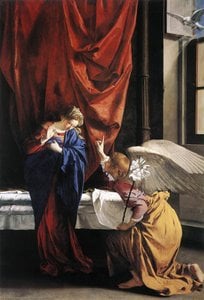
A Divine Encounter Captured in Light
In the profound stillness of a moment that changed the course of human history, Gérard de Lairesse’s Annunciation unfolds with a breathtaking sense of drama and spiritual weight. This monumental canvas, measuring an imposing 133 x 168 cm, serves as a masterclass in the Belgian Baroque tradition, inviting the viewer into a sacred space where the earthly and the divine collide. The painting captures the exact instant of the Archangel Gabriel’s visitation to the Virgin Mary, a narrative moment that is less about physical movement and more about the internal, spiritual transformation occurring within the soul. Through his masterful command of composition, De Lairesse ensures that the viewer does not merely observe the scene but feels the weight of the divine revelation.
The atmosphere of the work is thick with a sense of holy awe, achieved through the artist's sophisticated use of chiaroscuro. Light does not simply illuminate the figures; it acts as a protagonist in its own right, streaming into the scene to highlight the Virgin’s receptive grace and the celestial messenger's urgent presence. This interplay of deep, velvety shadows and brilliant, focused highlights creates a theatricality that is quintessential to the Baroque era, drawing the eye toward the central interaction between Mary and Gabriel. The surrounding figures, though secondary to the main event, add layers of human witness and communal reverence, grounding the miraculous event in a palpable, lived reality.
The Artistry of the Flemish Baroque
Technically, De Lairesse demonstrates the rigorous training and immense skill that defined his career. His brushwork, while precise enough to render the delicate textures of fabric and the soft glow of skin, possesses an underlying energy that prevents the scene from feeling static. The composition is a carefully orchestrated visual symphony; every gesture, from the Angel’s hand raised toward the heavens to the quiet, contemplative posture of Mary, is designed to guide the viewer's emotional journey. This sense of movement and dynamism is what distinguishes this piece from the more restrained compositions of the preceding Renaissance, offering instead a visceral experience of faith.
For the discerning collector or interior designer, this painting offers much more than mere decoration; it provides a focal point of profound intellectual and emotional depth. The Annunciation possesses a timeless elegance that allows it to anchor a room with authority and grace. Whether placed in a grand library, a formal dining hall, or a curated gallery space, the work’s rich palette and dramatic scale command attention, sparking conversation about history, theology, and the enduring power of classical beauty. To possess a high-quality reproduction of this masterpiece is to bring a piece of the Golden Age into the modern home, surrounding oneself with the light of divine inspiration.



 Aperçu en situation
 Passer au format impression
 Envoyer
 Partager
 Détails de l'œuvre

 Télécharger
 Articles similaires
 Radiographie
 Diaporama
 Statistiques


 Lire la suite






































 L'option verre n'est disponible que pour les dimensions inférieures à 110 cm.