Aperçu en situation Aperçu en RA Acheter la peinture faite à la main Passer au format image numérique Partager
Détails Ajouter aux favoris Télécharger Articles similaires Radiographie Voir le diaporama Statistiques

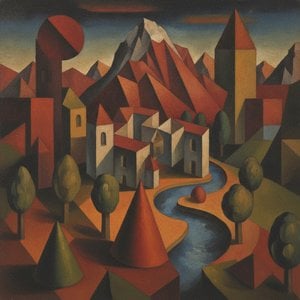
Musical instruments and Fruit

Explore Georges Braque’s ‘Musical Instruments & Fruit,’ a Cubist still life showcasing fragmented forms & dramatic lighting. Discover this iconic artwork's geometric abstraction.

Explorez la vie et l'art de Georges Braque (1882-1963), une figure clé de la peinture du 20e siècle. Pionnier du cubisme aux côtés de Picasso, connu pour le fauvisme, les collages et les formes géométriques innovantes. Découvrez son héritage chez WahooArt!

Giclées et impressions d'art

Impressions giclées ou sur toile de qualité musée, avec une production rapide et des finitions au choix. ( Acheter la peinture faite à la main Passer au format image numérique)

P118B $10
P118H $10
P118W $10
P438Z $10
P508JH $12
P508YH $12
P805H $10
P805Z $10
P919BZ $10
P919G $10
P919XJ $10
P959ZH $10
P968JZ $12
W106C $8
W218G $10
W218JH $8
W218Y $10
W307PJ $10
W316G $10
W316PJ $8
W316Y $10
W398PJ $8
W4111J $10
W500HY $15
W500JH $15
W692G $12
W849H $8
W940BG $15
W953PJ $8

Format standard
personnalisé
CM
INCH

Choisissez parmi nos formats prédéfinis qui respectent les proportions originales de l’œuvre.

largeur
hauteur

Vous pouvez saisir vos propres dimensions pour vous adapter à un cadre ou à un espace spécifique. Si la taille sélectionnée ne correspond pas aux proportions de l'image originale, nous recadrerons l'œuvre ou étendrons l'image avec une bordure en miroir ou une couleur unie. Une maquette numérique vous sera envoyée pour approbation avant le début de la production.
Veuillez noter que l'aperçu à l'écran ne reflète pas le recadrage ou l'extension réelle. Seule la maquette montrera avec précision la composition finale.
Bien que des tailles personnalisées soient disponibles, nous vous recommandons de choisir une dimension dans la liste prédéfinie afin de préserver les proportions originales.

Livraison dans le monde entier () en 2 semaines au lieu des 4/5 semaines habituelles. (19 septembre)

why_choose_icon
Livraison express gratuite dans le monde entier
why_choose_icon
Toile de lin de haute qualité
why_choose_icon
Assurance transport complète
why_choose_icon
Garantie de remboursement des droits de douane
why_choose_icon
Garantie de fidélité des couleurs
why_choose_icon
Garantie de retour de 100 jours (uniquement en cas de défaut)
why_choose_icon
Garantie de remboursement à 100%
why_choose_icon
Tarifs dégressifs sur quantité

Prix total

$ 68

reproduction

Musical instruments and Fruit

Giclées et impressions d'art

Format de la reproduction

-

Prix total final

$ 68

L'essentiel de l'œuvre

  • Location: Tate Modern, London
  • Medium: Oil on canvas
  • Title: Musical Instruments and Fruit
  • Year: 1927
  • Influences: Cézanne
  • Movement: Cubism
  • Artist: Georges Braque

Quiz d'art

Chaque question ne comporte qu'une seule bonne réponse.

Question 1:
What artistic movement is most closely associated with Georges Braque’s ‘Musical Instruments and Fruit’?
Question 2:
The painting utilizes a fragmented perspective, characteristic of which art movement?
Question 3:
What is the primary subject matter depicted in ‘Musical Instruments and Fruit’?
Question 4:
Based on the image description, what is a prominent feature of the lighting in ‘Musical Instruments and Fruit’?
Question 5:
Which artist is most closely associated with Georges Braque, particularly during the development of Cubism?

A Fragmented World: The Genesis of Cubism

Georges Braque's "Musical Instruments and Fruit" isn’t merely a still life; it’s a carefully orchestrated dismantling of perception, a visual embodiment of the revolutionary ideas taking shape in early 20th-century Paris. Painted in 1927, during a period of intense collaboration with Pablo Picasso, this work represents a pivotal moment in the development of Cubism – an artistic movement that sought to redefine how we see and represent reality. The canvas isn’t concerned with replicating a single, unified view; instead, it presents multiple viewpoints simultaneously, as if peering through fractured lenses at a commonplace scene. This deliberate fragmentation reflects the burgeoning anxieties and intellectual shifts of the era, mirroring a world grappling with rapid industrialization, technological advancements, and a growing sense of instability.

Braque’s approach was deeply rooted in Cézanne's geometric explorations, particularly his emphasis on analyzing objects into their fundamental forms. Cézanne’s influence is palpable in the painting’s flattened perspective and the reduction of recognizable elements – the bowl, the sheet of paper, the draped cloth – to a series of interlocking planes and angles. This isn’t an attempt at photographic realism; rather, it's a conscious rejection of traditional representation, prioritizing the exploration of form, space, and the very nature of seeing itself. The muted color palette—primarily ochres, browns, and grays—further enhances this sense of detachment from the tangible world, contributing to the painting’s contemplative mood.

The Language of Geometry: Form and Structure

The composition is dominated by a rigorous geometric vocabulary. Rectangular blocks define the table and its contents, while triangular shapes suggest the contours of the fruit bowl and draped cloth. These forms aren't smoothly blended; they are sharply delineated, creating a dynamic tension between solidity and instability. Notice how Braque uses overlapping planes to create an illusion of depth – not through linear perspective, but by layering geometric shapes that seem to shift and rearrange themselves before your eyes. This technique is central to Cubism’s challenge to traditional spatial representation, forcing the viewer to actively engage with the painting and reconstruct its form in their mind.

  • The Bowl of Fruit: Representing abundance and fertility, the fruit itself becomes a collection of fragmented shapes, mirroring the overall fractured composition.
  • The Sheet of Paper: Suggests intellectual activity and documentation – perhaps reflecting Braque’s own role as an artist documenting his explorations of form.
  • The Draped Cloth: Adds a layer of complexity to the arrangement, its folds and creases contributing to the overall sense of dynamism and instability.

Musicality in Monochrome: Symbolism and Emotion

Beyond its purely formal qualities, “Musical Instruments and Fruit” resonates with a subtle emotional depth. The inclusion of musical instruments – specifically a mandolin – introduces an element of melody and rhythm into the composition. This suggests that Braque wasn’t simply interested in dissecting objects; he was also exploring their inherent relationships and the ways they could evoke feelings and associations. The painting's title itself hints at this interplay between visual form and auditory experience, inviting the viewer to imagine a silent symphony of shapes and colors.

Furthermore, the still life genre traditionally held symbolic weight, often representing the five senses. Braque’s choice to depict fruit and musical instruments aligns with this tradition, suggesting an exploration of pleasure, nourishment, and artistic creation. The muted color palette contributes to a sense of quiet contemplation, inviting viewers to reflect on the beauty and complexity of everyday objects.

A Legacy in Fragments: Reproduction and Interpretation

Reproductions of “Musical Instruments and Fruit” offer a remarkable opportunity to appreciate Braque’s groundbreaking innovations. The painting's fragmented composition and geometric forms are particularly well-suited to digital reproduction, allowing viewers to examine the intricate details of its construction. Whether displayed in a modern interior or a dedicated art gallery, this work continues to challenge our perceptions of reality and inspire new ways of seeing the world – a testament to Braque’s enduring legacy as one of the most influential artists of the 20th century.


Biographie de l'artiste

**Jeunesse et formation**

Georges Braque, peintre français renommé, collagiste, dessinateur, graveur et sculpteur, est né le 13 mai 1882 à Argenteuil, dans les Val-d'Oise. Il a grandi à Le Havre et a initialement été formé pour devenir peigneur et décorateur comme son père et son grand-père. Cependant, les inclinations artistiques de Braque l’ont conduit à étudier la peinture à l’École des Beaux-Arts de Le Havre de 1897 à 1899.

**Évolution artistique et fauvisme**

En 1902, après avoir terminé son apprentissage auprès d'un décorateur à Paris, Braque a fréquenté l’Académie Humbert jusqu’en 1904. Cette période a marqué son introduction au fauvisme, un style caractérisé par des couleurs vives et des réponses émotionnelles. Influencé par les œuvres de Henri Matisse et André Derain, Braque a adopté une approche fauviste, comme en témoigne son tableau La Patience (fauvisme, huile sur toile).

**Contribution au cubisme**

La collaboration de Braque avec Pablo Picasso de 1908 à 1912 a conduit au développement du cubisme. Leurs œuvres cubistes analytiques, telles que Georges Braque: La Patience et Pablo Picasso: Le Clarinette(cubisme analytique, huile sur toile), sont aujourd’hui considérées comme des jalons de l'histoire de l'art.

**Héritage et œuvres notables**

* Maisons à l’Estaque : Témoignage de l'utilisation innovante de la géométrie et de la perspective simultanée par Braque. * La Patience(fauvisme, huile sur toile) : démontre le style fauve de Braque. * Le Clarinette(cubisme analytique, huile sur toile) : œuvre cubiste collaborative avec Picasso.

**Musées et collections**

* Musée d'Orsay : présente une vaste collection d'art impressionniste et post-impressionniste, incluant des œuvres de Braque. * Musée de l'Orangerie : expose une large gamme d'œuvres d'art, incluant celles de Braque et d'autres artistes notables.
  • Découvrez-en davantage sur la vie et l’œuvre de Georges Braque sur WahooArt.com
  • Explorez la collection du Musée d'Orsay, présentant des œuvres de Braque et d'autres artistes, sur Musée d'Orsay - Wikipédia
  • Apprenez-en davantage sur le fauvisme et son influence sur le développement du cubisme avec le mouvement artistique fauviste sur WahooArt.com
**Le style innovant de Georges Braque et sa collaboration avec Pablo Picasso continuent d'inspirer les artistes et les amateurs d'art.**
Georges Braque

Georges Braque

1882 - 1963 , France

En bref

  • Artistes Influents:
    • Henri Matisse
    • André Derain
    • Paul Cézanne
  • Date De Décès: 1963
  • Date De Naissance: 13 mai 1882
  • Influence Sur Les Artistes: ['Pablo Picasso']
  • Lieu De Naissance: Argenteuil, France
  • Mouvement Artistique: Cubisme, Fauvisme
  • Nationalité: Française
  • Nom Complet: Georges Braque
  • Oeuvres Notables:
    • Maisons à L'Estaque
    • La Patience
    • Le Clarinette
    • Nature morte avec cruets
Explorez des œuvres d'art classées par thèmes, styles et caractéristiques.