x
Aperçu en situationAperçu en situation Visualiser en RAVisualiser en RA Commander la reproduction peinte à la main Commander la reproduction peinte à la mainAcheter l'image haute résolution Acheter l'image haute résolution EnvoyerEnvoyer
Détails de l'œuvreDétails de l'œuvre Ajouter aux favoris Ajouter aux favoris TéléchargerTélécharger Articles similairesArticles similaires RadiographieRadiographie DiaporamaDiaporama

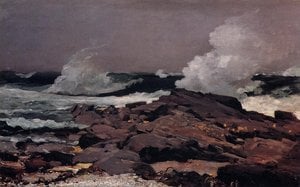
Monhegan Island

George Bellows’ "Monhegan Island" captures the rugged beauty of Maine's coast with dynamic brushstrokes and evocative light. A powerful depiction of nature's strength, painted in 1913.

Découvrez George Wesley Bellows (1882-1925), peintre américain réaliste majeur ! Explorez son style Ashcan, ses coups de pinceau audacieux & ses représentations saisissantes de la vie urbaine à New York.

Giclées et impressions d'art

Impressions giclées ou sur toile de qualité musée, avec une production rapide et des finitions au choix. (Commander la reproduction peinte à la main Commander la reproduction peinte à la mainAcheter l'image haute résolution Acheter l'image haute résolution)

P118B $10
P118H $10
P118W $10
P438Z $10
P508JH $12
P508YH $12
P805H $10
P805Z $10
P919BZ $10
P919G $10
P919XJ $10
P959ZH $10
P968JZ $12
W106C $8
W218G $10
W218JH $8
W218Y $10
W307PJ $10
W316G $10
W316PJ $8
W316Y $10
W398PJ $8
W4111J $10
W500HY $15
W500JH $15
W692G $12
W849H $8
W940BG $15
W953PJ $8

Format standard
sur mesure
CM
INCH

Choisissez parmi nos formats prédéfinis qui respectent les proportions originales de l’œuvre.

largeur
hauteur

Vous pouvez saisir vos propres dimensions pour vous adapter à un cadre ou à un espace spécifique. Si la taille sélectionnée ne correspond pas aux proportions de l'image originale, nous recadrerons l'œuvre ou étendrons l'image avec une bordure en miroir ou une couleur unie. Une maquette numérique vous sera envoyée pour approbation avant le début de la production.
Veuillez noter que l'aperçu à l'écran ne reflète pas le recadrage ou l'extension réelle. Seule la maquette montrera avec précision la composition finale.
Bien que des tailles personnalisées soient disponibles, nous vous recommandons de choisir une dimension dans la liste prédéfinie afin de préserver les proportions originales.

Livraison dans le monde entier () en 2 semaines au lieu des 4/5 semaines habituelles. (2 septembre)

why_choose_icon
Livraison express gratuite dans le monde entier

why_choose_icon
Toile de lin de qualité supérieure
why_choose_icon
Assurance transport complète
why_choose_icon
Garantie de remboursement des droits de douane
why_choose_icon
Garantie de fidélité des couleurs
why_choose_icon
Politique de retour de 60 jours (uniquement en cas de défaut)
why_choose_icon
Garantie de remboursement à 100%
why_choose_icon
Offre de tarifs dégressifs

Prix total

$ 68

reproduction

Monhegan Island

Giclées et impressions d'art

Format de la reproduction

-

Prix total

$ 68

Informations clés

  • Artist: George Bellows
  • Year: 1913
  • Movement: Ashcan School
  • Title: Monhegan Island
  • Medium: Oil on panel
  • Notable elements: Coastal scene, rocks
  • Subject or theme: Ocean landscape

Quiz d'art

Chaque question ne comporte qu'une seule bonne réponse.

Question 1:
What is the primary subject of George Wesley Bellows’ ‘Monhegan Island’?
Question 2:
In what year was George Wesley Bellows’ ‘Monhegan Island’ painted?
Question 3:
Which artistic movement is George Bellows most closely associated with?
Question 4:
What type of building is the Monhegan Island Light housed in?
Question 5:
The painting ‘Monhegan Island’ by Bellows is known for its depiction of:

A Storm’s Embrace: Bellows' Monhegan Island

George Wesley Bellows’ “Monhegan Island,” painted in 1913, isn’t merely a depiction of a coastal scene; it’s a visceral embodiment of the raw energy and untamed spirit of early 20th-century America. This evocative work captures a dramatic seascape – a churning ocean relentlessly assaulting jagged, red-streaked rocks – yet within this turbulent exterior lies a profound sense of quiet observation and understated power. Bellows, a key figure in the Ashcan School movement, eschewed idealized landscapes for the gritty realities of urban life, but his ability to translate that sensibility to the natural world is strikingly evident here. The painting’s strength resides not just in its technical mastery, but in its capacity to evoke a deeply felt connection to the elemental forces of nature and the human experience within them.

The Painter's Hand: Technique and Style

Bellows employed a distinctive technique characterized by bold brushstrokes and a vibrant, almost frenetic energy. The paint is applied with thick impasto in areas like the crashing waves and the textured rocks, creating a palpable sense of movement and volume. Notice how he uses short, choppy strokes to convey the relentless motion of the water, contrasted with broader, more fluid marks for the sky and distant coastline. This dynamic approach reflects Bellows’ interest in capturing not just what *looked* like a seascape, but also *how* it felt – the power, the chaos, and ultimately, the sublime beauty of the ocean's embrace. The color palette is dominated by cool blues and greens, punctuated by flashes of fiery orange and red within the rocks, creating a dramatic interplay of light and shadow that intensifies the scene’s emotional impact. The composition itself is carefully constructed, drawing the eye towards the tumultuous center while maintaining a sense of balance and perspective.

Monhegan: A Haven for Artists

To fully appreciate “Monhegan Island,” it's crucial to understand its historical context. In 1913, Monhegan Island off the coast of Maine was experiencing a remarkable artistic renaissance. Drawn by the island’s dramatic landscape and isolation, artists like Rockwell Kent, Edward Hopper, and, of course, Bellows, flocked to its shores seeking inspiration. This period saw Monhegan transform into a vibrant community of painters, writers, and naturalists, fostering an atmosphere of creative exchange and experimentation. The island's rugged beauty, combined with the relative seclusion from the pressures of urban life, provided a unique environment for artists to explore their ideas and develop their individual styles. Bellows’ painting is therefore not just a personal statement; it’s also a reflection of this broader artistic movement and the transformative power of place.

Symbolism and Emotional Resonance

Beyond its technical brilliance, “Monhegan Island” resonates with deeper symbolic meaning. The turbulent sea can be interpreted as representing the challenges and uncertainties of life, while the steadfast rocks symbolize resilience and endurance. The interplay between light and shadow suggests a constant struggle between hope and despair, beauty and destruction. The small boat in the distance hints at human presence within this vast, indifferent landscape – a reminder of our vulnerability and our connection to the natural world. Bellows masterfully captures not just a visual scene but also a complex emotional state, inviting viewers to contemplate their own relationship with nature, life, and the enduring power of the human spirit. The painting’s raw energy and dramatic intensity evoke a sense of awe and wonder, prompting us to consider the sublime beauty that can be found even in the face of chaos.

Reproductions and Display

High-quality reproductions of “Monhegan Island” capture much of the original's power, offering an accessible way to bring this iconic work into any setting. When displayed, consider framing options that complement the painting’s dramatic palette – a dark wood frame can enhance the sense of depth and intensity, while a lighter tone might allow the colors to shine through more vividly. This piece would be particularly striking in a coastal-themed room or an interior space seeking to evoke a feeling of rugged beauty and timelessness.

Biographie de l'artiste

Premières années et éducation

George Wesley Bellows, figure marquante de l'art américain, est né le 12 ou le 19 août 1882 à Columbus, Ohio. Il était le seul enfant de George Bellows et d’Anna Wilhelmina Smith Bellows. Son enfance fut marquée par une inclination précoce pour l'art, comme en témoignent ses dessins bien avant qu'il ne commence l'école maternelle.

Carrière artistique

Le parcours artistique de Bellows a débuté avec des illustrations commerciales avant de le mener vers une carrière de peintre. Il s’est inscrit à l'université de l'Ohio (1901-1904), où il jouait au baseball et au basketball, consolidant ainsi ses talents athlétiques. Cependant, sa véritable passion résidait dans l'art, ce qui l'a poussé à déménager à New York en 1904 pour étudier sous la direction de Robert Henri.
  • George Wesley Bellows s’est associé au groupe "The Eight" et à l'école Ashcan, plaidant pour la représentation de la société américaine contemporaine.
  • En 1906, il a installé un atelier au 1947 Broadway Street, marquant le début de sa carrière prolifique.
  • Sa première exposition notable en 1908 présentait des études urbaines, qui, bien que jugées grossièrement peintes par certains critiques, étaient également considérées comme audacieusement audacieuses et innovantes.

Œuvres notables et contributions

Oeuvres clés :
  • Central Park (Ohio State University Faculty Club, États-Unis, huile sur toile) – un témoignage de son talent pour capturer la vie urbaine.
  • The Germans Arrive (1918) – une série de lithographies et de peintures qui dépeignaient graphiquement les atrocités commises par l'Allemagne lors de son invasion de la Belgique.
Musées présentant ses œuvres :
  • Le Museum of Modern Art (New York, Royaume-Uni) – bien qu’il ne présente pas exclusivement ses œuvres, il représente le contexte plus large de l’art moderne dans lequel Bellows a prospéré.
  • La New York Public Library – bien qu'elle ne soit pas spécifiquement connue pour abriter ses œuvres, ses collections artistiques et ses programmes reflètent la scène artistique vibrante de la ville qui a influencé sa carrière.

Influences et développement artistique

Bellows a été profondément influencé par Robert Henri, dont l'approche réaliste et son engagement envers le sujet social ont façonné sa propre vision artistique. Il s’est inspiré des œuvres d'Edgar Degas pour ses représentations dynamiques de mouvements et d'action, en particulier dans ses peintures de boxeurs. Son intérêt pour la représentation de la vie urbaine a été alimenté par son expérience personnelle de New York City, où il a observé les foules animées, l’activité industrielle et la diversité sociale qui caractérisaient la ville au début du XXe siècle. Bellows a également exploré des thèmes plus personnels dans ses œuvres, comme le portrait et les scènes de famille, démontrant sa capacité à capturer une large gamme d'émotions et d'expériences humaines.

Héritage

George Wesley Bellows est décédé le 8 janvier 1925, mais son héritage en tant que « l’artiste américain le plus acclamé de sa génération » (selon le Columbus Museum of Art) perdure. Ses représentations audacieuses de la vie urbaine à New York continuent d'inspirer et d'influencer l'art contemporain.
  • Découvrez 'Hommes des Quais' de George Bellows (1912) – une puissante peinture réaliste capturant la saleté industrielle et la résilience humaine de NYC. Explorez les coups de pinceau impressionnistes et le commentaire social dans cette œuvre américaine emblématique.
  • Découvrez "Marguerite" de George Wesley Bellows, un portrait captivant de 1919 illustrant la scène artistique new-yorkaise et l'école Ashcan.
George Wesley Bellows

George Wesley Bellows

1882 - 1925 , États-Unis d'Amérique

L'essentiel de l'artiste

  • Artistes Influents: ['Robert Henri']
  • Date De Décès: 8 janvier 1925
  • Date De Naissance: 12 ou 19 août 1882
  • Lieu De Naissance: Columbus, États-Unis
  • Mouvement Artistique: Réalisme américain, Ashcan School
  • Nationalité: Américaine
  • Nom Complet: George Wesley Bellows
  • Œuvres Notables:
    • Central Park
    • The Germans Arrive
Explorez des œuvres d'art classées par thèmes, styles et caractéristiques.