Aperçu en situationAperçu en situation Visualiser en RAVisualiser en RA Commander la reproduction peinte à la main Commander la reproduction peinte à la mainPasser à l'image numérique Passer à l'image numérique EnvoyerEnvoyer
Détails de l'œuvreDétails de l'œuvre Ajouter aux favoris Ajouter aux favoris TéléchargerTélécharger Articles similairesArticles similaires RadiographieRadiographie DiaporamaDiaporama StatistiquesStatistiques

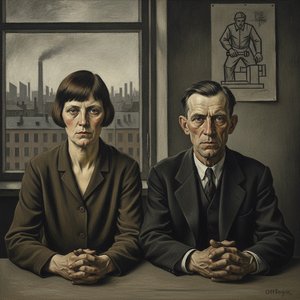
Café 1

Experience George Grosz’s ‘Café 1’! A vibrant depiction of urban life in Berlin, showcasing his distinctive style & social commentary. Hand-painted reproduction available.

Découvrez George Grosz (1893-1959), figure clé du Dada berlinois et de la Nouvelle Objectivité ! Ses peintures satiriques dénoncent la société allemande, la politique et l'ascension du fascisme. Explorez ses caricatures puissantes et son héritage.

Giclées et impressions d'art

Impressions giclées ou sur toile de qualité musée, avec une production rapide et des finitions au choix. (Commander la reproduction peinte à la main Commander la reproduction peinte à la mainPasser à l'image numérique Passer à l'image numérique)

P118B $10
P118H $10
P118W $10
P438Z $10
P508JH $12
P508YH $12
P805H $10
P805Z $10
P919BZ $10
P919G $10
P919XJ $10
P959ZH $10
P968JZ $12
W106C $8
W218G $10
W218JH $8
W218Y $10
W307PJ $10
W316G $10
W316PJ $8
W316Y $10
W398PJ $8
W4111J $10
W500HY $15
W500JH $15
W692G $12
W849H $8
W940BG $15
W953PJ $8

Format standard
personnalisé
CM
INCH

Choisissez parmi nos formats prédéfinis qui respectent les proportions originales de l’œuvre.

largeur
hauteur

Vous pouvez saisir vos propres dimensions pour vous adapter à un cadre ou à un espace spécifique. Si la taille sélectionnée ne correspond pas aux proportions de l'image originale, nous recadrerons l'œuvre ou étendrons l'image avec une bordure en miroir ou une couleur unie. Une maquette numérique vous sera envoyée pour approbation avant le début de la production.
Veuillez noter que l'aperçu à l'écran ne reflète pas le recadrage ou l'extension réelle. Seule la maquette montrera avec précision la composition finale.
Bien que des tailles personnalisées soient disponibles, nous vous recommandons de choisir une dimension dans la liste prédéfinie afin de préserver les proportions originales.

Livraison dans le monde entier () en 2 semaines au lieu des 4/5 semaines habituelles. (10 septembre)

why_choose_icon
Livraison express gratuite dans le monde entier
why_choose_icon
Toile de lin de haute qualité
why_choose_icon
Assurance transport complète
why_choose_icon
Garantie de remboursement des droits de douane
why_choose_icon
Garantie de fidélité des couleurs
why_choose_icon
Garantie de retour de 100 jours (uniquement en cas de défaut)
why_choose_icon
Garantie de remboursement à 100%
why_choose_icon
Tarifs dégressifs sur quantité

Prix total

$ 68

reproduction

Café 1

Giclées et impressions d'art

Format de la reproduction

-

Prix total final

$ 68

Informations clés

  • Artist: George Grosz
  • Artistic style: Social commentary, Satirical
  • Notable elements or techniques: Detailed depiction of urban life
  • Subject or theme: People socializing in a busy cafe
  • Title: Café 1

A Window into the Weimar Soul

In the heart of a bustling, fractured Berlin, George Grosz captures a moment of suspended animation in his evocative work, Café 1. This painting serves as more than just a depiction of a social gathering; it is a vibrant, almost frenetic window into the urban pulse of the early twentieth century. As one gazes upon the canvas, the viewer is immediately swept into a crowded, atmospheric setting where the clinking of cups and the low hum of conversation seem to vibrate through the brushstrokes. The scene is populated by a diverse cast of characters—individuals caught in the quiet, mundane rituals of eating, drinking, and socializing—yet there is an underlying tension that suggests the world outside these cafe walls is far from stable. Through his masterful use of color and composition, Grosz invites us to witness the delicate dance of human connection amidst the encroaching shadows of a changing era.

The technique employed in Café 1 reflects the artist's unique ability to blend meticulous observation with a sharp, satirical edge. While his early training involved the disciplined study of Dutch masters, here we see a departure toward a more expressive and jagged aesthetic. The figures are rendered with a certain rhythmic energy, their forms defined by lines that feel both deliberate and urgent. The interplay of light and shadow across the dining tables creates a sense of depth, drawing the eye through the layers of the crowd toward the subtle details—a man in a tie, a woman lost in thought, and even the unexpected presence of birds that flutter near the periphery. This layering of detail ensures that every glance reveals something new, making the painting an endlessly engaging subject for close study.

Symbolism and the Urban Tapestry

Beyond its surface beauty, Café 1 functions as a profound piece of social commentary. Grosz, a chronicler of societal decay, uses the cafe setting as a microcosm of the Weimar Republic. The arrangement of people—some isolated in their own thoughts, others huddled in small groups—mirrors the fragmented nature of a society struggling to find its footing between tradition and modernity. The presence of the birds adds a layer of surrealist intrigue, perhaps symbolizing a fleeting sense of freedom or an external world that remains indifferent to the human drama unfolding within the cafe's walls. For the discerning collector, the painting offers a rich tapestry of meaning, where every object, from a simple coffee cup to a formal necktie, serves as a symbol of the social hierarchies and cultural shifts defining the age.

For interior designers and art enthusiasts alike, this reproduction offers a commanding presence that brings both historical weight and intellectual depth to any space. The painting’s palette, though colorful, possesses a sophisticated complexity that allows it to integrate seamlessly into both contemporary and classic decor. It acts as a conversation piece, sparking dialogue about history, sociology, and the enduring power of art to capture the human condition. To possess a hand-painted reproduction of Café 1 is to hold a fragment of Berlin's turbulent history, offering an emotional resonance that transcends time and provides a soulful focal point for any curated collection.


Biographie de l'artiste

Première Vie et Influences

George Grosz, figure marquante du groupe Berlin Dada et de la Nouvelle Objectivité pendant la République de Weimar, est né le 26 juillet 1893 à Berlin, en Allemagne. En tant que Georg Ehrenfried Gross, il a grandi dans une famille luthérienne fervente, son père étant propriétaire d'un pub. La vie précoce de Grosz a été marquée par la mort de son père en 1901, après laquelle sa mère est devenue la gardienne du mess des officiers hussards locaux.

Développement Artistique

Grosz a commencé son parcours artistique sous la tutelle d'un peintre local nommé Grot, développant davantage ses compétences grâce à de méticuleuses copies des scènes de boisson et des scènes de bataille imaginaires d’Eduard von Grützner. Il a ensuite étudié à l'Académie des beaux-arts de Dresde (1909-1911) puis au Collège des arts et métiers de Berlin.

Œuvres Notables et Style

  • La Fosse, une peinture présentant le style dadaïste de Grosz, est un exemple notable de son œuvre.
  • Ce tableau, ainsi que d'autres comme L’Agitateur et Les Piliers de la Société, démontrent sa critique satirique de la communauté bourgeoise allemande.
  • Ces œuvres se caractérisent par leur nature caricaturale, présentant souvent des images morbides et grotesques qui symbolisaient les forces fascistes en Allemagne.
  • Cain ou Hitler en Enfer est une œuvre puissante anti-fasciste.
  • L'Éclipse du Soleil dépeint le chaos de l’Allemagne de Weimar.

Collections de Musées et Expositions

Les œuvres de Grosz se trouvent dans divers musées, notamment les Kunstsammlungen und Museen Augsburg et la Kunsthalle Bielefeld, tous deux réputés pour leurs vastes collections d'art allemand.

Vie Ultérieure et Héritage

Grosz a émigré aux États-Unis en 1933, devenant citoyen naturalisé en 1938. Il a enseigné à l'Art Students League de New York et a continué à exposer son travail jusqu’à son retour à Berlin, où il est décédé le 6 juillet 1959. Points Clés :
  • Grosz était un membre important du groupe Berlin Dada et de la Nouvelle Objectivité.
  • Son œuvre se caractérise par des critiques satiriques de la communauté bourgeoise allemande.
  • Il a émigré aux États-Unis en 1933 et est devenu citoyen naturalisé en 1938.
  • L'héritage de Grosz continue d’être célébré à travers ses œuvres, qui peuvent être trouvées dans divers musées à travers l'Allemagne.

Références :

Liste de personnalités américaines d'origine allemande (Wikipédia)
George Grosz

George Grosz

1893 - 1959 , Allemagne

En bref

  • Artistes Influents: ['Édouard von Grützner']
  • Date De Décès: 6 juillet 1959
  • Date De Naissance: 26 juillet 1893
  • Lieu De Naissance: Berlin, Allemagne
  • Mouvement Artistique: Dadaïsme, Nouvelle Objectivité
  • Nationalité: Allemand, Américain
  • Nom Complet: George Grosz
  • Oeuvres Notables:
    • La Fosse
    • L'Agitateur
    • Les Piliers de la Société
    • Cain ou Hitler en Enfer
Explorez des œuvres d'art classées par thèmes, styles et caractéristiques.