Huile sur toile peinte à la main, avec cadre et dimensions personnalisés, réalisée sur commande par nos artistes. ( Commander l'impression Acheter l'image haute résolution)
Choisissez parmi nos formats prédéfinis qui respectent les proportions originales de l’œuvre.

Vous pouvez saisir vos propres dimensions pour l'adapter à un cadre ou à un espace spécifique. Si la taille sélectionnée ne correspond pas aux proportions de l'image d'origine, nous recadrerons l'œuvre ou prolongerons la peinture avec des éléments peints à la main supplémentaires. Une maquette numérique vous sera envoyée pour approbation avant le début de la production.
Veuillez noter que l'aperçu à l'écran ne reflète pas le recadrage ou l'extension réels. Seule la maquette montrera fidèlement la composition finale.
Bien que des tailles personnalisées soient disponibles, nous vous recommandons de sélectionner une dimension dans la liste prédéfinie afin de préserver les proportions d'origine.
Livraison dans le monde entier () en 3 à 4 semaines au lieu des 5 semaines habituelles. (7 septembre). Aucun compromis sur la qualité.


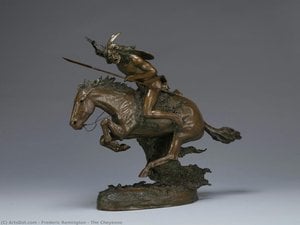
The Cheyenne
Format de la reproduction
Frederic Remington’s “The Cheyenne” stands as more than just a bronze sculpture; it's a powerful testament to a vanishing world, a meticulously crafted narrative frozen in time. Completed in 1906, this iconic piece captures the raw energy and stoic dignity of a Native American warrior on horseback, a subject that would define Remington’s career and solidify his place as one of America’s foremost chroniclers of the late 19th-century West. The sculpture's immediate impact stems from its dynamic composition – a rider in mid-gallop, lance poised for action, embodying the spirit of both fierce combat and profound connection to the land.
Remington’s artistic vision is firmly rooted in Realism, rejecting the romanticized depictions prevalent at the time. He sought an accurate representation of the subject, paying meticulous attention to anatomical detail – particularly evident in the musculature of the horse and the warrior's posture. The rough, granular texture achieved through the sculpting process isn’t a flaw but a deliberate choice, reflecting the harsh realities of frontier life and adding a palpable sense of authenticity to the piece. Subtle lighting enhances these textures, casting delicate shadows that emphasize the contours of the figures and the base, contributing to a dramatic and weighty atmosphere.
“The Cheyenne” is deeply embedded within its historical context – the late 19th century, a period of profound transformation in the American West. The sculpture reflects the complex relationship between Native Americans and the expanding United States, capturing a moment of both conflict and cultural exchange. The straightened right rear fetlock of number 12, a concession made to the foundry due to casting difficulties, subtly highlights the compromises inherent in this era. The choice speaks volumes about the practical constraints Remington faced while striving for artistic perfection.
Beyond its technical brilliance and historical significance, “The Cheyenne” possesses a powerful emotional resonance. The sculpture evokes feelings of power, determination, and perhaps even melancholy – a poignant reminder of a way of life that was rapidly disappearing. Its placement on a simple, dark-colored base further emphasizes the subject matter, creating a focal point that draws the viewer in. Frederic Remington’s “The Cheyenne” remains a seminal work, not just for its technical mastery but for its enduring portrayal of a pivotal moment in American history and the spirit of the West.


1861 - 1909 , États-Unis d'Amérique

Discover the enduring allure of bronze sculptures at WahooArt.com. From classical lost-wax casting to modern metal masterpieces, explore museum-quality artworks designed to elevate luxury interiors. Expert curation, authenticity guaranteed, and worldwide shipping for discerning collectors.

Discover the enduring elegance of bronze sculpture. From ancient Roman strength to Art Deco sophistication, explore our expert guide on collecting, casting techniques, and integrating timeless metal masterpieces into your fine art collection.

Discover the enduring allure of bronze sculpture. From the intricate lost-wax process to Neoclassical masterpieces, our expert guide offers connoisseurs deep insights into evaluating patina, historical significance, and integrating metal fine art into sophisticated collections.

 Envoyer
 Partager
 Détails de l'œuvre

 Télécharger
 Articles similaires
 Diaporama


 Lire la suite




































 L'option verre n'est disponible que pour les dimensions inférieures à 110 cm.