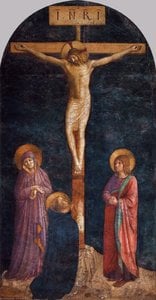
Fiesole Triptych: A Symphony of Faith and Renaissance Vision
The
Fiesole Triptych stands as a cornerstone of Early Renaissance art, born from the crucible of Florentine intellectual fervor and imbued with the spiritual devotion characteristic of its creator, Fra Angelico. Painted circa 1423-1425 for the Benedictine Convent of San Domenico in Fiesole, this masterpiece transcends mere decoration; it embodies a profound exploration of Christian iconography and humanist ideals—a testament to Angelico’s unparalleled artistic genius.
The Artist and His Style
Fra Angelico (1395-1455), a Dominican friar and painter of extraordinary talent, emerged from the Tuscan monastic tradition—a lineage steeped in illumination and manuscript decoration. Unlike many of his contemporaries who embraced the dramatic innovations of Masaccio’s perspective, Angelico cultivated an aesthetic rooted in elegance and naturalism, prioritizing serene beauty and spiritual contemplation. His distinctive style blended Gothic sensibilities with nascent Renaissance principles, resulting in compositions characterized by balanced lines, luminous colors, and a palpable sense of tranquility—a stylistic hallmark that distinguishes him from other artists of his time. The Fiesole Triptych exemplifies this approach perfectly.
The Painting's Composition and Symbolism
The triptych’s tripartite structure immediately establishes a visual hierarchy designed to guide the viewer’s gaze toward the central panel depicting the Virgin Mary cradling Jesus Christ—the focal point of Christian devotion. Angels surround the Madonna, conveying divine grace and protection. The flanking panels showcase St. Dominic and St. Peter Martyr, figures venerated for their piety and martyrdom—symbols of faith and sacrifice. Angelico skillfully employs perspective to create depth and dimensionality, fostering a feeling of immersion within the sacred space depicted. Beyond its technical mastery, the painting resonates with profound symbolism: Mary represents humility and purity, Jesus embodies divine compassion and redemption, while St. Dominic and St. Peter Martyr embody unwavering faith and selfless service—themes central to Christian theology and celebrated throughout the Renaissance.
Key Features of the Painting
- Medium: Tempera on Panel
- Innovation: Angelico’s masterful use of perspective, a revolutionary technique emerging from Masaccio's influence, establishes spatial awareness and enhances realism.
- Symbolism: The depiction of Mary and Jesus embodies Christian ideals of humility, compassion, and divine grace.
- Color Palette: Angelico utilized a restrained yet luminous palette—primarily blues and golds—creating an atmosphere of serenity and spiritual contemplation.
Explore More: To delve deeper into Fra Angelico’s artistic legacy and discover exquisite reproductions of his works, including the Fiesole Triptych, visit
WahooArt.com. You can also find valuable insights into the artist's life and oeuvre on
Wikipedia. The Fiesole Triptych remains a captivating emblem of Early Renaissance artistic excellence—a timeless masterpiece that continues to inspire awe and reverence centuries later. Admire its beauty at
WahooArt.com and immerse yourself in the artistic heritage of 15th-century Italy.
Saint Dominic Altarpiece: A Reflection on Faith and Patronage
The Saint Dominic Altarpiece, executed by Fra Angelico around 1430–1437 for the Benedictine Convent of San Domenico in Fiesole, is a remarkable example of Early Renaissance art. It exemplifies Angelico’s meticulous attention to detail and his profound understanding of Christian iconography—a testament to his artistic prowess and devotion. The altarpiece's composition reflects the humanist ideals prevalent during its creation, emphasizing balance and harmony while simultaneously conveying spiritual significance. Its serene colors and luminous surfaces contribute to an atmosphere of contemplative beauty—capturing the essence of Angelico’s distinctive style.
The Painting's Technique
Angelico employed tempera on panel—a technique favored during the Early Renaissance—resulting in vibrant pigments that resist fading over time. He meticulously layered colors, creating subtle gradations and textures that enhance realism and depth. The artist’s masterful brushwork conveys a sense of movement and dynamism within the stillness of the sacred scene—demonstrating his technical virtuosity and artistic vision.
Symbolism and Context
The Saint Dominic Altarpiece commemorates St. Dominic, founder of the Dominican Order, who championed the reform of the Catholic Church during the 13th century. The altarpiece’s imagery—including depictions of St. Dominic himself, saints, and biblical figures—reflects the theological concerns of its time—emphasizing faith, piety, and divine grace. Its placement within the convent underscores its role as a devotional object intended to inspire contemplation and prayer.
Further Research
To explore Fra Angelico’s artistic journey and discover more reproductions of his celebrated works, visit
WahooArt.com. You can also consult scholarly resources on Wikipedia:
Wikipedia. Admire the Saint Dominic Altarpiece's enduring beauty and artistic merit—a masterpiece of Early Renaissance art that continues to resonate with audiences today.



 Aperçu en situation
 Passer au format impression
 Partager
 Partager
 Détails

 Télécharger
 Articles similaires
 Radiographie
 Voir le diaporama
 Statistiques

 Afficher la suite






































 L'option verre n'est disponible que pour les dimensions inférieures à 110 cm.