Aperçu en situation Aperçu en RA Passer au format impression Passer au format image numérique Partager
Détails Guide imprimable Ajouter aux favoris Télécharger Articles similaires Radiographie Voir le diaporama Statistiques

The Parade

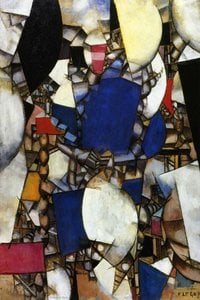
Fernand Léger’s "The Parade" explodes with geometric form and industrial spirit! This Cubist lithograph captures the dynamism of modern life through fragmented figures & bold abstraction. Explore a masterpiece of 20th-century art!

Explorez l'art de Fernand Léger (1881-1955), un pionnier du Cubisme et du 'Tubisme'. Découvrez ses peintures audacieuses et figuratives célébrant la vie moderne, les machines et la forme humaine. Un précurseur du Pop Art !

Reproduction à l'huile faite à la main

Huile sur toile peinte à la main, avec cadre et dimensions personnalisés, réalisée sur commande par nos artistes. ( Passer au format impression Passer au format image numérique)

Corner sample of the P118B picture frame: polystyrène moulé, 5 cm wide and 3 cm thick
P118B 10
Corner sample of the P118H picture frame: polystyrène moulé, 5 cm wide and 3 cm thick
P118H 10
Corner sample of the P118W picture frame: polystyrène moulé, 5 cm wide and 3 cm thick
P118W 10
Corner sample of the P438Z picture frame: polystyrène moulé, 5.5 cm wide and 3.5 cm thick
P438Z 10
Corner sample of the P508JH picture frame: polystyrène moulé, 7 cm wide and 3.5 cm thick
P508JH 12
Corner sample of the P508YH picture frame: polystyrène moulé, 7 cm wide and 3.5 cm thick
P508YH 12
Corner sample of the P805H picture frame: polystyrène moulé, 5 cm wide and 3.5 cm thick
P805H 10
Corner sample of the P805Z picture frame: polystyrène moulé, 5 cm wide and 3.5 cm thick
P805Z 10
Corner sample of the P919BZ picture frame: polystyrène moulé, 7 cm wide and 3.5 cm thick
P919BZ 10
Corner sample of the P919G picture frame: polystyrène moulé, 7 cm wide and 3.5 cm thick
P919G 10
Corner sample of the P919XJ picture frame: polystyrène moulé, 7 cm wide and 3.5 cm thick
P919XJ 10
Corner sample of the P959ZH picture frame: polystyrène moulé, 5 cm wide and 3 cm thick
P959ZH 10
Corner sample of the P968JZ picture frame: polystyrène moulé, 6 cm wide and 4 cm thick
P968JZ 12
Corner sample of the W106C picture frame: bois massif, 5 cm wide and 3 cm thick
W106C 8
Corner sample of the W218G picture frame: bois massif, 5 cm wide and 3 cm thick
W218G 10
Corner sample of the W218JH picture frame: bois massif, 5 cm wide and 3 cm thick
W218JH 8
Corner sample of the W218Y picture frame: bois massif, 5 cm wide and 3 cm thick
W218Y 10
Corner sample of the W307PJ picture frame: bois massif, 6 cm wide and 3 cm thick
W307PJ 10
Corner sample of the W316G picture frame: bois massif, 6 cm wide and 3 cm thick
W316G 10
Corner sample of the W316PJ picture frame: bois massif, 6 cm wide and 3 cm thick
W316PJ 8
Corner sample of the W316Y picture frame: bois massif, 6 cm wide and 3 cm thick
W316Y 10
Corner sample of the W398PJ picture frame: bois massif, 5 cm wide and 3 cm thick
W398PJ 8
Corner sample of the W4111J picture frame: bois massif, 6.5 cm wide and 3.5 cm thick
W4111J 10
Corner sample of the W500HY picture frame: bois massif, 7 cm wide and 5 cm thick
W500HY 15
Corner sample of the W500JH picture frame: bois massif, 7 cm wide and 5 cm thick
W500JH 15
Corner sample of the W692G picture frame: bois massif, 8 cm wide and 4 cm thick
W692G 12
Corner sample of the W849H picture frame: bois massif, 5 cm wide and 3 cm thick
W849H 8
Corner sample of the W940BG picture frame: bois massif, 7.5 cm wide and 4.5 cm thick
W940BG 15
Corner sample of the W953PJ picture frame: bois massif, 6 cm wide and 3.5 cm thick
W953PJ 8

Format standard
personnalisé
CM
INCH

Choisissez parmi nos formats prédéfinis qui respectent les proportions originales de l’œuvre.

largeur
hauteur

Vous pouvez saisir vos propres dimensions pour l'adapter à un cadre ou à un espace spécifique. Si la taille sélectionnée ne correspond pas aux proportions de l'image d'origine, nous recadrerons l'œuvre ou prolongerons la peinture avec des éléments peints à la main supplémentaires. Une maquette numérique vous sera envoyée pour approbation avant le début de la production.
Veuillez noter que l'aperçu à l'écran ne reflète pas le recadrage ou l'extension réels. Seule la maquette montrera fidèlement la composition finale.
Bien que des tailles personnalisées soient disponibles, nous vous recommandons de sélectionner une dimension dans la liste prédéfinie afin de préserver les proportions d'origine.

Exemples de personnalisation possibles : remplacer un visage par la photo du client ; ajouter un animal de compagnie (par exemple, remplacer un chat par un chien) ; inclure un message caché en arrière-plan ; modifier le paysage ou les éléments de l'arrière-plan.
Après la commande, l’équipe WahooArt.com contactera le client par e-mail pour recueillir ses instructions et lui fournira une maquette d’aperçu

Livraison dans le monde entier () en 3 à 4 semaines au lieu des 5 semaines habituelles. (13 octobre). Aucun compromis sur la qualité.

Livraison express gratuite dans le monde entier
Toile de lin de haute qualité
Assurance transport complète
Garantie de remboursement des droits de douane
Garantie de fidélité des couleurs
Garantie de retour de 100 jours (uniquement en cas de défaut)
Garantie de remboursement à 100%
Tarifs dégressifs sur quantité

Prix total

€ 235

The Parade

Technique de reproduction

Format de la reproduction

-

Prix total final

€ 235

L'essentiel de l'œuvre

  • Artistic style: Modernist
  • Title: The Parade
  • Notable elements or techniques: Bold lines, simplified forms; Lithography texture
  • Influences: Georges Braque
  • Movement: Cubism

The Parade: A Symphony of Geometric Form and Industrial Spirit

Fernand Léger’s “The Parade,” executed in lithograph, transcends mere depiction; it embodies the very essence of Cubism's revolutionary embrace of modern life. Created during the formative years of the 20th century, this artwork isn’t simply a visual record but rather an assertion of artistic innovation—a bold declaration that abstraction could illuminate the complexities of the burgeoning machine age without sacrificing palpable emotion. Léger’s singular vision distinguishes him from many contemporaries who retreated into purely conceptual realms; instead, he sought to synthesize observation and imagination, resulting in a masterpiece that simultaneously captures the dynamism of urban existence and adheres to the disciplined logic of geometric abstraction.

Composition and Visual Elements: Capturing Movement Within Stillness

The artwork’s central focus is a sprawling tableau populated by figures—approximately thirteen individuals—engaged in various activities. Léger skillfully employs a dynamic compositional arrangement, prioritizing movement and interaction over static representation. The figures aren't rendered as realistic portraits but rather fragmented forms—geometric shapes—that overlap and intersect to convey the energy of a bustling procession. Notably, a prominent clock dominates the left side of the image, symbolizing time’s relentless march forward, while a chair sits centrally, representing domesticity amidst the industrial landscape. Scattered bottles contribute to the visual texture and subtly hint at themes of consumption and societal rituals. Léger's meticulous attention to detail—evident in the textured surface achieved through lithographic printing—amplifies the artwork’s impact, inviting viewers to contemplate both form and content.

Cubist Style: Simplifying Reality Through Geometric Reduction

Léger’s stylistic approach firmly establishes “The Parade” within the canon of Cubism, pioneered by Picasso and Braque. Unlike traditional painting techniques that strive for illusionistic depth and perspective, Cubism dismantles these conventions, presenting subjects from multiple viewpoints simultaneously. Léger achieves this feat through reductive geometric forms—cubes, cylinders, and cones—which are strategically employed to depict objects and figures in a fragmented manner. This technique isn’t merely stylistic; it reflects the artist's conviction that abstraction could convey greater truth than representational art by stripping away superfluous details and focusing on fundamental shapes. The bold lines and simplified forms characteristic of Cubism powerfully communicate Léger’s fascination with industrial architecture and machinery, mirroring the pervasive influence of technology on daily life during his time.

Historical Context: Embracing Futurism's Vision of Progress

Fernand Léger’s artistic trajectory was inextricably linked to the burgeoning intellectual currents of the early 20th century, particularly Futurism—a movement that championed speed, dynamism, and technological advancement. Influenced by thinkers like Luigi Russolo and Filippo Tommaso Marinetti, Léger embraced Futurist ideals, rejecting academic conventions in favor of a visual language that mirrored the rapid transformations reshaping European society. “The Parade” serves as an emblem of this era’s optimism—a celebration of progress and innovation—while simultaneously questioning traditional notions of beauty and representation. The artwork's aesthetic aligns seamlessly with the broader artistic landscape of its time, demonstrating Léger’s commitment to pushing boundaries and redefining artistic expression.

Symbolism and Emotional Resonance: Beyond Mere Form

Despite its geometric austerity, “The Parade” possesses a profound emotional resonance. Léger skillfully utilizes color—primarily reds and yellows—to imbue the artwork with vibrancy and energy, conveying a sense of excitement and anticipation. The repetition of geometric shapes reinforces the theme of unity and rhythm, mirroring the rhythmic movement of the parade itself. More subtly, the inclusion of objects like bottles speaks to broader societal concerns about consumption and ritualistic behavior. Ultimately, Léger invites viewers to contemplate not only what is seen but also how it feels—a testament to his ability to transform abstract form into emotionally evocative imagery.

Questions et réponses

L'œuvre « The Parade » est-elle plutôt claire ou plutôt sombre dans l'ensemble ?

Les valeurs enregistrées pour «The Parade» de Fernand Léger sont : une luminosité de éclatant, une luminance de Équilibre lumineux.

«The Parade» est-il l'une des œuvres les plus populaires de Fernand Léger ?

«The Parade» de Fernand Léger possède un niveau de popularité Reconnue. Cette classification reflète l'étendue de la reconnaissance de l'œuvre.

Quelle taille et quel format sont recommandés pour un tirage de «The Parade» de Fernand Léger ?

Pour « The Parade », la configuration d'impression recommandée est un format Format large avec une orientation Paysage.

Où et pour quel usage l'œuvre "The Parade" est-elle recommandée ?

«The Parade» de Fernand Léger est recommandé pour Accent coloré, idéalement dans une Espaces de vie. L'usage et l'espace permettent de déterminer où placer une reproduction.

Quelle est l'intensité des couleurs de "The Parade" ?

La couleur de « The Parade » présente une saturation de Couleurs vives et nettes et une intensité de Vif.

À quel mouvement artistique appartient «The Parade» de Fernand Léger ?

«The Parade» de Fernand Léger appartient au mouvement Cubist Modernism. Ce mouvement apporte le contexte stylistique de l'œuvre.

Quelle pièce s'accorde avec les couleurs de «The Parade» de Fernand Léger ?

Les couleurs Tons terreux de «The Parade» de Fernand Léger s'accordent parfaitement avec l'espace recommandé : une Espaces de vie.

Quelle émotion «The Parade» de Fernand Léger dégage-t-il ?

«The Parade» est associé à un sentiment Énergique. La tonalité émotionnelle décrit l'impression que dégage l'œuvre.


Biographie de l'artiste

jeune vie et formation

fernand léger, peintre, sculpteur et cinéaste français, est né le 4 février 1881 à Argentan, Orne, en Normandie inférieure. Son père élevait du bétail, et léger a initialement été formé à l'architecture de 1897 à 1899. Il s’est ensuite installé à Paris en 1900, se débrouillant comme dessinateur architectural.

développement artistique

Le travail précoce de léger a été influencé par l'impressionnisme, comme le montrent le jardin de ma mère (mon jardin) (1905). Après avoir fréquenté l'école des beaux-arts et l’académie Julian, il a commencé à travailler sérieusement comme peintre à 25 ans. Son style s'est développé en une forme personnelle de cubisme, que les critiques ont qualifié de "tubisme" pour son accent sur les formes cylindriques.

cubisme et le groupe des Puteaux

En 1910, léger a exposé au Salon d’automne aux côtés de jean metzinger et henri le fauconnier. Il a rejoint le groupe des Puteaux, également connu sous le nom de section d’or (la section dorée), avec d'autres artistes tels que francis picabia et marcel duchamp.

guerre et son influence sur le travail de léger

Les expériences de léger à la Première Guerre mondiale ont eu un impact significatif sur son œuvre. Pendant son séjour au front, il a produit des croquis d'artillerie, d'avions et de soldats. Sa peinture soldier avec un tuyau (1916) reflète cette période.

œuvre ultérieure et héritage

L'œuvre post-guerre de léger, caractérisée par des formes machine-like élégantes, le lia à la tradition de la peinture figurative française. Ses paysages animés de 1921 ont présenté des figures et des animaux dans des formes harmonieuses et rationalisées. œuvres clés: musées présentant l'œuvre de léger:
Fernand Léger

Fernand Léger

1881 - 1955 , France

En bref

  • Artistes Influents:
    • Cézanne
    • Impressionnisme
  • Date De Décès: 1955
  • Date De Naissance: 4 février 1881
  • Influences Artistiques: ['Pop Art']
  • Lieu De Naissance: Argentan, France
  • Mouvement Artistique: Cubisme, Tubisme
  • Nationalité: Française
  • Nom Complet: Fernand Léger
  • Oeuvres Notables:
    • La Grande Parade
    • Machine Élément
    • Femme assise
    • Paysages animés
Explorez des œuvres d'art classées par thèmes, styles et caractéristiques.