x
Aperçu en situationAperçu en situation Visualiser en RAVisualiser en RA Commander l'impression Commander l'impressionAcheter l'image haute résolution Acheter l'image haute résolution EnvoyerEnvoyer
Détails de l'œuvreDétails de l'œuvre Ajouter aux favoris Ajouter aux favoris TéléchargerTélécharger Articles similairesArticles similaires RadiographieRadiographie DiaporamaDiaporama

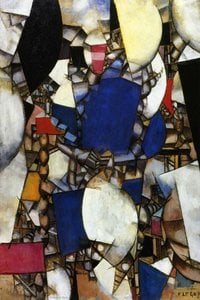
The man in the tavern

Discover "The Man in the Tavern" by Fernand Léger! A modernist masterpiece featuring a lively tavern scene & a motorcycle backdrop. Explore Cubism & Leger's iconic style.

Explorez l'art de Fernand Léger (1881-1955), un pionnier du Cubisme et du 'Tubisme'. Découvrez ses peintures audacieuses et figuratives célébrant la vie moderne, les machines et la forme humaine. Un précurseur du Pop Art !

Reproduction à l'huile faite à la main

Huile sur toile peinte à la main, avec cadre et dimensions personnalisés, réalisée sur commande par nos artistes. (Commander l'impression Commander l'impressionAcheter l'image haute résolution Acheter l'image haute résolution)

P118B $10
P118H $10
P118W $10
P438Z $10
P508JH $12
P508YH $12
P805H $10
P805Z $10
P919BZ $10
P919G $10
P919XJ $10
P959ZH $10
P968JZ $12
W106C $8
W218G $10
W218JH $8
W218Y $10
W307PJ $10
W316G $10
W316PJ $8
W316Y $10
W398PJ $8
W4111J $10
W500HY $15
W500JH $15
W692G $12
W849H $8
W940BG $15
W953PJ $8

Format standard
sur mesure
CM
INCH

Choisissez parmi nos formats prédéfinis qui respectent les proportions originales de l’œuvre.

largeur
hauteur

Vous pouvez saisir vos propres dimensions pour l'adapter à un cadre ou à un espace spécifique. Si la taille sélectionnée ne correspond pas aux proportions de l'image d'origine, nous recadrerons l'œuvre ou prolongerons la peinture avec des éléments peints à la main supplémentaires. Une maquette numérique vous sera envoyée pour approbation avant le début de la production.
Veuillez noter que l'aperçu à l'écran ne reflète pas le recadrage ou l'extension réels. Seule la maquette montrera fidèlement la composition finale.
Bien que des tailles personnalisées soient disponibles, nous vous recommandons de sélectionner une dimension dans la liste prédéfinie afin de préserver les proportions d'origine.

Exemples de personnalisation possibles : remplacer un visage par la photo du client ; ajouter un animal de compagnie (par exemple, remplacer un chat par un chien) ; inclure un message caché en arrière-plan ; modifier le paysage ou les éléments de l'arrière-plan.
Après la commande, l’équipe WahooArt.com contactera le client par e-mail pour recueillir ses instructions et lui fournira une maquette d’aperçu

Livraison dans le monde entier () en 3 à 4 semaines au lieu des 5 semaines habituelles. (28 août). Aucun compromis sur la qualité.

why_choose_icon
Livraison express gratuite dans le monde entier
why_choose_icon
Toile de lin de qualité supérieure
why_choose_icon
Assurance transport complète
why_choose_icon
Garantie de remboursement des droits de douane
why_choose_icon
Garantie de fidélité des couleurs
why_choose_icon
Politique de retour de 60 jours (uniquement en cas de défaut)
why_choose_icon
Garantie de remboursement à 100%
why_choose_icon
Offre de tarifs dégressifs

Prix total

$ 272

reproduction

The man in the tavern

Technique de reproduction

Format de la reproduction

-

Prix total

$ 272

Informations clés

  • year: 1917-1924 (debated)
  • style: Tubism
  • subject: Tavern scene with figures and a motorcycle
  • title: The Man in the Tavern
  • notable elements: Motorcycle, fragmented forms, cylindrical shapes, bold colors

Quiz d'art

Chaque question ne comporte qu'une seule bonne réponse.

Question 1:
Fernand Léger's style, characterized by simplified cylindrical forms, is often referred to as:
Question 2:
What unusual element appears in the background of 'The Man in the Tavern', reflecting Léger's fascination with modern life?
Question 3:
Approximately when was 'The Man in the Tavern' created?
Question 4:
Léger's work, including 'The Man in the Tavern', can be seen as a precursor to which later art movement?
Question 5:
What is a key characteristic of Léger's brushwork in this painting?

A Modern Gathering: Unveiling Léger’s “The Man in the Tavern”

Fernand Léger's “The Man in the Tavern” is a vibrant and dynamic exploration of modern life, painted sometime between 1917-1924. This captivating work exemplifies Léger’s distinctive ‘Tubism,’ a compelling offshoot of Cubism that celebrates the beauty of machinery and the energy of the industrial age.

Subject & Composition: A Slice of Modern Social Life

The painting presents an intimate scene within a bustling tavern. At least five figures are depicted, engaged in convivial conversation around a table laden with glasses, bottles, and other objects suggestive of refreshment and camaraderie. Léger deliberately fragments and geometrizes the composition; forms break down into cylindrical shapes and planes of color – hallmarks of his aesthetic. A centrally placed chair anchors the scene, immediately drawing the viewer’s eye, while another to the right subtly guides our gaze. Most strikingly, a motorcycle appears in the background—an unusual yet deliberate inclusion that speaks volumes about Léger's fascination with modern technology and its integration into everyday existence.

Style & Technique: The Power of ‘Tubism’

Léger’s “Tubism” is immediately apparent. Unlike the analytical fragmentation of early Cubism, his approach favors simplified, almost architectural forms. He employs bold colors—often primary hues—and strong contrasts to create a sense of solidity and monumentality. The brushwork isn't delicate; instead, it’s assertive and precise, emphasizing the constructed nature of the image. This technique reflects Léger’s belief in the beauty of the machine age and his desire to create an art that was accessible and relevant to modern society.

Historical Context & Artistic Significance: From War's Shadow to Modern Optimism

“The Man in the Tavern” emerges from a pivotal moment in art history. Following his experiences during World War I, Léger sought to reconcile the horrors of war with a celebration of life and progress. He rejected purely abstract forms, instead focusing on representing the world around him—factories, machines, and people—in a new visual language. This painting embodies that shift; it’s not merely a depiction of a tavern scene but a symbolic representation of modern social interaction within an increasingly industrialized world. Léger's work foreshadowed Pop Art by celebrating popular culture and everyday objects.

Symbolism & Emotional Impact: Energy, Alienation, and the Modern Spirit

The painting evokes a sense of bustling energy and camaraderie, yet there’s also a subtle undercurrent of detachment. The fragmented forms and simplified figures create a slightly alienating effect, perhaps reflecting the anonymity that can accompany modern life. However, the vibrant colors and dynamic composition ultimately convey a feeling of optimism and vitality. It's a scene that feels both familiar and strangely new – a testament to Léger’s ability to capture the complexities of the modern human experience.

Display & Interior Design Recommendations

“The Man in the Tavern” would be a stunning focal point in various settings:

  • Modern Living Room: Its bold colors and geometric forms complement contemporary furniture and décor.
  • Dining Room: The tavern scene creates an inviting atmosphere, perfect for entertaining.
  • Home Office/Study: Its intellectual energy can inspire creativity and focus.

To best showcase the painting, consider a neutral wall color that allows the vibrant hues to pop. Strategic lighting will highlight the texture and dimensionality of Léger’s brushwork. Framing in a simple, modern frame – perhaps black or silver – would further enhance its contemporary appeal. This artwork is more than just a visual statement; it's an investment in a piece of art history that embodies the spirit of modernity.


Biographie de l'artiste

jeune vie et formation

fernand léger, peintre, sculpteur et cinéaste français, est né le 4 février 1881 à Argentan, Orne, en Normandie inférieure. Son père élevait du bétail, et léger a initialement été formé à l'architecture de 1897 à 1899. Il s’est ensuite installé à Paris en 1900, se débrouillant comme dessinateur architectural.

développement artistique

Le travail précoce de léger a été influencé par l'impressionnisme, comme le montrent le jardin de ma mère (mon jardin) (1905). Après avoir fréquenté l'école des beaux-arts et l’académie Julian, il a commencé à travailler sérieusement comme peintre à 25 ans. Son style s'est développé en une forme personnelle de cubisme, que les critiques ont qualifié de "tubisme" pour son accent sur les formes cylindriques.

cubisme et le groupe des Puteaux

En 1910, léger a exposé au Salon d’automne aux côtés de jean metzinger et henri le fauconnier. Il a rejoint le groupe des Puteaux, également connu sous le nom de section d’or (la section dorée), avec d'autres artistes tels que francis picabia et marcel duchamp.

guerre et son influence sur le travail de léger

Les expériences de léger à la Première Guerre mondiale ont eu un impact significatif sur son œuvre. Pendant son séjour au front, il a produit des croquis d'artillerie, d'avions et de soldats. Sa peinture soldier avec un tuyau (1916) reflète cette période.

œuvre ultérieure et héritage

L'œuvre post-guerre de léger, caractérisée par des formes machine-like élégantes, le lia à la tradition de la peinture figurative française. Ses paysages animés de 1921 ont présenté des figures et des animaux dans des formes harmonieuses et rationalisées. œuvres clés: musées présentant l'œuvre de léger:
Fernand Léger

Fernand Léger

1881 - 1955 , France

L'essentiel de l'artiste

  • Artistes Influents:
    • Cézanne
    • Impressionnisme
  • Date De Décès: 1955
  • Date De Naissance: 4 février 1881
  • Influences Artistiques: ['Pop Art']
  • Lieu De Naissance: Argentan, France
  • Mouvement Artistique: Cubisme, Tubisme
  • Nationalité: Française
  • Nom Complet: Fernand Léger
  • Oeuvres Notables:
    • La Grande Parade
    • Machine Élément
    • Femme assise
    • Paysages animés
Explorez des œuvres d'art classées par thèmes, styles et caractéristiques.