CONSEIL EN ART GRATUIT

x
Commander la reproduction Commander la reproductionAcheter l'image haute résolution Acheter l'image haute résolution PartagerPartager
DétailsDétails Ajouter aux favoris Ajouter aux favoris TéléchargerTélécharger Articles similairesArticles similaires RadiographieRadiographie DiaporamaDiaporama

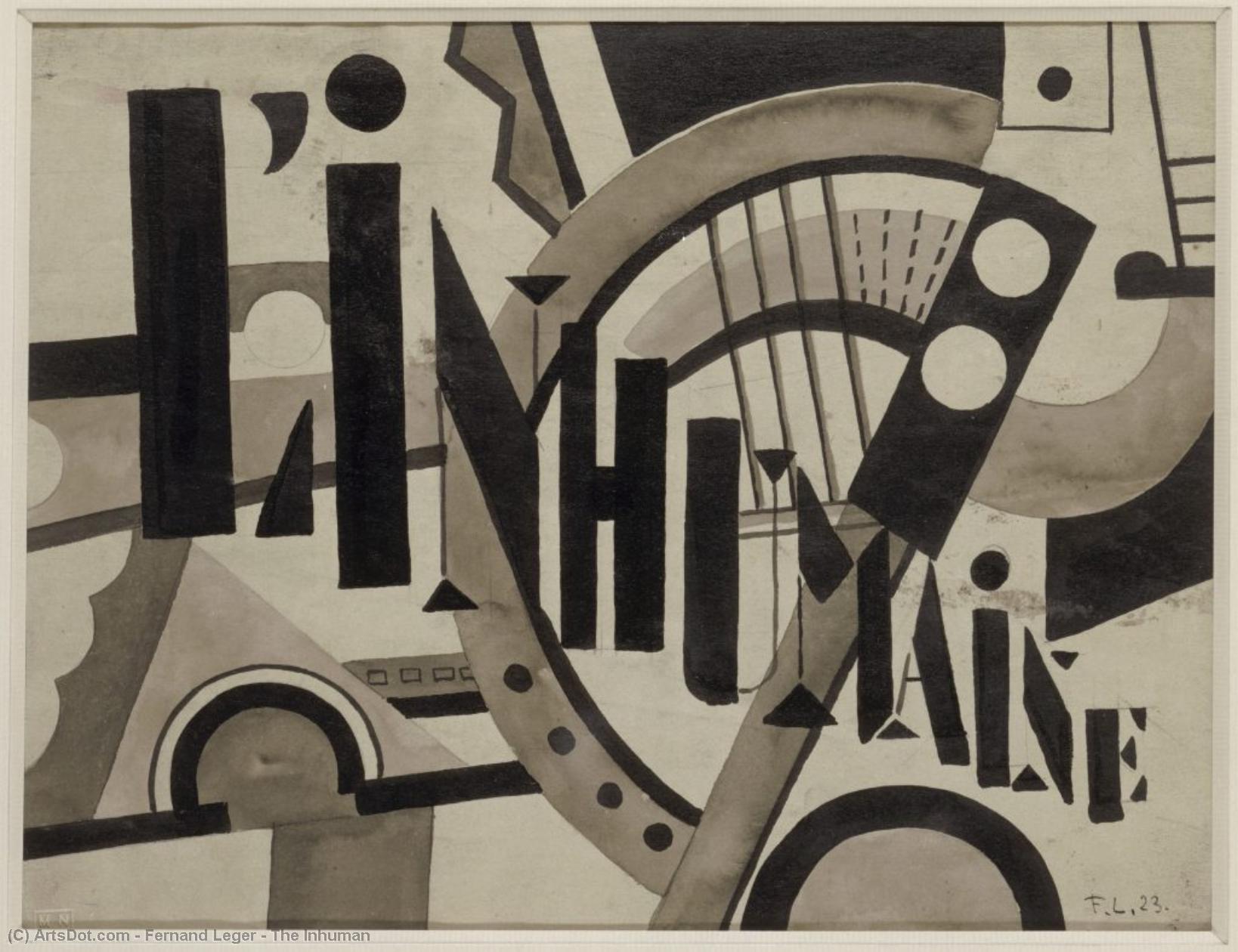
The Inhuman

Explore Fernand Léger’s striking Constructivist masterpiece, ‘The Inhuman,’ a 1923 painting characterized by bold geometric shapes and a clock motif—a captivating glimpse into the machine age's influence on artistic expression. Discover this iconic artwork and bring its timeless beauty home.

Explorez l'art de Fernand Léger (1881-1955), un pionnier du Cubisme et du 'Tubisme'. Découvrez ses peintures audacieuses et figuratives célébrant la vie moderne, les machines et la forme humaine. Un précurseur du Pop Art !

Giclée / Impression d'art

Impression giclée ou sur toile de qualité musée, avec une production rapide et des finitions au choix.

P118B $10
P118H $10
P118W $10
P438Z $10
P508JH $12
P508YH $12
P805H $10
P805Z $10
P919BZ $10
P919G $10
P919XJ $10
P959ZH $10
P968JZ $12
W106C $8
W218G $10
W218JH $8
W218Y $10
W307PJ $10
W316G $10
W316PJ $8
W316Y $10
W398PJ $8
W4111J $10
W500HY $15
W500JH $15
W692G $12
W849H $8
W940BG $15
W953PJ $8

Standard
custom
CM
INCH

Choisissez parmi nos formats prédéfinis qui respectent les proportions originales de l’œuvre.

largeur
hauteur

Vous pouvez saisir vos propres dimensions pour vous adapter à un cadre ou à un espace spécifique. Si la taille sélectionnée ne correspond pas aux proportions de l'image originale, nous recadrerons l'œuvre ou étendrons l'image avec une bordure en miroir ou une couleur unie. Une maquette numérique vous sera envoyée pour approbation avant le début de la production.
Veuillez noter que l'aperçu à l'écran ne reflète pas le recadrage ou l'extension réelle. Seule la maquette montrera avec précision la composition finale.
Bien que des tailles personnalisées soient disponibles, nous vous recommandons de choisir une dimension dans la liste prédéfinie afin de préserver les proportions originales.

Livraison dans le monde entier () en 2 semaines au lieu des 4/5 semaines habituelles. (3 juillet)

why_choose_icon
Livraison express gratuite dans le monde entier
why_choose_icon
Toile de lin de haute qualité
why_choose_icon
Assurance transport complète
why_choose_icon
Garantie de remboursement des frais de douane
why_choose_icon
Garantie de fidélité des couleurs
why_choose_icon
Politique de retour de 60 jours (uniquement en cas de défaut)
why_choose_icon
Garantie de remboursement à 100%
why_choose_icon
Réduction sur les achats groupés

Prix total

-

reproduction

The Inhuman

Giclée / Impression d'art

Format de reproduction

-

Prix total final

-

En bref

  • Dimensions: 25 x 32 cm
  • Year: 1923
  • Medium: Painting
  • Movement: Constructivism
  • Location: Private Collection
  • Artist: Fernand Léger
  • Artistic style: Abstract Expressionism

Description de l'œuvre

A Symphony of Geometric Form: Exploring Fernand Léger’s “The Inhuman”

Fernand Léger's "The Inhuman," painted in 1923, isn’t merely a visual spectacle; it’s a crystallized embodiment of the anxieties and aspirations surrounding the burgeoning industrial revolution. This striking black and white photograph captures a seminal work within Léger’s constructivist oeuvre—a movement that sought to liberate art from traditional representational constraints and embrace the raw power of geometric abstraction as a reflection of technological progress. The image itself is deceptively simple, yet brimming with intellectual depth, inviting viewers to contemplate its profound implications.
  • Subject Matter: Léger’s vision centers on a fragmented landscape dominated by circles—a deliberate rejection of organic forms and an assertion of the primacy of machine-like precision. These circles aren't merely decorative; they represent abstracted representations of wheels, gears, and other mechanical components – symbols of relentless movement and industrial efficiency.
  • Style & Technique: Léger’s constructivist style is characterized by bold lines and flattened planes, prioritizing visual impact over meticulous detail. The painting utilizes a reductive technique, stripping away superfluous ornamentation to focus on essential shapes and textures. This approach aligns perfectly with the aesthetic principles of Constructivism, which championed clarity and functionality as ideals for artistic expression.
  • Historical Context: Created during the turbulent years following World War I, “The Inhuman” reflects the pervasive disillusionment felt by artists grappling with the devastation of conflict and the rapid transformation of society under industrial influence. Léger’s work stands alongside other constructivist paintings that grapple with similar themes—the dehumanizing effects of urbanization and the potential for technology to both liberate and oppress humanity.
  • Symbolism: Beyond its mechanical imagery, “The Inhuman” carries a deeper symbolic resonance. The clock prominently displayed on the upper right corner serves as a poignant reminder of time’s relentless march forward—a visual metaphor for the unstoppable progression of industrialization and the anxieties surrounding its consequences. Léger deliberately avoids sentimental depictions; instead, he presents an unflinching portrayal of a world increasingly governed by logic and efficiency.

The Artist's Vision: Léger’s Engagement with Constructivism

Fernand Léger wasn’t simply reacting to the industrial age; he was actively shaping its artistic representation. Influenced by figures like Piet Mondrian and Kazimir Malevich, Léger embraced Constructivism as a means of expressing his belief in the transformative potential of technology. He saw it not just as a source of destruction but also as an opportunity for creating new forms of beauty—beauty rooted in geometric abstraction and driven by rational principles. This conviction fueled his unwavering dedication to exploring the visual language of the machine age, resulting in artworks that continue to captivate audiences today.

Emotional Resonance: Facing Forward with Unease

Despite its austere aesthetic, “The Inhuman” possesses a palpable emotional intensity. Léger’s deliberate avoidance of emotive color and expressive brushstrokes underscores his commitment to conveying a sense of unease—a recognition of the anxieties inherent in confronting an increasingly mechanized world. The painting compels viewers to contemplate humanity's relationship with technology, prompting questions about our role within a larger system driven by forces beyond our control. Ultimately, Léger’s masterpiece serves as a powerful reminder that even in the face of overwhelming change, art can retain its capacity for profound reflection and emotional engagement.

Biographie de l'artiste

jeune vie et formation

fernand léger, peintre, sculpteur et cinéaste français, est né le 4 février 1881 à Argentan, Orne, en Normandie inférieure. Son père élevait du bétail, et léger a initialement été formé à l'architecture de 1897 à 1899. Il s’est ensuite installé à Paris en 1900, se débrouillant comme dessinateur architectural.

développement artistique

Le travail précoce de léger a été influencé par l'impressionnisme, comme le montrent le jardin de ma mère (mon jardin) (1905). Après avoir fréquenté l'école des beaux-arts et l’académie Julian, il a commencé à travailler sérieusement comme peintre à 25 ans. Son style s'est développé en une forme personnelle de cubisme, que les critiques ont qualifié de "tubisme" pour son accent sur les formes cylindriques.

cubisme et le groupe des Puteaux

En 1910, léger a exposé au Salon d’automne aux côtés de jean metzinger et henri le fauconnier. Il a rejoint le groupe des Puteaux, également connu sous le nom de section d’or (la section dorée), avec d'autres artistes tels que francis picabia et marcel duchamp.

guerre et son influence sur le travail de léger

Les expériences de léger à la Première Guerre mondiale ont eu un impact significatif sur son œuvre. Pendant son séjour au front, il a produit des croquis d'artillerie, d'avions et de soldats. Sa peinture soldier avec un tuyau (1916) reflète cette période.

œuvre ultérieure et héritage

L'œuvre post-guerre de léger, caractérisée par des formes machine-like élégantes, le lia à la tradition de la peinture figurative française. Ses paysages animés de 1921 ont présenté des figures et des animaux dans des formes harmonieuses et rationalisées. œuvres clés: musées présentant l'œuvre de léger:
Fernand Léger

Fernand Léger

1881 - 1955 , France

En bref

  • Artistes Influents:
    • Cézanne
    • Impressionnisme
  • Date De Décès: 1955
  • Date De Naissance: 4 février 1881
  • Influences Artistiques: ['Pop Art']
  • Lieu De Naissance: Argentan, France
  • Mouvement Artistique: Cubisme, Tubisme
  • Nationalité: Française
  • Nom Complet: Fernand Léger
  • Oeuvres Notables:
    • La Grande Parade
    • Machine Élément
    • Femme assise
    • Paysages animés
Explorez des œuvres d'art classées par thèmes, styles et caractéristiques.