CONSEIL EN ART GRATUIT

x
Commander l'impression Commander l'impressionCommander la reproduction Commander la reproduction PartagerPartager
Détails de l'œuvreDétails de l'œuvre Ajouter aux favoris Ajouter aux favoris TéléchargerTélécharger Articles similairesArticles similaires RadiographieRadiographie DiaporamaDiaporama

The dance

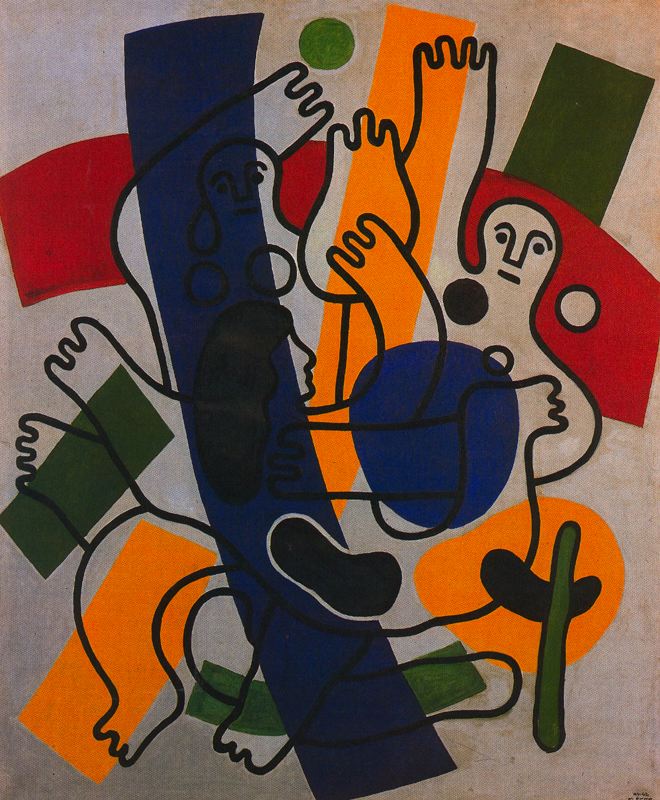
Fernand Léger's "The Dance" captures the energy of the machine age through abstracted figures and objects—a sports ball, tennis racket, and clocks—creating a dynamic composition reflecting movement and vitality.

Explorez l'art de Fernand Léger (1881-1955), un pionnier du Cubisme et du 'Tubisme'. Découvrez ses peintures audacieuses et figuratives célébrant la vie moderne, les machines et la forme humaine. Un précurseur du Pop Art !

Acquérez une image numérique haute résolution et améliorée, bien supérieure à l'aperçu en ligne.

Chaque fichier est méticuleusement préparé par nos spécialistes internes à l'aide d'outils avancés et d'une retouche manuelle experte. Nous garantissons que chaque image possède une clarté exceptionnelle, une précision des couleurs irréprochable et un niveau de détail fin.

Le fichier final est livré par e-mail sous 72 heures, optimisé pour une utilisation immédiate dans des contextes professionnels, éditoriaux et d'impression. Il offre la même qualité de confiance que celle utilisée par les plus grands studios de création, éditeurs et galeries.

Image numérique

Téléchargez un fichier haute résolution pour un usage personnel, l'impression et vos projets créatifs.

Prix total

$9.99

Inclus avec chaque achat d'image numérique

Livraison numérique experte, garantie.

En choisissant WahooArt.com, vous n'obtenez pas seulement une simple image : vous recevez une œuvre numérique sublimée avec professionnalisme, conçue avec précision et accompagnée d'une garantie de satisfaction. Voici tout ce qui accompagne automatiquement votre commande :

shipping_icon
Livraison rapide par e-mail

Votre fichier d'image numérique haute résolution vous sera envoyé par e-mail sous 72 heures après votre commande — prêt à un usage immédiat.

canvas_icon
Fichier numérique optimisé par l'IA

Votre œuvre d'art bénéficie d'une optimisation professionnelle grâce à des outils d'IA avancés et une retouche manuelle, garantissant un niveau maximal de détail, de clarté et de fidélité chromatique.

insurance_icon
Réexpédition gratuite à vie

Vous avez accidentellement supprimé ou perdu votre fichier ? Pas de panique — nous vous le renverrons gratuitement, quand vous le souhaitez.

tax_icon
Aucun frais de douane - À jamais

Profitez de votre œuvre d'art instantanément sans frais de douane ni de livraison — les téléchargements numériques sont toujours exonérés de taxes.

color_icon
Garantie de fidélité des couleurs

Nous garantissons que votre image numérique reproduit les couleurs de l'original aussi fidèlement que possible grâce à des outils professionnels et une gestion rigoureuse des couleurs.

return_icon
Garantie de satisfaction de 60 jours

Si vous n'êtes pas satisfait de votre image numérique, nous la réviserons ou vous rembourserons 100% sous 60 jours - sans poser de questions.

guarantee_icon
Garantie de remboursement à 100%

Pas satisfait ? Obtenez un remboursement intégral dans les 60 jours suivant la réception de votre fichier numérique — sans aucune question posée.

discount_icon
Réductions sur les commandes groupées

Achetez 3 images, économisez 10% - Achetez 5, économisez 15% - Achetez 10+, économisez 20%. Idéal pour les projets créatifs, les galeries et les agences.

En bref

  • Year: 1932
  • Location: Musée Matisse
  • Movement: Cubism
  • Artistic style: Formalist
  • Influences: Picasso
  • Dimensions: Large
  • Notable elements or techniques: Geometric abstraction

Quiz d'art

Chaque question ne comporte qu'une seule bonne réponse.

Question 1:
What artistic movement is Fernand Léger associated with?
Question 2:
The painting prominently features objects like a sports ball and tennis racket. What does this symbolize in relation to the artwork's context?
Question 3:
Fernand Léger’s style is characterized by simplified geometric forms. How does this approach contribute to the overall impression of movement and energy?
Question 4:
The painting depicts a group of figures engaged in what activity?
Question 5:
What is the primary purpose of Léger’s use of bold colors and simplified forms in “The Dance”?’

Description du collectible

A Symphony of Form and Movement: Exploring Fernand Léger’s “The Dance”

Fernand Léger's "The Dance," completed in 1932, stands as an arresting embodiment of Surrealist principles interwoven with a distinctly modernist aesthetic. More than just a depiction of figures engaged in movement—though undeniably that is present—the painting operates on multiple levels, inviting contemplation about the relationship between humanity and technology during the turbulent years preceding World War II. Léger’s intention wasn't merely to represent what he saw; it was to distill the essence of experience itself into geometric abstraction.

The Style: Geometric Surrealism

Léger’s stylistic approach defies easy categorization, earning him the moniker “Geometric Surrealist.” He rejected the prevailing trend toward purely abstract art championed by artists like Picasso and Mondrian, arguing that true artistic expression required retaining a connection to observable reality. However, he radically simplified forms—reducing figures and objects to basic geometric shapes—primarily cubes and cylinders—a technique heavily influenced by his fascination with industrial design and architectural structures. This simplification wasn’t an abandonment of visual interest; rather, it heightened the impact of repetition and rhythm, creating a mesmerizing visual dance akin to its title suggests. The deliberate flattening of perspective contributes to this sense of immediacy and reinforces Léger's desire to convey not just what is seen but how it *feels*.

Technique: Bold Color Palette and Textured Surfaces

The painting’s execution showcases Léger’s masterful command of color and texture. He employed a vibrant palette dominated by reds, yellows, and blues—colors that evoke both energy and warmth—contrasting sharply with the cool tones of the background. Crucially, Léger utilized a technique known as “faceted painting,” applying thick layers of paint onto canvas to create textured surfaces that resemble industrial materials like concrete and steel. This tactile element adds another dimension to the artwork’s visual experience, grounding its abstract forms in the physicality of the material world. The deliberate roughness of the surface underscores Léger's preoccupation with representing the raw power of modern industry.

Historical Context: Navigating Uncertainty

“The Dance” emerged during a period of profound social and political upheaval—the shadow of fascism loomed large across Europe, and anxieties about technological advancement fueled widespread apprehension. Léger’s artistic choices reflect this climate of uncertainty, articulating a vision of humanity grappling with the transformative forces reshaping society. While Surrealists often sought to tap into the subconscious realm, Léger focused on capturing the observable consequences of industrialization—the repetitive patterns of machines, the dominance of geometric forms—presenting them as symbols of both progress and potential peril. The inclusion of clocks serves as a poignant reminder of time’s relentless march forward, mirroring the anxieties surrounding impending conflict.

Symbolism: Rhythm, Repetition, and Industrial Harmony

Beyond its formal qualities, “The Dance” is laden with symbolic significance. The repetition of geometric shapes—particularly cubes—represents stability and order amidst chaos, suggesting a harmonious coexistence between humanity and technology. Léger’s deliberate use of rhythm—created by the arrangement of figures and objects—captures the dynamism inherent in movement and reinforces the painting's central theme. The sports ball and tennis racket symbolize human activity and aspiration, anchoring the abstract forms within the realm of everyday experience. Ultimately, Léger invites viewers to contemplate not just what is depicted but also what it represents – a celebration of form, movement, and the enduring spirit of innovation.

Emotional Impact: Capturing Vitality

“The Dance” possesses an undeniable emotional resonance. Its bold colors and textured surfaces stimulate the senses, conveying a palpable feeling of energy and vitality. The painting’s rhythmic composition evokes a sense of exhilaration, mirroring the joyous abandon of movement itself. Léger's masterful manipulation of visual language transcends mere representation; it communicates directly to the viewer's subconscious mind, eliciting feelings of optimism and wonder. It remains a testament to Léger’s ability to transform abstract concepts into emotionally compelling artworks—a captivating glimpse into the heart of modernist expression.

Œuvres apparentées


Biographie de l'artiste

jeune vie et formation

fernand léger, peintre, sculpteur et cinéaste français, est né le 4 février 1881 à Argentan, Orne, en Normandie inférieure. Son père élevait du bétail, et léger a initialement été formé à l'architecture de 1897 à 1899. Il s’est ensuite installé à Paris en 1900, se débrouillant comme dessinateur architectural.

développement artistique

Le travail précoce de léger a été influencé par l'impressionnisme, comme le montrent le jardin de ma mère (mon jardin) (1905). Après avoir fréquenté l'école des beaux-arts et l’académie Julian, il a commencé à travailler sérieusement comme peintre à 25 ans. Son style s'est développé en une forme personnelle de cubisme, que les critiques ont qualifié de "tubisme" pour son accent sur les formes cylindriques.

cubisme et le groupe des Puteaux

En 1910, léger a exposé au Salon d’automne aux côtés de jean metzinger et henri le fauconnier. Il a rejoint le groupe des Puteaux, également connu sous le nom de section d’or (la section dorée), avec d'autres artistes tels que francis picabia et marcel duchamp.

guerre et son influence sur le travail de léger

Les expériences de léger à la Première Guerre mondiale ont eu un impact significatif sur son œuvre. Pendant son séjour au front, il a produit des croquis d'artillerie, d'avions et de soldats. Sa peinture soldier avec un tuyau (1916) reflète cette période.

œuvre ultérieure et héritage

L'œuvre post-guerre de léger, caractérisée par des formes machine-like élégantes, le lia à la tradition de la peinture figurative française. Ses paysages animés de 1921 ont présenté des figures et des animaux dans des formes harmonieuses et rationalisées. œuvres clés: musées présentant l'œuvre de léger:
Fernand Léger

Fernand Léger

1881 - 1955 , France

Informations clés

  • Artistes Influents:
    • Cézanne
    • Impressionnisme
  • Date De Décès: 1955
  • Date De Naissance: 4 février 1881
  • Influences Artistiques: ['Pop Art']
  • Lieu De Naissance: Argentan, France
  • Mouvement Artistique: Cubisme, Tubisme
  • Nationalité: Française
  • Nom Complet: Fernand Léger
  • Oeuvres Notables:
    • La Grande Parade
    • Machine Élément
    • Femme assise
    • Paysages animés