Aperçu en situation Aperçu en RA Acheter la peinture faite à la main Passer au format image numérique Partager
Détails Guide Ajouter aux favoris Télécharger Articles similaires Radiographie Voir le diaporama Statistiques

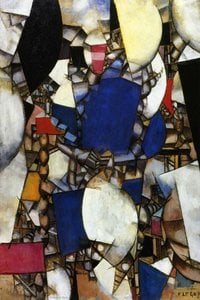
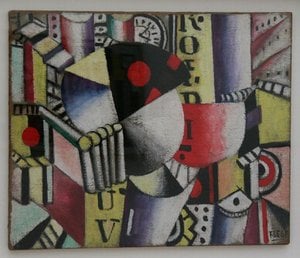
Still life with plaster mask

Explore Fernand Léger's 'Still Life with Plaster Mask,' a Cubist masterpiece capturing the machine age through striking forms and bold colors. A unique WahooArt reproduction.

Explorez l'art de Fernand Léger (1881-1955), un pionnier du Cubisme et du 'Tubisme'. Découvrez ses peintures audacieuses et figuratives célébrant la vie moderne, les machines et la forme humaine. Un précurseur du Pop Art !

Giclées et impressions d'art

Impressions giclées ou sur toile de qualité musée, avec une production rapide et des finitions au choix. ( Acheter la peinture faite à la main Passer au format image numérique)

P118B $10
P118H $10
P118W $10
P438Z $10
P508JH $12
P508YH $12
P805H $10
P805Z $10
P919BZ $10
P919G $10
P919XJ $10
P959ZH $10
P968JZ $12
W106C $8
W218G $10
W218JH $8
W218Y $10
W307PJ $10
W316G $10
W316PJ $8
W316Y $10
W398PJ $8
W4111J $10
W500HY $15
W500JH $15
W692G $12
W849H $8
W940BG $15
W953PJ $8

Format standard
personnalisé
CM
INCH

Choisissez parmi nos formats prédéfinis qui respectent les proportions originales de l’œuvre.

largeur
hauteur

Vous pouvez saisir vos propres dimensions pour vous adapter à un cadre ou à un espace spécifique. Si la taille sélectionnée ne correspond pas aux proportions de l'image originale, nous recadrerons l'œuvre ou étendrons l'image avec une bordure en miroir ou une couleur unie. Une maquette numérique vous sera envoyée pour approbation avant le début de la production.
Veuillez noter que l'aperçu à l'écran ne reflète pas le recadrage ou l'extension réelle. Seule la maquette montrera avec précision la composition finale.
Bien que des tailles personnalisées soient disponibles, nous vous recommandons de choisir une dimension dans la liste prédéfinie afin de préserver les proportions originales.

Livraison dans le monde entier () en 2 semaines au lieu des 4/5 semaines habituelles. (24 septembre)

why_choose_icon
Livraison express gratuite dans le monde entier
why_choose_icon
Toile de lin de haute qualité
why_choose_icon
Assurance transport complète
why_choose_icon
Garantie de remboursement des droits de douane
why_choose_icon
Garantie de fidélité des couleurs
why_choose_icon
Garantie de retour de 100 jours (uniquement en cas de défaut)
why_choose_icon
Garantie de remboursement à 100%
why_choose_icon
Tarifs dégressifs sur quantité

Prix total

$ 68

reproduction

Still life with plaster mask

Giclées et impressions d'art

Format de la reproduction

-

Prix total final

$ 68

L'essentiel de l'œuvre

  • Subject or theme: Still life, mask
  • Notable elements or techniques: Tubist style, cylindrical forms
  • Title: Still life with plaster mask
  • Medium: Oil on canvas
  • Movement: Cubism
  • Artist: Fernand Léger

Quiz d'art

Chaque question ne comporte qu'une seule bonne réponse.

Question 1:
What is the primary subject of Fernand Léger’s ‘Still Life with a Plaster Mask’?
Question 2:
Which artistic movement is most closely associated with Fernand Léger’s style, as evidenced by this painting?
Question 3:
The presence of an umbrella in the composition suggests what about the artwork’s setting?
Question 4:
Considering the historical context of Fernand Léger’s work, what does the plaster mask likely symbolize?
Question 5:
Based on the description, what can be inferred about Léger’s approach to representing objects in this painting?

The Enigmatic Presence of the Mask

Fernand Léger’s “Still Life with Plaster Mask” is not merely a depiction of objects arranged on a surface; it's an invitation into a world where form, geometry, and the echoes of industrialization converge. Painted around 1914, during a pivotal period in Léger’s artistic evolution – a time when he moved away from the rigid constraints of Cubism towards a more expressive, almost populist style – this work embodies his fascination with the machine age while retaining a distinctly human sensibility. The central figure, a plaster mask, immediately commands attention. It's not a realistic representation but rather an abstracted form, hinting at anonymity and perhaps even a veiled identity. Léger’s deliberate simplification of shapes—the cylindrical forms reminiscent of pipes and gears, characteristic of his “Tubism”—suggests a world increasingly dominated by mechanical processes, yet the mask itself retains a certain theatricality, recalling ancient ritual objects and the power of disguise.
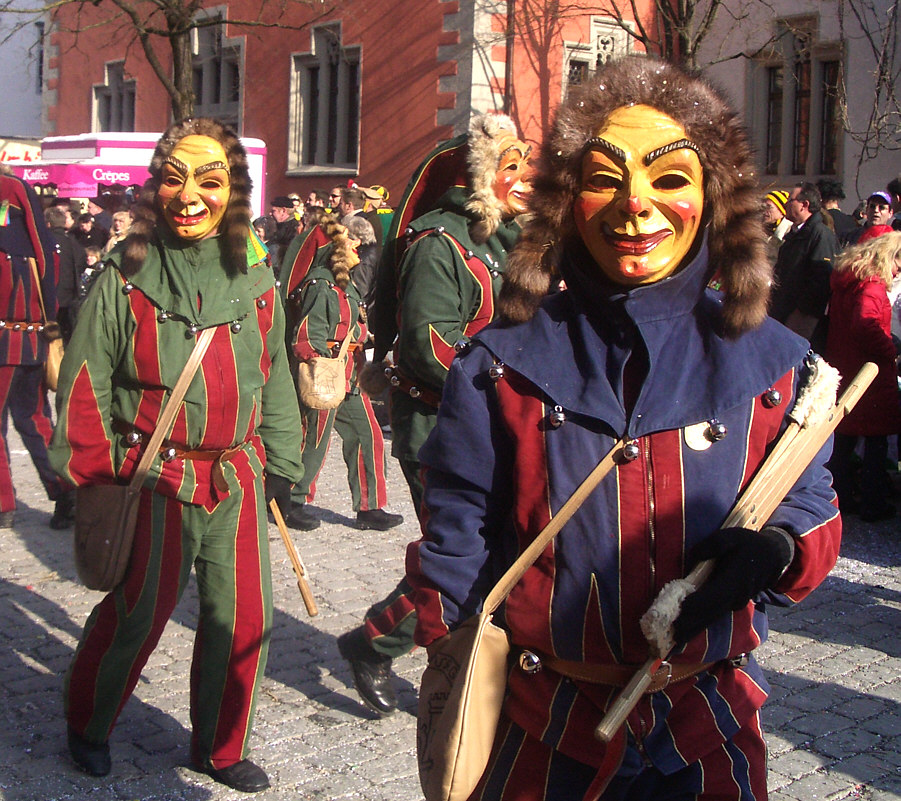
Mask Image

(Image: A traditional mask from Ravensburg Fasnet, illustrating the historical and ritual significance of masks)

A Dialogue with Cubism and Beyond

Léger’s artistic journey is inextricably linked to the development of Cubism. Initially influenced by Picasso and Braque, he developed his own distinctive approach – “Tubism” – which prioritized simplified geometric forms, particularly cylinders, cones, and cubes. This style was a direct response to the dynamism and fragmentation he observed in the burgeoning industrial landscape. However, unlike many of his contemporaries who retreated into pure abstraction, Léger sought to integrate modernity directly into his work. “Still Life with Plaster Mask” demonstrates this brilliantly; the mask itself becomes a visual embodiment of this integration – a fragmented, stylized representation that simultaneously evokes both ancient symbolism and contemporary mechanics. The surrounding objects—a cup, a bowl, an umbrella—are treated with similar geometric precision, contributing to the painting’s overall sense of ordered chaos.

The addition of the umbrella, positioned high in the composition, introduces an element of unexpected lightness and perhaps even vulnerability against the backdrop of industrial forms. It's a subtle detail that adds depth to the work, suggesting a human presence within this machine-dominated world. Interestingly, Léger’s exploration of masks during this period coincided with his own experiences in World War I, where he witnessed firsthand the dehumanizing effects of mechanized warfare. The mask, therefore, can be interpreted as a symbol of both anonymity and the loss of individual identity – themes that resonated deeply within him.

Technique and Materiality: A Celebration of Form

Executed in oil on canvas, “Still Life with Plaster Mask” showcases Léger’s masterful control of color and form. He employs a limited palette—primarily primary colors punctuated by black and white—to create a sense of clarity and visual impact. The brushstrokes are bold and decisive, emphasizing the geometric shapes and contributing to the painting's overall dynamism. The use of canvas itself is integral to the work’s aesthetic; Léger deliberately avoids illusionistic depth, instead focusing on the flat surface and the interplay of shapes and colors. This approach aligns with his desire to represent the world as it *appears* rather than as it *is*, reflecting a commitment to capturing the essence of modern experience.

Symbolism and Emotional Resonance

Beyond its formal qualities, “Still Life with Plaster Mask” carries a profound symbolic weight. The mask, as a recurring motif in Léger’s work, represents not just anonymity but also transformation, disguise, and the potential for rebirth. It speaks to our desire to conceal ourselves from the world, yet simultaneously invites us to explore hidden aspects of our own identities. The painting's overall mood is one of quiet contemplation—a subtle tension between the ordered precision of industrial forms and the inherent mystery of human existence. It’s a work that rewards repeated viewing, revealing new layers of meaning with each encounter. A high-quality reproduction allows us to appreciate Léger’s innovative approach to modern art and his enduring legacy as a pioneer of abstraction.


Biographie de l'artiste

jeune vie et formation

fernand léger, peintre, sculpteur et cinéaste français, est né le 4 février 1881 à Argentan, Orne, en Normandie inférieure. Son père élevait du bétail, et léger a initialement été formé à l'architecture de 1897 à 1899. Il s’est ensuite installé à Paris en 1900, se débrouillant comme dessinateur architectural.

développement artistique

Le travail précoce de léger a été influencé par l'impressionnisme, comme le montrent le jardin de ma mère (mon jardin) (1905). Après avoir fréquenté l'école des beaux-arts et l’académie Julian, il a commencé à travailler sérieusement comme peintre à 25 ans. Son style s'est développé en une forme personnelle de cubisme, que les critiques ont qualifié de "tubisme" pour son accent sur les formes cylindriques.

cubisme et le groupe des Puteaux

En 1910, léger a exposé au Salon d’automne aux côtés de jean metzinger et henri le fauconnier. Il a rejoint le groupe des Puteaux, également connu sous le nom de section d’or (la section dorée), avec d'autres artistes tels que francis picabia et marcel duchamp.

guerre et son influence sur le travail de léger

Les expériences de léger à la Première Guerre mondiale ont eu un impact significatif sur son œuvre. Pendant son séjour au front, il a produit des croquis d'artillerie, d'avions et de soldats. Sa peinture soldier avec un tuyau (1916) reflète cette période.

œuvre ultérieure et héritage

L'œuvre post-guerre de léger, caractérisée par des formes machine-like élégantes, le lia à la tradition de la peinture figurative française. Ses paysages animés de 1921 ont présenté des figures et des animaux dans des formes harmonieuses et rationalisées. œuvres clés: musées présentant l'œuvre de léger:
Fernand Léger

Fernand Léger

1881 - 1955 , France

En bref

  • Artistes Influents:
    • Cézanne
    • Impressionnisme
  • Date De Décès: 1955
  • Date De Naissance: 4 février 1881
  • Influences Artistiques: ['Pop Art']
  • Lieu De Naissance: Argentan, France
  • Mouvement Artistique: Cubisme, Tubisme
  • Nationalité: Française
  • Nom Complet: Fernand Léger
  • Oeuvres Notables:
    • La Grande Parade
    • Machine Élément
    • Femme assise
    • Paysages animés
Explorez des œuvres d'art classées par thèmes, styles et caractéristiques.